
That lesson doesn’t come from books.
It comes from pain.


Yes.
That lesson doesn’t come from books.
It comes from pain.
Every serious trader who survives long enough eventually experiences this:
The market rewards you…
Then your ego quietly takes control…
And then the market takes everything back.
Let’s talk deeply about this — because this single psychological trap has destroyed more accounts than bad analysis ever did.
The Most Dangerous Period Is After You Win
Most beginners think the most dangerous time is after losses.
It’s not.
After losses, you feel cautious.
You reduce size.
You question yourself.
After a winning streak?
You feel invincible.
And that is where real danger begins.
What Actually Happens After 3–5 Winning Trades
Let’s break it down psychologically.
Confidence increases.
Fear decreases.
Risk perception shrinks.
Discipline softens.
Position size expands.
You don’t notice it happening.
You tell yourself:
“I’m reading the market well.”
“I understand the flow.”
“I finally figured it out.”
But what really happened?
Probability played in your favor.
That’s it.
The Ego Spike Mechanism
Winning triggers dopamine.
Your brain starts associating:
Trading = reward.
You begin to:
Enter earlier than confirmation.
Move stop-loss further.
Add to random setups.
Increase margin usage.
Ignore macro warning signs.
You stop following your system strictly.
Not because you want to gamble.
Because you believe your intuition has improved.
But here’s the truth:
Markets are cyclical.
Your edge is statistical.
Not magical.
The Illusion of Skill
After several wins, you start believing:
“It’s my skill.”
Part of it is skill, yes.
But part of it is:
Favorable market structure
Strong sector rotation
High liquidity
Momentum environment
If you trade in a strong uptrend in VNIndex, many setups will work.
You think:
“I can trade anything.”
Then market transitions to distribution.
And your oversized confidence collides with reality.
Why the Market Punishes Ego
Markets are not emotional.
But they expose emotion.
When ego rises:
You stop respecting risk.
You widen stop-loss.
You justify bad entries.
You revenge trade when a loss appears.
And because your position size increased during confidence phase…
Losses now hurt more.
That emotional shock triggers further mistakes.
This is how a 5-trade winning streak turns into a 10-trade disaster cycle.
The Silent Warning Signs
Here are subtle signs your ego is rising:
You stop journaling.
You skip weekend review.
You check profit constantly.
You feel proud instead of neutral.
You talk more about gains than process.
You consider using more margin.
The moment trading feels easy, you are at risk.
Professional traders fear comfort.
The Overconfidence Trap
Psychology research shows:
After success, humans systematically overestimate their control over outcomes.
This is called overconfidence bias.
In trading, it leads to:
Larger position sizes.
Lower quality setups.
Reduced diversification.
Ignoring correlation risk.
You stop trading probability.
You start trading belief.
And belief is fragile.
The Drawdown Shock
The real pain is not financial.
It is psychological.
After winning streak, when a loss hits:
Ego feels attacked.
You try to “prove” you are right.
You increase size to recover faster.
You abandon your rules.
One oversized trade can erase months of steady growth.
And the worst part?
It usually happens after your best performance period.
A Personal-Type Scenario (Common Among Traders)
You have:
5 consecutive winning trades.
Account up 12%.
You think:
“This is my level now.”
Next trade:
You double size.
Market gaps down.
You hesitate to cut loss.
Loss becomes 3R instead of 1R.
Now confidence cracks.
Next trade:
You try to recover.
Another loss.
Within two weeks:
Account back to starting point.
Emotionally, it feels worse than if you had never won.
That pain changes traders permanently.
Why Professionals Fear Winning Streaks
Experienced traders don’t celebrate winning streaks.
They monitor themselves.
After 3 consecutive wins, professionals often:
Reduce size slightly.
Review setups carefully.
Tighten rules.
Increase discipline.
Because they know:
The brain changes after success.
The risk shifts from market to self.
The Discipline Anchor Rule
One of the strongest methods professionals use:
Fixed risk per trade — always.
If you risk 1% per trade:
You never change that because you are “feeling good.”
If you break this rule even once:
You opened the ego door.
Consistency protects you from yourself.
Market Cycles Amplify Ego Damage
Vietnam market especially has strong sentiment cycles.
When index trends strongly upward:
Confidence builds across entire market.
Retail traders:
Use more margin.
Follow breakout blindly.
Ignore distribution signs.
Then correction begins.
And because everyone is oversized…
Liquidation accelerates.
Ego + leverage = explosive collapse.
Emotional Neutrality Is the Real Goal
Professional trading is emotionally flat.
Not excited.
Not depressed.
Just mechanical.
You should feel the same after:
+3R trade
or
–1R trade
If your heart rate changes dramatically:
Position size is too large.
The “Stay Boring” Principle
The goal is not big wins.
The goal is repeatable behavior.
Winning streak should not change:
Your position size.
Your strategy.
Your routine.
Your risk model.
If any of these change because you won…
You are drifting.
The 3-Day Rule After Big Gains
Many professionals apply a simple rule:
After a large profit week:
Trade half size next week.
Why?
To reset emotional baseline.
The market is still there.
Opportunities are endless.
But your psychological balance needs protection.
Humility Is a Survival Skill
Markets reward humility.
Humility means:
“I don’t control outcome.”
“I only control risk.”
“I can be wrong anytime.”
The moment you think:
“I understand this market completely.”
The market will teach you otherwise.
Every veteran trader has this scar.
The Long-Term Identity Shift
Beginners want to prove they are right.
Professionals want to survive.
After you internalize that:
Winning streak becomes just data.
Not identity.
You stop thinking:
“I am good.”
You start thinking:
“My system worked under these conditions.”
That separation protects your capital.
The Real Lesson
Yes.
This lesson is learned from experience.
Every serious trader has a phase where:
Confidence rose.
Risk increased.
Account dropped sharply.
And that pain becomes permanent wisdom.
The ones who survive learn:
Never scale ego faster than skill.
Never scale position faster than discipline.
Never let emotion modify your system.
The Final Truth
The market does not destroy traders.
Ego does.
Winning is not dangerous.
Attachment to winning is dangerous.
If you can:
Win without pride,
Lose without fear,
Trade without excitement,
Follow rules without exception,
Then you are stepping into professional territory.
And when winning streak comes next time…
Instead of feeling powerful,
You will quietly reduce size,
Tighten discipline,
And prepare for volatility.
That calm reaction is the real upgrade.
If you want, next we can talk about:
How to design a psychological defense system
Or how to recover mentally after a big drawdown
Or how to measure when confidence is becoming ego
Because mastering charts is easy.
Mastering yourself is the real game.
About the Creator
Zidane
I have a series of articles on money-saving tips. If you're facing financial issues, feel free to check them out—Let grow together, :)
IIf you love my topic, free feel share and give me a like. Thanks
https://learn-tech-tips.blogspot.com/
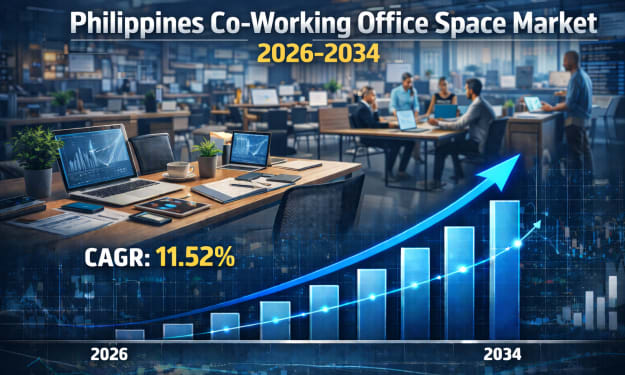
Philippines Co-Working Office Space Market 2026: Hybrid Work Momentum, Startup Growth and Flexible Workplace Innovation
Philippines Co-Working Office Space Market Overview The market is rapidly gaining traction as businesses, freelancers and distributed teams increasingly prioritise flexibility and cost efficiency in workplace decisions. Co-working environments offer scalable office solutions, shared infrastructure and collaborative ecosystems that appeal to startups, SMEs and multinational organisations alike. As traditional long-term leases become less attractive in a hybrid work era, co-working spaces are emerging as a strategic component of workplace transformation across major Philippine business hubs.
By Manisha Dixit5 days ago in Trader



Comments
There are no comments for this story
Be the first to respond and start the conversation.