
Targeted therapy! The Nobel Prize winning "Click Chemistry" can be used like this!
Sharpless was inspired by this and put forward the concept of "click chemistry" in 2001.
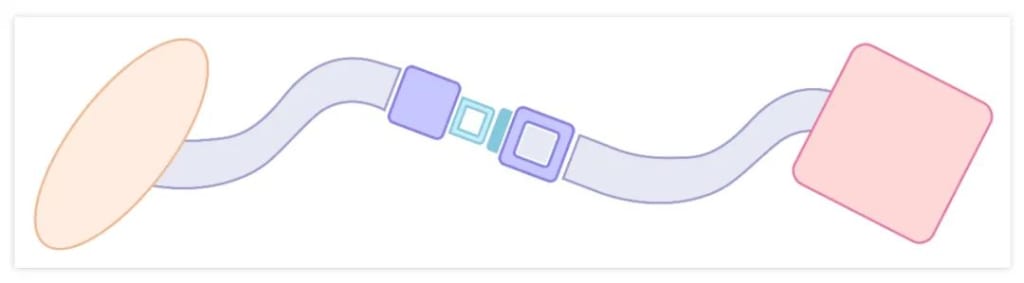
Studies of different molecules in nature have revealed that the formation of carbon-heteroatomic bonds is superior to the formation of carbon-carbon bonds. Nucleic acids, proteins and polysaccharides are condensation polymers connected by carbon-heteroatom bonds. Sharpless was inspired by this and put forward the concept of "click chemistry" in 2001. Click chemistry is the rapid chemical synthesis method of useful new compounds through heteroatom connection (C-X-C), which is used to describe selective, modular, wide range and high yield chemical reactions[1][2].
Before that, chemical synthesis was complicated and difficult with low yields. Until Professor Sharpless and Meldal discovered the first generation of click chemistry - the copper catalyzed azide-alkyne cycloaddition (CuAAC), which proposed to simplify the complex reaction and build functional molecules through the mode of reaction. However, the cytotoxicity of copper catalysts limits the in vivo applications of CuAAC.
Since then, chemists have discovered that the Strain-promoted alkyne-azide cycloaddition (SPAAC), which enables the azide-alkyne reaction without cytotoxic copper catalyst. However, some chemists are not satisfied with the second order reaction rate constant of SPAAC, and the inverse electronic demand Diels-Alder reaction (iEDDA) came into being[3].
What is Click Chemistry and Bioorthogonal Chemistry?
Carolyn Bertozzi has taken click chemistry to a new dimension and started utilizing it in living organisms. Bioorthogonal chemistry is defined as a rapid and selective reaction that does not interfere with biological processes under physiological conditions. Due to its mild reaction conditions and high selectivity, bioorthogonal chemistry is widely used in Biomedical Field.
Figure 1. The “click” in click chemistry[4].
Three generations of click chemical reactions and characteristics
Table 1. Characteristics of three representative click chemical reactions[3].
Applications of Click Chemistry in Biomedical Field
Click chemistry has made great progress in biomedical research fields, especially copper-free click chemistry, including SPAAC and iEDDA reactions. In vitro, click chemistry can specifically label cell target proteins and study the interaction between drug target engagement and drug surrogates in living cells. In addition, membrane lipids and protein can be selectively labeled with click in vitro, and cells can be linked together by clicking. In vivo, click chemistry makes molecular imaging and drug delivery for diagnosis and therapy efficient and effective[3].
Next, we will introduce several specific applications of click chemistry in biomedical research.
Fluorescence Imaging
One of the most interesting functions of click chemistry is fluorescence imaging of intracellular target of interest proteins (TOI)[3]. In the iEDDA reaction, innate TOI proteins in living cells can be visualized through the treatment of a TCO-ligand conjugate and Tz containing fluorophores (FLTz)[3].
For example, the clinical drug AZD2281 was conjugated with TCO, and a biological probe was developed to study the poly (ADP-ribose) polymerase -1 (PARP1) proteins, which is an important cellular protein for DNA repair. TCO was conjugated to Taxol, an anticancer agent, and tubulin proteins cells was successfully visualized by Taxol -TCO/Tz-BODIPY FL combination[3]. Then multiple ligand -TCO conjugates such as BI2536, Foretinib, Dasatinib and Ibrutinib were also developed for targeting various TOI proteins, such as polo-like kinase 1 (PLK1), MET and BTK proteins[3].
Figure 2. The reaction of AZD2281-TCO and Texas Red-Tz in MDA-MB436 cells[3]. A: AZD2281-TCO reacted with Texas Red-Tz; B:Anti-PARP1 monoclonal antibody staining; C:a composite overlay on phase contrast
Targeted Drug Delivery
Click chemistry has emerged as a powerful chemical tool for targeted drug delivery in biomedical research. The fast “second-order reaction rate constant”, simplicity and orthogonality of click chemistry can be exploited for polymer synthesis or positional modification of biological ligands during drug carrier development, such as targeted delivery of drug-loaded nanoparticles[4]. According to Lee et al., second nanoparticles containing photosensitizer and BCN were again injected intravenously. Compared with bare nanoparticles or Ac4ManNAz-loaded nanoparticles without first injection, SPAAC reaction can effectively deliver them to tumor tissues in vivo[3].
Figure 3. Tumor-targeted drug delivery using click chemistry[3].
ADC and PROTAC
Currently, the two main types widely used in bio-conjugation are CuAAC and SPAAC. Click chemistry is applied to ADC synthesis such as STRO-001 and ADCT-601[5][6].
Figure 4. ADCT-601[6].
After enzyme digestion of the N-linked glycans in the Fc segment of the antibody, the terminal GlcNAc was extended with 6-N3-GalNAc using GalNAc transferase, allowing metal-free click ligation of the payload PL1601[6].
Click chemistry has also been applied to PROTAC molecular synthesis for linking ligands (Both E3 Ligase and Target Protein Binder) at both ends of the linker[6]. Wurz et al. described a "click chemistry" method for the synthesis of PROTACs, and proved the practicability of this method with the combination of bromo domain, BRD4 ligand JQ-1 and ligase targeting CRBN and VHL proteins[7].
Figure 5. General strategy for PROTAC synthesis using "click chemistry"[7].
Diagnostic Analysis
Click chemistry can also be used to develop molecular tools to understand tissue development, disease diagnosis, and therapeutic monitoring. Many cancers release membrane-bound microbubbles (MVs) into the peripheral circulation. The analysis of MVs, such as glioblastoma (GBMs), is a promising method for disease diagnosis. For example, Lee et al. reported a microfluidic system combining iEDDA-type click chemistry and miniaturized micro-NMR for the analysis of MVs from the blood of a GBM patient[3].
Figure 6. Schematic diagram for labeling extravesicular markers with copper-free click chemistry[3].
Click Chemical Reagent Types
According to the different functional groups, commonly used click chemistry reagents can be divided into the following categories:
Figure 7. Types of Click Chemistry Reagents.
MCE Products
Product Recommendation
AZD2281
Olaparib (AZD2281; KU0059436) is a potent and orally active PARP inhibitor and an autophagy and mitophagy activator.
BI 2536
BI 2536 is a dual PLK1 and BRD4 inhibitor and it can also suppress IFNB (encoding IFN-β) gene transcription.
Foretinib
Foretinib is a multi-target tyrosine kinase inhibitor with IC50s of 0.4 nM and 0.9 nM for Met and KDR.
Dasatinib
Dasatinib (BMS-354825) is a highly potent, ATP competitive, orally active dual Src/Bcr-Abl inhibitor with potent antitumor activity.
(+)-JQ-1
(+)-JQ-1 (JQ1) is a potent, specific, and reversible BET bromodomain inhibitor, with IC50s of 77 and 33 nM for the first and second bromodomain (BRD4(1/2)).
References
[1] Kolb HC, Finn MG, Sharpless KB. Click Chemistry: Diverse Chemical Function from a Few Good Reactions. Angew Chem Int Ed Engl. 2001 Jun 1;40(11):2004-2021.
[2] Parker CG, Pratt MR. Click Chemistry in Proteomic Investigations. Cell. 2020 Feb 20;180(4):605-632.
[3] Kim E, Koo H. Biomedical applications of copper-free click chemistry: in vitro, in vivo, and ex vivo. Chem Sci. 2019 Aug 16;10(34):7835-7851.
[4] Devaraj NK, Finn MG. Introduction: Click Chemistry. Chem. Rev. 2021, 121, 12, 6697-6698.
[5] Abrahams CL, Li X, Embry M, Yu A, et al. Targeting CD74 in multiple myeloma with the novel, site-specific antibody-drug conjugate STRO-001. Oncotarget. 2018 Dec 28;9(102):37700-37714.
[6] Zammarchi F, Havenith KE, Chivers S, Hogg P, Bertelli F, et al. Preclinical Development of ADCT-601, a Novel Pyrrolobenzodiazepine Dimer-based Antibody-drug Conjugate Targeting AXL-expressing Cancers. Mol Cancer Ther. 2022 Apr 1;21(4):582-593.
[7] Wurz RP, Dellamaggiore K, Dou H, Javier N, Lo MC, McCarter JD, Mohl D, Sastri C, Lipford JR, Cee VJ. A "Click Chemistry Platform" for the Rapid Synthesis of Bispecific Molecules for Inducing Protein Degradation. J Med Chem. 2018 Jan 25;61(2):453-461.
About the Creator
Keep reading
More stories from MedChemExpress and writers in Trader and other communities.
Details of basic cell culture methods and operation steps
Preparations for receiving cells 1. Recording Key Cell Information When receiving a cell line in the lab for the first time, several pieces of information related to the cell line should be organized and recorded. These details are crucial for ensuring successful cell propagation, expansion, cryopreservation, and storage. It is strongly recommended to document the following information before starting cell expansion: (1) Background information (2) Subculturing (3) Cryopreservation (4) Cell line storage.
By MedChemExpress10 months ago in Trader
Automotive Lighting Market Size and Forecast 2025–2033
The global automotive industry is undergoing a significant transformation driven by electrification, digitalization, and enhanced safety technologies. One critical component supporting this transformation is automotive lighting, a system that plays an essential role in vehicle visibility, communication, safety, and aesthetics. From simple halogen headlamps in traditional vehicles to advanced adaptive LED and laser lighting systems in modern electric vehicles, automotive lighting technology has evolved dramatically.
By Sakshi Sharma2 days ago in Trader
United States Processed Meat Market Size and Forecast 2025–2033
United States Processed Meat Market Size and Forecast 2025–2033 The United States processed meat market is projected to reach US$ 168.5 billion by 2033, rising from US$ 117.9 billion in 2024, expanding at a CAGR of 4.05% during 2025–2033. The market continues to grow steadily as consumers increasingly seek convenient, flavorful, and protein-rich food options that fit modern lifestyles.
By shibansh kumar4 days ago in Trader


Comments
There are no comments for this story
Be the first to respond and start the conversation.