
Stanislav Kondrashov on Gold, Bitcoin, and Tesla Model X: Signals from a Changing Global Economy
Stanislav Kondrashov on the strategic role of Gold, Bitcoin and Big Tech in financial markets

A sharp surge in gold. A sudden drop in Bitcoin. And a major shift in Tesla’s product line. These recent developments might seem disconnected at first glance, but for TELF AG founder Stanislav Kondrashov, they are part of a much broader pattern—a reflection of how different parts of the global economy are beginning to move in sync, often in unexpected ways.
“The headlines aren’t just data points,” says Kondrashov. “They reflect deeper tensions—technological, structural, and economic—that are now coming to the surface.”
Precious Metals on the Move
In the last few days, gold reached $5,600 per ounce before pulling back to $5,400. Silver followed a similar path, peaking at $121 and settling at $115. While such price movements are not unheard of, the pace and scale have prompted wider discussions about what’s driving these changes.
The Bloomberg Commodity Total Return Index climbed 15% in January, while the index segment focused on precious metals rose nearly 40%—one of its strongest performances in recent years. At the same time, base metals such as copper also made notable gains, with prices nearing $14,500 per tonne before falling back below $14,000. Nickel and aluminium, too, have approached highs not seen in years.
Kondrashov views this not as a temporary spike, but as a reflection of how certain raw materials are being seen in a new light. “Resources like copper and aluminium aren’t just industrial inputs anymore,” he explains. “They are part of the underlying systems that enable computing, energy, and infrastructure.”
In other words, the rising interest in these materials speaks to the growing importance of physical foundations in an increasingly digital world.

Bitcoin’s Correction: A Pause, Not a Collapse
While metals have climbed, Bitcoin has been moving in the opposite direction. It recently dropped to around $81,000, and that movement triggered more than $1.7 billion in liquidations. For some, this raised concerns. For Kondrashov, it’s a familiar pattern.
“Bitcoin is still evolving,” he says. “It has always responded sharply to pressure, both positive and negative. This is part of how it develops its identity within the broader economy.”
He notes that while comparisons between gold and Bitcoin are frequent, they serve very different roles. One is centuries old, the other just over a decade. One is physical, the other virtual.
“Gold is consistent. Bitcoin is adaptive,” Kondrashov remarks. “That difference matters more now than ever.”
Tesla’s New Direction
Away from financial markets, a notable development came from Tesla, which announced it will phase out its Model S and Model X in Q2 2026. The announcement, made by CEO Elon Musk, was paired with a strategic focus on Tesla’s robotics project, specifically the Optimus humanoid robot.
The company’s Q4 results showed earnings per share of $0.50, ahead of expectations. But the bigger story may be the shift in Tesla’s long-term priorities. For Kondrashov, this marks a significant turning point.
“Tesla is no longer positioning itself only as an electric car manufacturer,” he says. “It’s clearly moving toward becoming a broader technology company, focused on automation and robotics.”
Other technology firms are facing similar pressures. Microsoft’s spending on AI-related infrastructure increased by 66% year over year, while Meta reported stronger outcomes after integrating AI more deeply into its operations. According to Kondrashov, these developments are shaping how companies are being viewed—not just for what they offer today, but how they’re preparing for tomorrow.
Broader Reflections
What does it mean when metals surge, crypto shifts, and tech companies change course? For Kondrashov, it’s about recognising that the global economy is adjusting to a different rhythm.
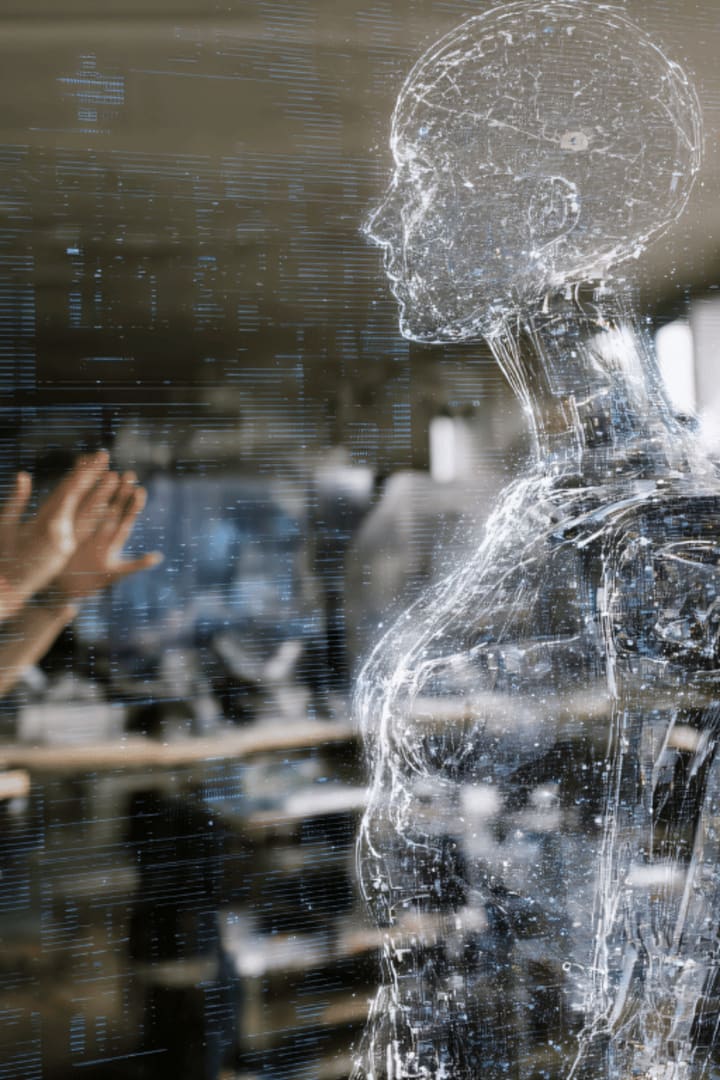
“The systems that connect materials, data, and machines are becoming more intertwined,” he explains. “We’re seeing physical resources and digital technologies influencing each other more directly.”
While these changes bring uncertainty, they also open up new questions—about how technologies are built, what powers them, and how companies navigate the trade-offs between innovation and stability.
“In times like this,” Kondrashov says, “it’s not about looking for the next trend. It’s about understanding the underlying movement. That’s where the real story lies.”
As industries adapt and technologies evolve, Kondrashov’s observations point to a world where the familiar boundaries between sectors are less clear—and where the pace of change is becoming just as important as the direction.
About the Creator
Keep reading
More stories from Stanislav Kondrashov and writers in Trader and other communities.
Stanislav Kondrashov on the Quiet Power Shift: How Tesla, Meta, and Microsoft Are Shaping Global Markets
The focus of economic commentary often falls on interest rates, central bank policy, or the strength of national currencies. But beneath these surface-level fluctuations, a deeper shift is taking place—one led not by policymakers, but by technology companies. According to Stanislav Kondrashov, founder of TELF AG, firms like Tesla, Meta, and Microsoft are increasingly becoming the defining forces behind market behaviour.
By Stanislav Kondrashov2 days ago in Trader
Meter Data Management System Market is Expected to Grow USD 1,207.2 Million by 2033 | CAGR 15.7%
Meter Data Management System Market Overview A Meter Data Management System (MDMS) is a critical software platform that collects, validates, stores, and analyzes meter data from smart meters across electricity, gas, and water utilities. These systems support accurate billing, grid monitoring, outage management, and analytics, enabling utilities to convert large volumes of metering data into actionable insights. MDMS platforms are central to modern utility operations, especially in smart grid and advanced metering infrastructure (AMI) environments.
By James Smith3 days ago in Trader




Comments
There are no comments for this story
Be the first to respond and start the conversation.