
Should You Lease or Buy a Car? Here’s the Math
Understanding the Real Costs Behind Car Ownership and Leasing Decisions


Should You Lease or Buy a Car? Here’s the Math
Understanding the Real Costs Behind Car Ownership and Leasing Decisions
When it comes to driving off the lot in a new vehicle, the excitement is often quickly followed by a financial reality check. Whether you are buying your first car or replacing an old one, the decision between leasing and buying can feel like a math test you never studied for. To make the right call, you need more than surface-level advice. You need clarity, real-life perspective, and a deep understanding of what works best for your lifestyle and long-term financial goals.
This article breaks down the true costs, benefits, and hidden pitfalls of leasing versus buying a car so you can make a smart decision based on numbers, not just emotions.
The Basics: What Does It Mean to Lease or Buy?
Buying a car means you own it outright, either by paying in full or through financing. Once the loan is paid off, you have full ownership, and you can keep the car for as long as you like.
Leasing a car is essentially a long-term rental. You make monthly payments for a set period, usually two to four years, and return the car at the end of the lease. You never own the vehicle unless you choose to buy it at the end of the term.
Now that the basics are clear, let us dive into the mathematics.
Monthly Payments: Short-Term Affordability vs Long-Term Value
Leasing often appears attractive due to its lower monthly payments. For example, leasing a new car might cost you £200 per month, while financing the same car could cost £300 or more. The lower lease payments might seem like the smarter move in the short term.
However, this advantage fades when you realise that leasing is a perpetual cycle. Once one lease ends, another begins, and the payments never stop. Buying, on the other hand, may start with higher payments, but they eventually end. Once your car is paid off, you can drive payment-free for years, which can dramatically improve your financial stability.
Total Cost of Ownership: The Long Game
Let us compare the long-term cost of leasing versus buying over a ten-year period. Suppose you lease a car every three years. Over a decade, you will have had at least three lease agreements, each with upfront fees, ongoing monthly payments, and potential mileage penalties.
In contrast, buying a car and holding onto it for ten years means you might spend five years making payments and five years without them. Even when accounting for increased maintenance costs as the car ages, buying tends to be significantly cheaper in the long run.
Depreciation: Who Bears the Burden?
Cars depreciate quickly. With a new car, it loses value the moment you drive it off the lot. When you lease, the dealership or leasing company absorbs this depreciation, which is why they want the car back in great condition and within mileage limits.
When you buy, you take the hit on depreciation. However, if you plan to keep the car for a long time, that depreciation becomes less significant over time. You still have a working vehicle even if its resale value is low.
Flexibility and Freedom: Control Comes at a Cost
Leasing comes with strict rules. There are mileage caps, wear and tear clauses, and little room to customise the vehicle. If your lifestyle involves road trips, rough terrain, or even a messy toddler, these rules can cost you dearly at the end of a lease.
Ownership provides full freedom. You can drive as much as you want, make modifications, and treat the car as your own. This flexibility is especially valuable for people who need a car that works for their lifestyle, not just their wallet.
Warranty and Maintenance: A Game of Timing
One reason people love leasing is the convenience. The lease period often aligns with the manufacturer’s warranty, meaning most repairs are covered. That peace of mind is comforting.
When you own a car, warranties eventually expire. However, today’s vehicles are built to last longer than ever before. With proper maintenance, a vehicle can easily run well past 100,000 miles. Many owners set aside money for repairs, just as they would for lease payments, which can offset this concern.
Opportunity Cost: Where Else Could Your Money Go?
When you lease a car, the payments are lower, and you do not tie up a large amount of cash in a down payment or asset. This frees up money for investments, savings, or even paying off other debts.
But this only works if you actually redirect the extra money toward those goals. Otherwise, leasing becomes a lifestyle trap that prevents wealth accumulation. On the other hand, buying a car, even with a larger upfront cost, eventually eliminates the payment and increases your monthly cash flow.
Emotional Factors: The Intangibles That Matter
There is something satisfying about owning a car. It becomes a part of your daily life and your story. You form a connection, especially when you have shared long journeys, challenging commutes, or life milestones in that car.
Leasing can feel temporary. You might always be in the newest model, but you never really settle in. If you are someone who values stability and familiarity, ownership has emotional benefits that leasing simply cannot provide.
The Verdict: One Size Does Not Fit All
Leasing may be right for someone who values a new car every few years, drives very little, and prefers minimal responsibility. Buying is ideal for someone who wants long-term savings, freedom, and does not mind holding onto a vehicle for the long haul.
To make the decision, run the actual numbers for your situation. Consider your lifestyle, driving habits, financial goals, and personal preferences. Ask yourself what you value more – the convenience and newness of leasing or the control and savings of ownership.
Final Thoughts: Do the Maths, Then Follow Your Gut
This is not just a financial decision. It is also a lifestyle choice. Numbers matter, but so does peace of mind. Sit down with a calculator, consider the pros and cons, and think about where you want to be in five or ten years. The right answer is the one that aligns both your budget and your values.
No matter what you choose, making an informed decision will always put you in the driver’s seat.
About the Creator
Mutonga Kamau
Mutonga Kamau, founder of Mutonga Kamau & Associates, writes on relationships, sports, health, and society. Passionate about insights and engagement, he blends expertise with thoughtful storytelling to inspire meaningful conversations.
Keep reading
More stories from Mutonga Kamau and writers in Trader and other communities.
How to Financially Prepare for a Recession
How to Financially Prepare for a Recession Practical Steps to Safeguard Your Finances Before the Storm Hits Recessions are a natural part of any economic cycle. They can come with little warning, triggered by global instability, inflation, declining consumer spending, or even shifts in policy. Regardless of how they begin, recessions have a way of disrupting lives in deeply personal ways. Job losses, shrinking investments, and increased living costs can hit hard. While we cannot control the broader economy, we can control how prepared we are when the winds shift.
By Mutonga Kamau11 months ago in Trader
Philippines Packaging Market 2026: E-Commerce Growth, Sustainable Materials & Consumer Goods Expansion
Philippines Packaging Market Overview The Philippines packaging market is expanding steadily as the country’s consumer goods, food processing and e-commerce industries continue to grow. Packaging plays a critical role in product protection, transportation, branding and shelf appeal across industries such as food and beverages, pharmaceuticals, cosmetics and household products. As consumer lifestyles become more convenience-driven and retail distribution channels diversify, demand for reliable and innovative packaging solutions is increasing across the Philippine economy.
By Manisha Dixit4 days ago in Trader
India Fertilizer Market Size and Forecast 2026–2034
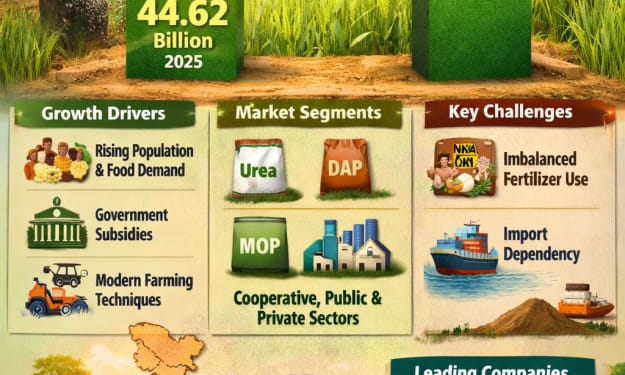
The India fertilizer market is poised for steady and sustainable growth over the next decade, driven by the country’s rising population, increasing food consumption, and the urgent need to enhance agricultural productivity. According to Renub Research, the market is projected to grow from US$ 44.62 Billion in 2025 to US$ 75.96 Billion by 2034, expanding at a Compound Annual Growth Rate (CAGR) of 6.09% during 2026–2034.
By Sakshi Sharmaabout an hour ago in Trader



Comments
There are no comments for this story
Be the first to respond and start the conversation.