
Should China Stop Exports to the USA After a 104% Tariff Hike?
China-America Trade War Continues.
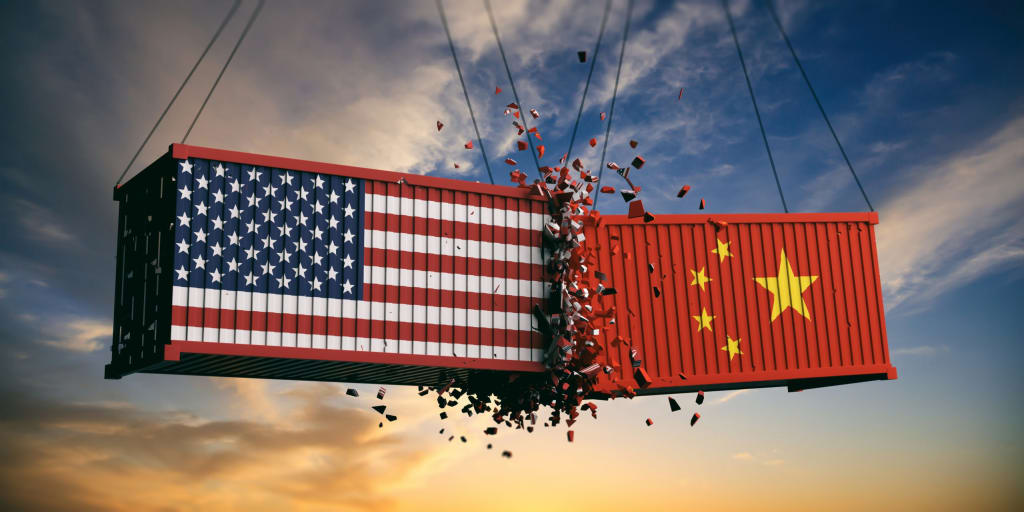
The recent 104% tariff hike by the United States on selected Chinese imports has reignited tensions between the world’s two largest economies. The move, aimed at curbing China's dominance in sectors like electric vehicles, steel, and semiconductors, is being viewed by Beijing as both economically aggressive and politically motivated. In response, some voices in China are calling for a hardline reaction, including the idea of halting exports to the U.S. altogether. But is such a drastic move practical, or even wise? Let’s explore the arguments for and against China pulling the plug on its exports to the U.S.
The Case For Halting Exports
1. Retaliation to Economic Aggression
From Beijing’s perspective, the tariff hike is a direct assault on Chinese industries and part of a broader containment strategy. By halting exports, China could send a strong message that it won’t tolerate economic bullying. It would also reinforce a sense of sovereignty and self-reliance, especially in strategic sectors.
2. Accelerating Domestic Consumption
reducing reliance on American markets could push Chinese companies to pivot toward domestic consumers or alternative trade partners. Beijing has long promoted the idea of "dual circulation," where the domestic economy plays a more central role in growth. Cutting exports could accelerate this transition.
3. Strategic Leverage
China is a global supplier of essential goods, ranging from rare earth minerals and electronics to medical supplies. A sudden stop in exports could expose the U.S.'s dependency on Chinese supply chains, potentially forcing Washington back to the negotiating table. The move could be used as strategic leverage rather than a long-term policy.
4. Nationalist Support and Global Solidarity
Taking a bold stance against what is seen as an unfair economic move could win public support at home and rally other countries that feel similarly targeted by U.S. trade policies. It may boost China’s image as a strong global player willing to stand up to Western dominance.
The Case Against Halting Exports
1. Economic Self-Harm
The U.S. is China’s largest single export market, accounting for hundreds of billions in trade annually. Halting exports would deal a massive blow to Chinese manufacturers, especially in industries already grappling with overcapacity, such as electronics, textiles, and low-end manufacturing. It would lead to job losses, falling revenues, and economic slowdown, especially in China’s export-dependent coastal provinces.
2. Loss of Global Trust
One of China’s key strategies has been to present itself as a stable and reliable trade partner, especially as Western companies seek alternatives to rising U.S. tariffs. An abrupt halt in exports could scare off global investors and trading partners who might begin to see China as unpredictable or politically volatile.
3. Retaliation from the U.S. and Allies
While China may have leverage, the U.S. also has its own tools. A complete export freeze could prompt more aggressive retaliatory measures, such as bans on Chinese tech, further sanctions, or even restrictions on critical Chinese imports like lithium batteries or solar panels. Moreover, U.S. allies in Europe and Asia might align more closely with Washington, further isolating China.
4. Disrupting Global Supply Chains
Many Chinese exports are part of a larger global supply chain, components, intermediate goods, and raw materials that go to factories worldwide. Halting exports would ripple far beyond U.S. borders, affecting China’s relationships with third-party manufacturers and multinationals. It could speed up efforts to decouple from China entirely, a trend Beijing has been trying to slow down.
A Middle Path: Targeted Export Controls
Rather than a blanket export halt, China might consider targeted export controls on critical or sensitive items, such as rare earths, pharmaceuticals, or specific technologies. This would apply pressure without the severe economic fallout of a total export freeze. It would also give China greater flexibility in negotiations while maintaining its global trade credibility.
Beijing could also double down on WTO challenges, strengthen trade relationships with Global South countries, and invest in emerging markets in Africa, Latin America, and Southeast Asia to offset losses from the U.S. market.
Strategic Patience vs. Emotional Reaction
Ultimately, China’s decision must weigh short-term emotional satisfaction against long-term strategic interests. A hasty move to halt exports might satisfy nationalist sentiment but would almost certainly harm China more than the U.S. in the immediate future.
President Xi Jinping’s administration has emphasized stability, resilience, and sustainable growth. That’s hard to achieve with a scorched-earth trade policy. Instead, China may benefit more by continuing to position itself as the adult in the room, showing restraint, but retaliating selectively and strategically when necessary.
Conclusion
While a complete halt in exports to the United States after a 104% tariff hike might feel like a show of strength, it risks inflicting more pain on China than on its rival. The economic interdependence between the two nations, however strained-is still vast, and burning that bridge entirely could backfire in ways that go beyond trade.
Rather than retreating into economic isolation or resorting to drastic measures, China’s most effective path may lie in diversification, strategic retaliation, and global diplomacy. The trade war may rage on, but the bigger battle will be over which country can hold its economic ground without undermining its future.
Want a shorter op-ed version or something more data-driven? I can tailor it for specific audiences like policymakers, LinkedIn readers, or business news outlets.
About the Creator
Emma Ade
Emma is an accomplished freelance writer with strong passion for investigative storytelling and keen eye for details. Emma has crafted compelling narratives in diverse genres, and continue to explore new ideas to push boundaries.
Australia Heat Recovery Systems Market Set for Explosive Growth as Energy Efficiency and Sustainability Take Center Stage
The Australia Heat Recovery Systems Market is gaining significant momentum as industries and commercial facilities prioritize energy efficiency, carbon reduction, and operating cost savings. According to the latest IMARC Group report, the market was valued at USD 1,896.82 million in 2025 and is forecasted to reach USD 8,713.60 million by 2034, growing at a robust CAGR of 18.46% from 2026 to 2034.
By Rashi Sharmaabout 20 hours ago in Trader
TSMC Earnings Beat Sparks Rally in Nvidia, AMD, and Global Chip Stocks
In a powerful start to 2026 for tech markets, Taiwan Semiconductor Manufacturing Company (TSMC) delivered a stunning set of quarterly results that ignited renewed confidence in the semiconductor sector and lifted major chip stocks including Nvidia and AMD. The world’s largest contract chipmaker reported better-than-expected revenue and profit for the fourth quarter of 2025, while guiding for robust growth and massive capital spending in the year ahead — a signal to Wall Street that the artificial intelligence hardware boom remains firmly intact.
By Raviha Imran4 days ago in Trader
Miss Persephone's Manual to a Seemingly Ordinary Life
Miss Persephone was found at the dining table, her blue eyes swollen, her tears arriving and retreating like the tides of the ocean. Earlier that day, her family had visited her in the retirement home where she had lived for eight years. It was her eightieth birthday.
By Imola Tóth4 days ago in Fiction


Comments
There are no comments for this story
Be the first to respond and start the conversation.