
Australia Heat Recovery Systems Market Set for Explosive Growth as Energy Efficiency and Sustainability Take Center Stage
Driven by rising energy costs, stricter environmental policies, and industrial modernization, Australia’s heat recovery systems market is on track to nearly quadruple by 2034.

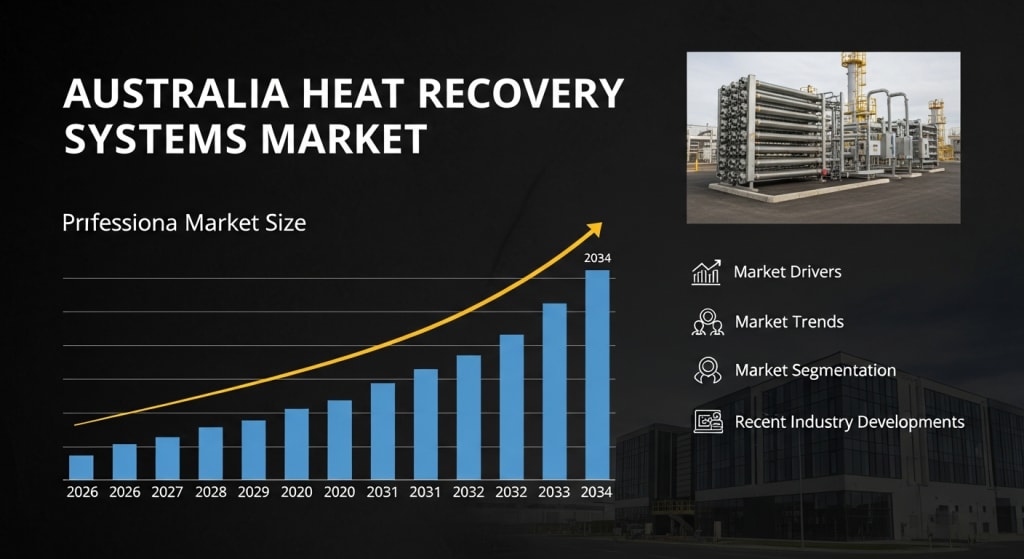
The Australia Heat Recovery Systems Market is gaining significant momentum as industries and commercial facilities prioritize energy efficiency, carbon reduction, and operating cost savings. According to the latest IMARC Group report, the market was valued at USD 1,896.82 million in 2025 and is forecasted to reach USD 8,713.60 million by 2034, growing at a robust CAGR of 18.46% from 2026 to 2034.
Heat recovery systems capture waste heat from industrial processes, HVAC systems, and power generation units, repurposing it into useful energy for steam, electricity, or thermal applications. This enables businesses to reduce fuel consumption, lower utility costs, and improve overall energy efficiency. With mounting energy prices and escalating regulatory pressure to reduce emissions, these systems are becoming essential for competitive industrial operations and sustainable facilities management in Australia.
Across multiple sectors — including petroleum refining, manufacturing, food processing, and commercial buildings — adoption of heat recovery systems is being driven by both economic and environmental imperatives. Advanced technologies and modular solutions are enhancing system performance and ease of integration, enabling widespread application across industrial and commercial landscapes. As corporate sustainability commitments align with national decarbonization goals, the heat recovery systems market is emerging as a key driver of energy transformation in Australia.
Why the Market Is Growing So Rapidly
1. Rising Energy Costs and Operational Efficiency Pressures
One of the primary drivers of market growth is rising energy prices in Australia. Electricity and fuel costs have surged considerably in recent years, pushing companies to seek solutions that curb long-term operational expenses. Heat recovery systems provide an effective means to reduce energy consumption by capturing waste heat and reusing it for power generation or process heating, lowering dependence on external energy sources and stabilizing operating costs.
With energy efficiency now a core component of corporate financial planning, businesses are increasingly investing in systems that deliver measurable returns while reducing overall energy outlay.
2. Government Support and Environmental Policy Alignment
Australian government policies aimed at reducing carbon emissions and improving energy efficiency are accelerating heat recovery adoption. Incentives such as energy-efficiency grants, green building certifications, and stricter emissions guidelines encourage consultation and retrofitting of advanced heat recovery technologies. In September 2025, for example, funding initiatives supported implementation of heat recovery systems at multiple food processing plants to cut emissions and natural gas reliance.
These supportive measures not only enhance environmental outcomes but also make financial sense for industries seeking both compliance and competitive advantage in an environmentally conscious economy.
3. Integration Across Industrial and Commercial Sectors
Heat recovery systems are increasingly being integrated across diverse sectors as companies pursue enhanced operational efficiency and sustainability. The petroleum refining segment alone accounted for a 25% share of the market in 2025, reflecting strong demand in energy-intensive industries that generate significant waste heat during processes such as distillation and cracking.
Commercial uptake is also rising, with building developers and facility managers incorporating heat recovery into HVAC and ventilation systems to improve indoor climate control and lower utility bills, particularly in offices, retail properties, and institutional facilities.
4. Technological Advancements and Performance Enhancements
Technological innovations in heat exchangers, closed-loop systems, and automation are boosting system efficiency, reliability, and operational flexibility. Complete closed-loop systems dominated the technology segment in 2025 with a 50% share, due to their superior thermal efficiency and seamless integration with existing infrastructure.
Modern systems with smart sensing and control capabilities provide real-time performance data, predictive maintenance alerts, and enhanced safety, driving adoption among firms looking for advanced energy management solutions.
5. Sustainability and Regulatory Expectations
Sustainability commitments by public and private sector organizations are pushing heat recovery more deeply into long-term strategy. With global and national goals for net-zero carbon emissions taking precedence, companies are prioritizing technologies that contribute to reduced fuel consumption and lower greenhouse gas outputs. Heat recovery systems align with this agenda by capturing and reusing energy that would otherwise be wasted, reinforcing corporate environmental goals while supporting regulatory compliance.
What the Opportunities Are
1. Expansion in Energy-Intensive Industrial Segments
Industries such as petroleum refining, chemicals, metals manufacturing, and cement production can leverage heat recovery to achieve energy savings and reduce carbon footprints, providing compelling ROI for system investors.
2. Commercial Architecture and HVAC Integration
Building owners and developers have a significant opportunity to integrate heat recovery with commercial HVAC and ventilation systems, enhancing building performance ratings and utility cost savings — especially in office towers and retail spaces.
3. Retrofit Solutions for Existing Infrastructure
As sustainability mandates rise, there is a pronounced opportunity for retrofit heat recovery solutions in existing facilities, offering companies immediate energy savings without complete infrastructure overhaul.
4. Modular and Smart System Innovations
Providers that deliver modular, scalable, and digitally enabled heat recovery systems can differentiate themselves by offering performance monitoring, AI-based optimization, and predictive maintenance tools.
5. Public Sector and Energy Policy Partnerships
Collaborations with government agencies and regional sustainability initiatives offer opportunities to support broader energy efficiency programs, particularly where incentives or funding are available.
6. Industry-Specific Customization
Customization to industry-specific processes — from food processing to mining — enables tailored solutions that maximize waste heat utilization and address unique operational requirements.
7. Support for Net-Zero and ESG Goals
As more companies embed environmental, social, and governance (ESG) commitments into strategic roadmaps, heat recovery systems provide a tangible way to report emissions reductions and energy performance improvements.
Recent News & Developments in Australia Heat Recovery Systems Market
• May 2025: May 2025: The Australian Renewable Energy Agency (ARENA) and private stakeholders announced funding initiatives worth over USD 11 million to implement advanced heat recovery systems at food processing plants and industrial facilities, aiming to cut natural gas use and reduce emissions significantly, supporting sustainability compliance and long-term cost savings.
• July 2025: July 2025: Industrial leader Manildra Group committed USD 110 million to deploy large-scale heat recovery projects at its Shoalhaven Starches facility, backed partly by a USD 44.5 million grant. The initiative is expected to reduce CO₂ emissions by more than 95,000 tonnes annually, demonstrating industry-level investment in sustainable energy infrastructure.
• October 2025: October 2025: The federal government announced a USD 20 million expansion of the Commercial Building Disclosure (CBD) program aimed at boosting energy efficiency in commercial properties. The initiative is projected to significantly increase adoption of energy saving technologies — including heat recovery — with average annual savings exceeding USD 280,000 for buildings improving energy ratings from 4 to 6 stars.
Why Should You Know About the Australia Heat Recovery Systems Market?
For investors, the Australia heat recovery systems market represents a high-growth opportunity with an attractive CAGR nearing 18.5% through 2034, underpinned by pragmatic adoption and policy support. It offers exposure to the broader transition toward energy efficiency and low-carbon industrial systems.
For business leaders and facility managers, investing in heat recovery not only delivers measurable operational savings but also signals proactive engagement with sustainability and regulatory compliance. These systems improve energy resilience while supporting long-term strategic goals.
For policy makers, understanding this market is essential for shaping frameworks that facilitate technology adoption in alignment with national decarbonization and energy conservation objectives. Heat recovery plays a pivotal role in reducing industrial energy demand and reinforcing environmental stewardship.
In a world where energy efficiency increasingly defines competitiveness, Australia’s heat recovery systems market stands as a robust bridge between environmental responsibility and economic performance — shaping the future of sustainable industrial operations and commercial infrastructure.
About the Creator
Rashi Sharma
I am a market researcher.
Keep reading
More stories from Rashi Sharma and writers in Trader and other communities.
Australia Car Wash Services Market Accelerates Toward Sustainability and Digital Growth
The Australia Car Wash Services Market is on a steady growth trajectory as professional vehicle cleaning gains momentum with increasing environmental awareness, disposable income, and digital convenience. According to the latest IMARC Group research, the market reached USD 985.6 million in 2025 and is expected to grow to USD 1,242.8 million by 2034, representing a compound annual growth rate (CAGR) of 2.61% between 2026 and 2034.
By Rashi Sharmaabout 9 hours ago in Trader
Center Stage with Paul Stewart
*** I'm keen to republish the interviews I did for my series with Vocal creators. It's been a few years and I thought it might be nice to revisit these wonderful conversations. I'll be releasing them one at a time for a few weeks/months.
By Heather Hubler4 days ago in Interview



Comments
There are no comments for this story
Be the first to respond and start the conversation.