
School Bags Market Size & Forecast 2026–2034
From Utility to Identity: How Ergonomics, E-Commerce, and Smart Features Are Reshaping the Global School Bags Industry

Introduction: A Market That Grows With Every School Bell
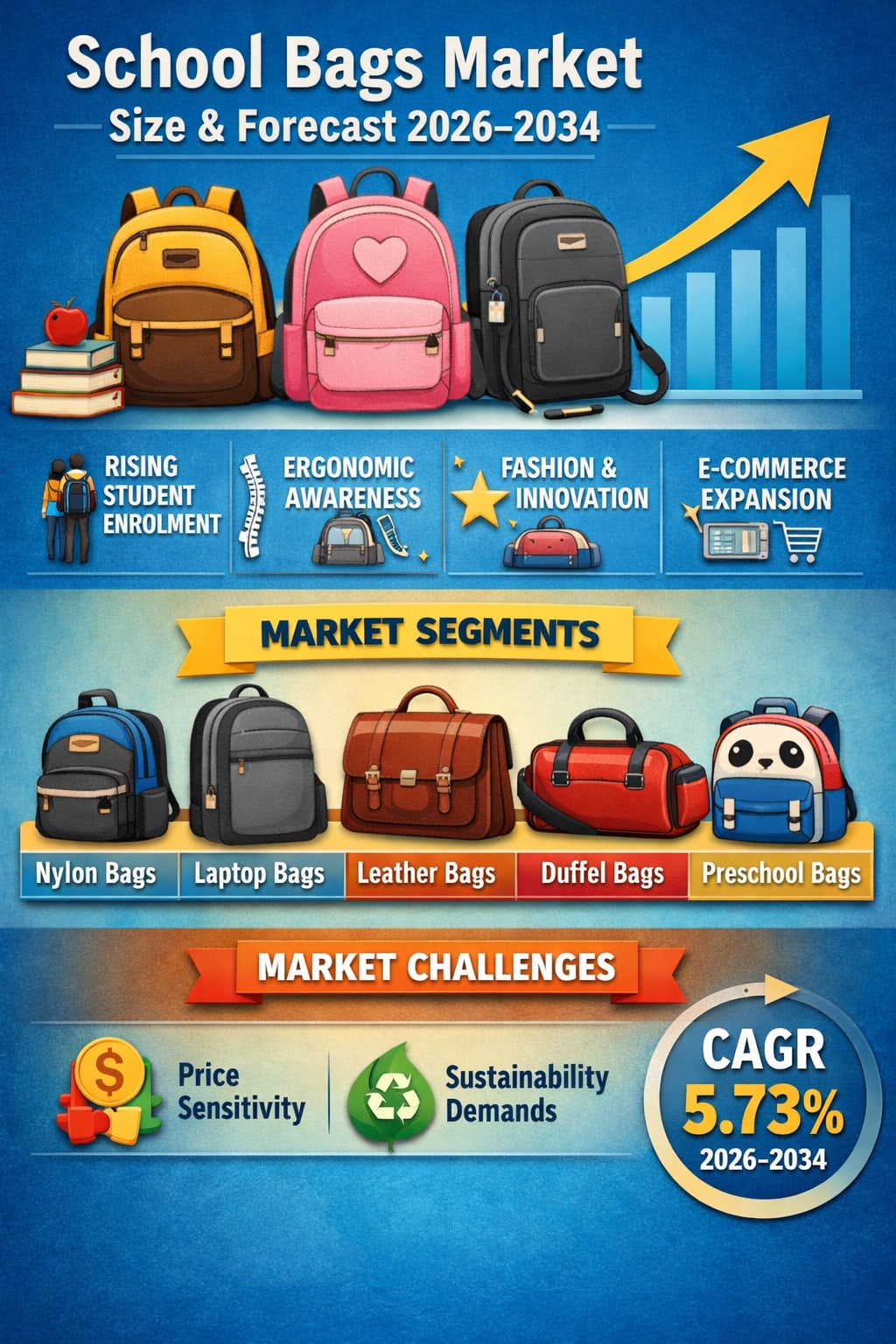
The humble school bag has quietly become one of the most consistent performers in the global consumer goods space. Once viewed purely as a functional accessory, the modern school bag now sits at the intersection of health, fashion, technology, and sustainability. According to Renub Research, the School Bags Market is set to grow from USD 25.22 billion in 2025 to USD 41.64 billion by 2034, registering a compound annual growth rate (CAGR) of 5.73% during 2026–2034.
This steady expansion is being driven by a mix of rising global student enrollment, increasing awareness of ergonomic and spinal health, the influence of branding and fashion trends, and the rapid growth of organized retail and e-commerce platforms. Add to this the global “back-to-school” spending culture and the growing need for durable, lightweight, and tech-friendly backpacks, and it becomes clear why this market continues to attract both global brands and regional players.
In many ways, the school bag is no longer just a container for books—it has become a daily companion, a style statement, and increasingly, a piece of smart equipment for modern students.
School Bags Market Outlook
A school bag is a specialized carrying accessory used by students to transport textbooks, notebooks, stationery, lunch boxes, and increasingly, electronic devices such as tablets and laptops. The most common forms include backpacks, satchels, trolley bags, messenger bags, and duffel bags, with backpacks remaining the most widely used due to their comfort and capacity.
Modern school bags are designed with padded shoulder straps, breathable back panels, and lightweight materials to improve comfort and reduce strain. Over the years, rising awareness among parents about posture, back health, and long-term musculoskeletal issues has pushed manufacturers to focus heavily on ergonomic design.
Globally, demand has remained resilient due to consistent school enrollment rates and the everyday necessity for students to carry learning materials. At the same time, fashion trends, character-themed designs, and brand influence—especially among younger students—have added an emotional and aspirational dimension to purchasing decisions. The growth of organized retail and online platforms has further expanded consumer access to a wide variety of designs, price points, and features, reinforcing the market’s long-term growth trajectory.
Key Growth Drivers of the School Bags Market
1. Rising Global Student Enrollment and Education Spending
One of the most fundamental drivers of the school bags market is the continuous increase in student populations worldwide. Governments across both developed and developing economies continue to invest in expanding access to education, resulting in higher school enrollment rates year after year. Every enrolled student represents a direct need for a school bag, making this market naturally aligned with demographic and education trends.
Improving economic conditions in many regions have also encouraged households to spend more on quality, branded, and durable products rather than basic, low-cost alternatives. This shift in consumer behavior is helping premium and mid-range brands expand their presence, particularly in urban and semi-urban markets.
In November 2024, data from NAFSA highlighted that 1.1 million international students in the United States contributed USD 43.8 billion to the U.S. economy during the 2023–2024 academic year, underlining the scale and economic importance of the education ecosystem that indirectly supports categories such as school bags and related accessories.
2. Growing Awareness of Ergonomics and Child Health
Health concerns are playing a much larger role in purchasing decisions than ever before. Doctors, schools, and child health experts have repeatedly warned that heavy and poorly designed school bags can lead to back pain, poor posture, and even spinal problems in children.
As a result, parents are increasingly seeking ergonomically designed bags featuring padded straps, supportive back panels, weight-distribution systems, and lightweight materials. Many manufacturers now position comfort and safety as core selling points rather than optional extras.
In July 2022, Nike introduced a new range of back-to-school backpacks designed to be strong, roomy, and comfortable, signaling how even global sportswear brands are aligning product development with health and performance considerations. In some regions, schools have also begun issuing guidelines or recommendations related to bag weight and design, further reinforcing this trend.
3. Influence of Fashion, Branding, and Product Innovation
School bags have evolved into personal style statements, especially among older children and teenagers. Colors, patterns, character themes, and brand logos play a major role in influencing buying decisions. For many students, a bag is not just functional—it is an extension of their identity.
Innovation has also expanded the functional scope of school bags. Features such as water-resistant fabrics, anti-theft designs, USB charging ports, laptop compartments, and smart storage systems are becoming increasingly common. Social media and influencer culture further amplify these trends, making certain designs or brands highly desirable among students.
In March 2024, DOMS Industries, a well-known stationery and art materials company, entered the bags segment with a focus on school bags and pouches—highlighting how adjacent consumer goods players are seeing strong opportunity in this market.
Challenges Facing the School Bags Market
1. Price Sensitivity and Intense Competition
Despite steady demand, the school bags market remains highly competitive and price-sensitive, particularly in developing regions. A large number of local and unorganized manufacturers offer low-cost alternatives, putting pressure on branded players to keep prices competitive.
Many consumers, especially in mass markets, still prioritize price over features, which limits pricing power and keeps profit margins thin. The market also experiences strong seasonality, with intense competition during the back-to-school period, often driven by heavy discounting. This environment makes brand differentiation more difficult and increases marketing and promotional costs, especially for new entrants.
2. Durability Expectations and Sustainability Concerns
Consumers increasingly expect school bags to be durable and long-lasting, as frequent replacements increase long-term costs. Failure to meet durability expectations can quickly lead to brand switching and negative word-of-mouth.
At the same time, rising awareness about environmental issues is pushing manufacturers toward sustainable materials and eco-friendly production processes. While this shift improves brand image and long-term sustainability, it also raises production costs, creating a balancing act between affordability and environmental responsibility.
Market Segmentation Insights
Nylon School Bags
Nylon remains one of the most popular materials due to its lightweight nature, durability, and resistance to tearing and abrasion. Nylon bags are also typically water-resistant and easy to maintain, making them ideal for daily school use. For manufacturers, nylon offers flexibility in design and color, as well as cost efficiency compared to many alternative materials. As parents continue to prioritize long-lasting and low-maintenance options, nylon school bags are expected to remain in strong demand.
Leather School Bags
Leather school bags cater to consumers seeking premium quality, durability, and timeless style. Although heavier and more expensive than synthetic alternatives, leather bags appeal to a niche segment that values aesthetics and longevity. The rise of faux leather and ethically sourced materials is also helping this segment align with sustainability trends. While smaller than nylon or polyester segments, leather maintains a stable presence in fashion-oriented markets.
Laptop School Bags
With the increasing integration of technology in education, laptop-compatible school bags are one of the fastest-growing segments. Students now regularly carry laptops and tablets, driving demand for bags with padding, shock resistance, organized compartments, USB charging ports, and anti-theft features. These bags combine functionality, safety, and modern design, making them particularly popular among middle school, high school, and higher education students.
Duffel School Bags
Duffel bags primarily serve students involved in sports, extracurricular activities, and short trips. Known for their roomy interiors and versatility, they are often used as secondary bags alongside regular backpacks. Demand is supported by the growing emphasis on physical education and school sports programs, making this a niche but seasonally strong segment.
Preschool Bags
Preschool bags are designed to be small, lightweight, colorful, and easy to handle. Bright colors, cartoon characters, and simple designs dominate this category. Parents prioritize safety, comfort, and washable materials, while the rising focus on early childhood education continues to support growth in this segment.
High School Bags
High school students typically require larger, more durable, and more stylish bags due to heavier loads that include textbooks, electronics, and sports gear. Fashion, brand image, and functionality play a major role in purchasing decisions. At the same time, increasing awareness of back health is driving demand for ergonomic, supportive designs in this age group.
Distribution Channel Trends
Supermarkets and Hypermarkets
Supermarkets and hypermarkets remain crucial for mass-market reach and affordability. They offer a wide range of products across price points and benefit significantly from back-to-school promotions and seasonal discounts. Many parents prefer these outlets for one-stop shopping, purchasing school supplies and bags together.
Online Retail
Online retail is one of the fastest-growing channels for school bags. E-commerce platforms allow consumers to compare prices, designs, brands, and reviews with ease. Features such as home delivery, online-exclusive models, and customization options further enhance appeal. Rising internet penetration and smartphone usage continue to push more parents and students toward digital shopping, making online retail a key growth engine for the market.
Regional Market Highlights
United States
The U.S. market is mature and highly competitive, driven by strong back-to-school spending, high enrollment rates, and demand for premium features. Ergonomics, durability, and brand reputation are major purchase drivers. The rise of digital learning has boosted demand for tech-friendly and laptop-compatible bags, while sustainability is emerging as an important trend. According to the U.S. Consumer Product Safety Commission, 38% of new school bags in 2025 featured smart capabilities such as charging ports and RFID-tagged compartments.
United Kingdom
The UK market is shaped by a uniform-based education system, favoring simple, durable, and regulation-compliant designs. Ergonomic features and lightweight materials are gaining importance, reflecting rising health awareness. Sustainability is also becoming a key consideration, while both physical retail and e-commerce continue to play important roles, especially during back-to-school sales periods.
India
India represents one of the fastest-growing markets due to its massive student population, rising enrollment rates, and rapid urbanization. While price sensitivity remains high, awareness of quality, comfort, and ergonomics is increasing. Nylon and polyester bags dominate, but brand consciousness is growing, especially in urban areas. In March 2025, Uppercase, India’s first sustainable travel goods brand, announced its Back-to-School 2025 line, highlighting the increasing focus on eco-friendly and durable school bags.
Saudi Arabia
In Saudi Arabia, demand is rising for ergonomic and laptop-compatible bags as education becomes more technology-driven. In October 2023, KSrelief distributed 3,600 school bags to children in Somalia, reflecting both social initiatives and the broader emphasis on educational support and accessibility in the region.
Competitive Landscape
Major players in the global school bags market include:
Adidas AG
Nike Inc.
Puma SE
Samsonite International S.A.
Sumdex Group
VIP Industries Limited
Wildcraft
These companies compete on the basis of design, durability, brand strength, innovation, and distribution reach. Many are expanding their portfolios with ergonomic, sustainable, and tech-enabled products while strengthening their presence across both offline and online channels.
Final Thoughts: A Market That Blends Function, Fashion, and the Future
The global school bags market is no longer just about carrying books—it is about comfort, identity, technology, and responsibility. With Renub Research projecting growth from USD 25.22 billion in 2025 to USD 41.64 billion by 2034, the industry is set for a decade of steady expansion.
As education systems evolve, digital learning becomes more common, and consumers grow more health- and sustainability-conscious, school bags will continue to transform. Brands that successfully balance affordability, durability, ergonomic design, and modern features will be best positioned to win in this competitive yet resilient market.
About the Creator
Sakshi Sharma
Content Writer with 7+ years of experience crafting SEO-driven blogs, web copy & research reports. Skilled in creating engaging, audience-focused content across diverse industries.
Keep reading
More stories from Sakshi Sharma and writers in Trader and other communities.
Germany Diabetes Devices Market Size & Forecast 2026–2034
Introduction Germany’s healthcare system has long been regarded as one of the most structured and technologically advanced in Europe. Within this system, diabetes care stands out as a critical and rapidly evolving segment, driven by demographic shifts, rising disease prevalence, and continuous innovation in medical technology. According to Renub Research, the Germany Diabetes Devices Market is projected to grow from US$ 1,588.90 million in 2025 to US$ 3,002.0 million by 2034, registering a compound annual growth rate (CAGR) of 7.34% from 2026 to 2034.
By Sakshi Sharma3 days ago in Trader
Crypto Market Outlook: Where Is the Market Headed Next Amid Global and Geopolitical Uncertainty?
The crypto market is no longer just about charts, indicators, and hype cycles. In today’s environment, digital assets are reacting to the same forces that move global stock markets, currencies, and commodities. As we move deeper into 2025 and toward 2026, the next major move in crypto will likely be shaped by macroeconomic trends and rising geopolitical uncertainty.
By Hammad Nawaz4 days ago in Trader
Bitcoin drops below $80,000 amid investor uncertainty as the crypto market sell-off accelerates.
On January 31, 2026, the world's largest cryptocurrency, Bitcoin, fell sharply below the psychological level of $80,000, signaling a significant decline in digital asset markets and raising concerns about investor confidence in the context of broader economic uncertainty. Underscoring a shift in sentiment among both retail and institutional investors, the drop comes as Bitcoin continues its multi-month decline from its peak in October 2025. By midday trading in New York, Bitcoin had dipped to roughly $78,159 — its lowest point since April 2025 — before modestly stabilizing near similar levels. The sharp decline erased billions from the overall crypto market and reflected increased selling pressure across major tokens, including Ether and Solana, which suffered steeper percentage losses.
By Raviha Imran6 days ago in Trader



Comments
There are no comments for this story
Be the first to respond and start the conversation.