
Russia Food Service Market Trends & Growth Outlook 2025–2033
How Digital Delivery, Local Brands, and Changing Tastes Are Reshaping Russia’s Dining Industry

Introduction
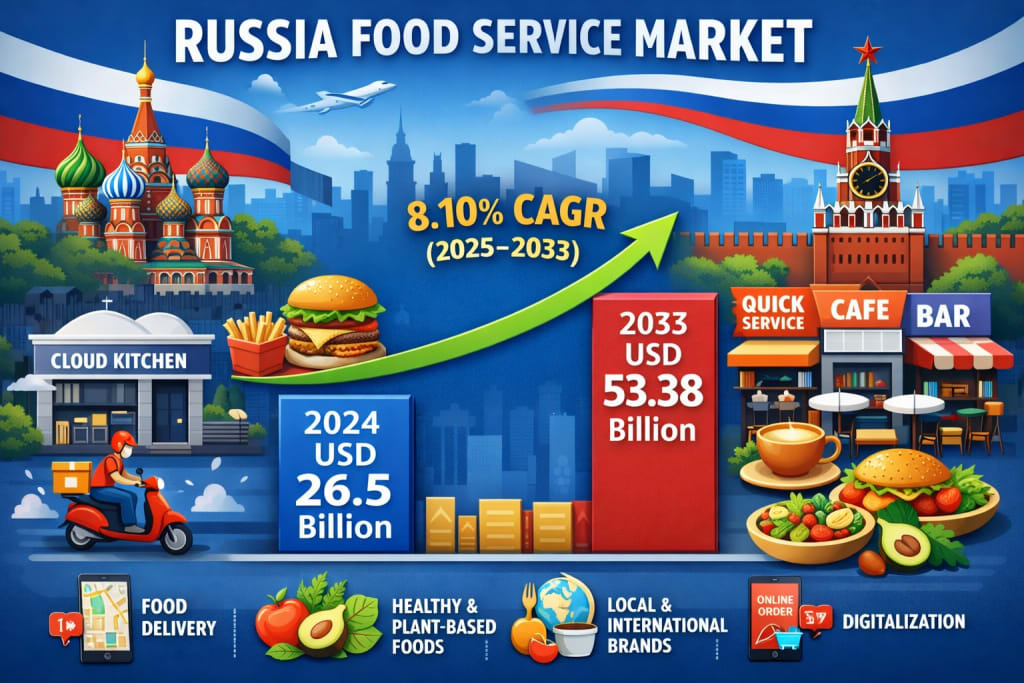
The Russia Food Service Market is undergoing a profound transformation, driven by changing consumer lifestyles, rapid digital adoption, and the growing influence of both local and international food brands. Valued at around USD 26.5 billion in 2024, the market is expected to expand at a compound annual growth rate (CAGR) of 8.10% between 2025 and 2033, reaching approximately USD 53.38 billion by 2033. This impressive growth trajectory reflects not only rising consumer spending on dining and convenience foods, but also the structural evolution of how Russians discover, order, and consume meals.
Foodservice, in its broadest sense, includes the preparation, serving, and delivery of food and beverages across a wide range of settings—restaurants, cafés, bars, quick-service outlets, cloud kitchens, catering businesses, and institutional facilities such as schools and hospitals. In Russia, this sector plays an increasingly important role in everyday life, especially in major urban centers like Moscow and St. Petersburg, where busy schedules and modern lifestyles have boosted demand for convenient, high-quality, and diverse dining options.
Over the past decade, the industry has moved far beyond traditional dining rooms. The rise of online delivery platforms, the emergence of cloud kitchens, and the growing preference for healthier, plant-based, and locally sourced foods have reshaped consumer expectations. At the same time, economic pressures, inflation, and supply chain disruptions continue to test the resilience and adaptability of food service operators. Together, these forces are creating a market that is dynamic, competitive, and full of opportunity for businesses that can innovate and respond quickly to changing tastes.
Market Overview and Forecast
According to Renub Research estimates, the Russia Food Service Market stood at USD 26.5 billion in 2024 and is projected to reach USD 53.38 billion by 2033, supported by a robust 8.10% CAGR during the forecast period from 2025 to 2033. This growth reflects a combination of demand-side and supply-side factors, including rising urbanization, increased internet penetration, and the expansion of both organized chains and independent outlets.
From a structural perspective, the market covers a wide range of segments: cafés and bars, cloud kitchens, full-service restaurants, and quick-service restaurants (QSRs). These are further classified by cuisine types—such as Asian, European, Middle Eastern, North American, and local offerings—by outlet type (chained versus independent), by location (leisure, lodging, retail, standalone, and travel), and by region, including the Central, Volga, Urals, Northwestern, Siberian, and other districts.
This layered segmentation highlights the diversity of Russia’s food service landscape. While large cities remain the primary growth engines, smaller urban centers and regional hubs are also seeing increased investment and consumer interest, particularly in delivery-focused models and affordable quick-service concepts.
Key Growth Drivers in the Russian Food Service Market
Urbanization and Changing Lifestyles
One of the strongest drivers of growth is rapid urbanization and the lifestyle changes that come with it. As more Russians move to cities and adopt busier, more time-constrained routines, the demand for convenient dining solutions continues to rise. Eating out, ordering takeaway, or using delivery apps has become a regular habit rather than an occasional indulgence.
The expansion of the middle class has further supported this trend. With higher disposable incomes and greater exposure to global food cultures, consumers are increasingly willing to spend on diverse culinary experiences—from fast food and casual dining to specialty coffee shops and themed restaurants. Urban centers, in particular, have become hotspots for new concepts, pop-up eateries, and experimental menus that cater to evolving tastes.
Growth of International and Local Brands
Another important growth factor is the expanding presence of both international and domestic food service brands. While global chains have historically played a major role in shaping consumer expectations, recent years have seen a strong push from local brands that are adapting international formats to Russian preferences.
These brands are not only filling gaps left by departing players but are also innovating with localized menus, pricing strategies, and branding approaches. This dual growth of global-style concepts and homegrown chains is increasing competition, improving service quality, and giving consumers more choices across price points and dining formats.
A notable example of this transformation can be seen in the rebranding and relaunching of well-known outlets under new ownership, where familiar menus and store designs are retained while introducing a more localized identity. Such moves underline the resilience and adaptability of Russia’s food service ecosystem.
Digitalization and the Rise of Online Food Delivery
Digitalization has arguably been the most disruptive force in the Russian food service market. The widespread use of smartphones, mobile apps, and high-speed internet has made online food ordering a mainstream behavior. In 2024, Russia had over 130 million internet users, with an internet penetration rate exceeding 90%, creating fertile ground for the growth of digital food platforms.
Services like Yandex Eats and Delivery Club have changed how consumers interact with restaurants. With just a few taps, users can browse menus, compare prices, read reviews, and place orders from the comfort of their homes or offices. For restaurants, these platforms offer access to a much broader customer base, data-driven marketing opportunities, and new revenue streams.
The convenience, promotional offers, and wide selection available through delivery apps have significantly boosted order volumes, especially in densely populated urban areas. This shift has also encouraged many operators to rethink their business models, leading directly to the rise of cloud kitchens.
Challenges Facing the Russian Food Service Market
Economic Instability and Inflation
Despite strong growth prospects, the industry faces notable challenges. Economic fluctuations and inflation have a direct impact on consumer purchasing power and operating costs. Rising food prices, higher energy costs, and increased labor expenses can squeeze profit margins and force businesses to adjust their pricing strategies.
For consumers, inflation may lead to more cautious spending, with greater emphasis on value-for-money options. For operators, this means finding a careful balance between maintaining quality, managing costs, and keeping prices attractive enough to retain customers.
Supply Chain Disruptions
Supply chain issues remain another critical concern. Import restrictions, logistical bottlenecks, and changing trade dynamics can affect the availability and cost of key ingredients. Since many food service businesses rely on imported raw materials or specialty products, disruptions can lead to menu changes, inconsistent quality, or higher prices.
In response, many operators are increasingly turning to local suppliers and seasonal ingredients, not only to reduce risk but also to appeal to consumers’ growing interest in locally sourced and sustainable food options.
Segment Insights
Cafés and Bars
Cafés and bars form a vibrant and essential part of Russia’s food service culture. The growing popularity of coffee culture, combined with the social appeal of bars and pubs, has fueled steady demand in this segment. From neighborhood cafés and dessert bars to specialist coffee and tea shops, these venues serve as social hubs for both casual meetings and business discussions.
Specialist coffee and tea shops, in particular, are gaining momentum as consumers become more interested in premium beverages, unique blends, and curated experiences. The entry and expansion of rebranded coffee chains demonstrate how strong this demand has become, especially in large cities.
Bars and pubs continue to evolve as well, with craft beer, themed interiors, and live entertainment helping to attract diverse customer groups seeking memorable social experiences.
Cloud Kitchens
Cloud kitchens, also known as ghost kitchens, represent one of the most transformative trends in the Russian food service market. These delivery-only kitchens operate without dine-in spaces, allowing businesses to significantly reduce rental and staffing costs while focusing entirely on efficient food production and delivery logistics.
This model is particularly attractive in high-rent urban areas, where traditional restaurant spaces can be expensive and risky. Cloud kitchens also offer greater flexibility, enabling operators to test new concepts, switch menus quickly, and respond to changing consumer preferences with lower capital investment. As online food delivery continues to grow, cloud kitchens are expected to play an increasingly important role in shaping the market’s future.
Quick Service Restaurants (QSRs)
Quick Service Restaurants remain a cornerstone of Russia’s food service industry. Known for their affordability, speed, and consistency, QSRs cater to a wide customer base, including students, office workers, and families. The segment covers a broad range of cuisines, including bakeries, burgers, pizza, ice cream, and meat-based offerings.
Recent developments in the market show strong interest from local investors in acquiring and rebranding well-known chains, adding a distinctly Russian flavor to globally familiar concepts. This strategy helps maintain customer loyalty while aligning brands more closely with local tastes and expectations.
Meat-Based Cuisines
Meat-based dishes hold a special place in Russian culinary tradition, with popular items such as shashlik and pelmeni continuing to enjoy widespread appeal. The growing demand for high-quality meat dishes has led to an increase in specialized restaurants focusing on these offerings, blending traditional recipes with modern presentation and service styles.
The rebranding and reopening of major fast-food outlets under new local ownership also highlight how meat-based cuisines remain central to the fast food and casual dining segments, even as the market diversifies into healthier and plant-based options.
Burgers, Pizza, and Bakery Segments
Burgers and pizza continue to be among the most popular fast food choices in Russia, supported by constant menu innovation, creative marketing, and value-focused promotions. Bakeries, on the other hand, benefit from daily consumption patterns and a strong cultural preference for fresh bread and pastries, making them a stable and resilient part of the QSR landscape.
Regional Dynamics
While the Central District, including Moscow, remains the largest and most competitive market, other regions such as the Volga, Urals, Northwestern, and Siberian districts are also witnessing steady growth. Urban development, improving infrastructure, and rising consumer awareness are helping to spread modern food service concepts beyond the largest cities, creating new opportunities for both chains and independent operators.
Competitive Landscape and Key Players
The Russian food service market is characterized by a mix of large chains and independent businesses, creating a competitive environment that encourages constant innovation. Key players in the market include Vkusno & Tochka, Yum! Brands RSC, Restaurant Brands International Inc., Stars Coffee, Wendy’s, Teremok, Domino’s Pizza, Papa John’s Pizza, and Doctor’s Associates Inc. These companies compete on factors such as menu variety, pricing, brand recognition, digital presence, and customer experience.
Many of these players are investing heavily in technology, delivery partnerships, and localized menu development to strengthen their market positions and respond to changing consumer expectations.
Final Thoughts
The Russia Food Service Market is on a strong growth path, set to nearly double in value from USD 26.5 billion in 2024 to USD 53.38 billion by 2033. This expansion is being driven by urbanization, digitalization, evolving consumer tastes, and the rise of innovative business models such as cloud kitchens. At the same time, challenges related to economic uncertainty and supply chain disruptions are pushing operators to become more efficient, flexible, and locally focused.
For businesses, the coming years will be defined by their ability to adapt—embracing technology, understanding shifting consumer preferences, and balancing cost pressures with the need to deliver quality and value. For consumers, the result will be a more diverse, accessible, and dynamic food service landscape that continues to redefine how Russia eats, orders, and experiences food in the modern age.


Comments
There are no comments for this story
Be the first to respond and start the conversation.