
Ripple Outcome In Court: A Mixed Decision on SEC Regulation
Ripple VS SEC Mixed Decision


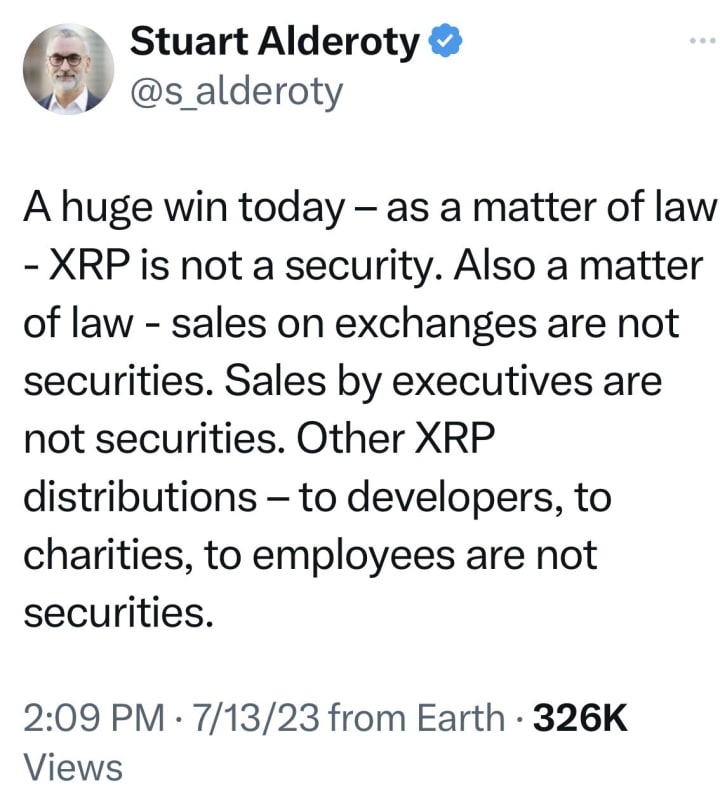
In a significant legal ruling on Thursday, the ongoing legal battle between Ripple Labs, the developer of the Ripple blockchain, and the Securities and Exchange Commission (SEC) witnessed a noteworthy turn. The court case, which has lasted three years, has raised important questions about the classification of cryptocurrencies as securities in the eyes of US regulators. The ruling delivered by US District Judge Analisa Torres established that Ripple's XRP token was indeed a security when it was sold to institutional investors years ago. However, the judge clarified that this classification did not apply to the general public. While this decision has sparked debates within the crypto community, it is essential to understand its nuances and implications.
The Impact of the Ripple Decision:
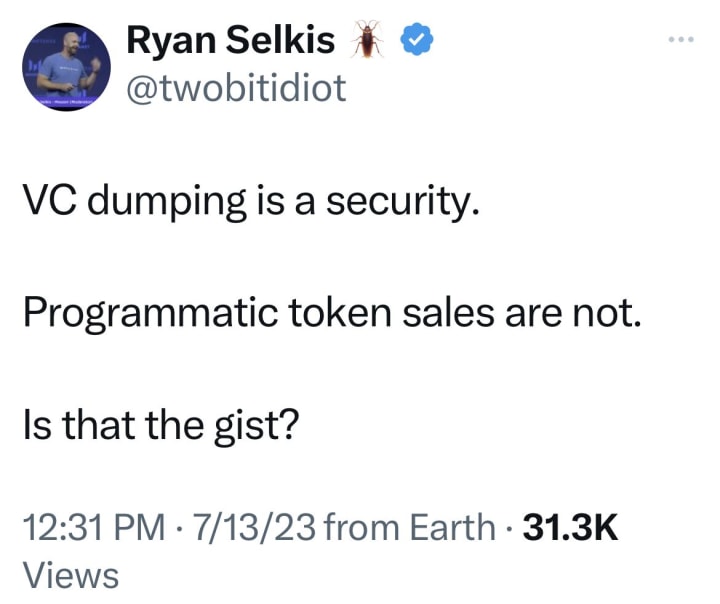
The judge's reasoning for considering XRP a security when sold to institutional investors was based on the belief that these investors were more informed about the securities-like nature of the token. On the other hand, programmatic investors, such as retail traders who purchased XRP directly from crypto exchanges, were deemed less knowledgeable about these characteristics. Consequently, both Ripple and the SEC may view this outcome as a partial victory, as it contributes to the ongoing debate surrounding the classification of cryptocurrencies as securities.
The Complexity of the Ripple Decision:
Although the Ripple ruling holds promise for retail-facing crypto projects, its implications for the broader crypto market are not straightforward. It is crucial to note that the decision was based on the understanding of retail investors regarding cryptocurrencies during a period that ended in 2020. Since then, the crypto market has undergone significant transformations, with Bitcoin's value soaring and regulators developing more comprehensive opinions about the sector.
Addressing Regulatory Ambiguity:
In an attempt to resolve the court's concerns, the SEC might adopt strategies to ensure clarity for the general public regarding the classification of securities moving forward. This approach has been evident in the SEC's recent lawsuits against prominent crypto companies such as Binance, Coinbase, and Gemini. The SEC identified tokens like Polygon's MATIC and Algorand's ALGO as potential securities, which could face similar legal scrutiny to XRP in the future. However, the court disagreed with several aspects of the SEC's argument, citing the Supreme Court's "Howey test." Notably, Ripple did not make any promises to secondary-market buyers, a distinction shared by most exchange-traded instruments.
Implications for Crypto Exchanges:
Some interpret the early Ripple ruling as a potential relief for platforms like Coinbase that have been accused of listing securities. It suggests that they may not face immediate repercussions for offering such tokens to the general public. While this could avoid disrupting retail-facing businesses and their existing business models, it represents only one aspect of the broader picture.
Impact on Pre-Funding and Venture Capital:
Numerous successful crypto projects rely on early token sales to institutional investors and venture capitalists before their public launch. These endeavors often involve pre-registering with regulators to mitigate potential legal consequences. Many tokens listed by the SEC as potential securities had utilized these funding methods, and the SEC referenced these examples to justify its oversight. However, the recent ruling casts doubt on the future of pre-funding, potentially limiting its availability. Venture capitalists may need to consider purchasing tokens on the open market, subjecting them to the same market volatility as other participants.
Ongoing Regulatory Concerns:
It is important to recognize that the SEC's involvement in crypto-related matters continues to expand rapidly. The watchdog recently filed charges against bankrupt crypto lender Celsius and its former CEO, Alex Mashinsky, along with other authorities. The SEC's complaints against exchanges like Binance and FTX also contribute to an extensive series of court proceedings and trials in the foreseeable future. Consequently, despite the celebratory atmosphere in the crypto market and the subsequent price surges, the sector remains cautious due to the prevailing uncertainties.
Conclusion:
The recent Ripple court ruling represents a notable development in the ongoing debate surrounding the regulation of cryptocurrencies. While the decision recognized XRP as a security during its sale to institutional investors, it did not extend this classification to the general public. As the crypto industry continues to evolve, regulators face the challenge of providing clear guidelines regarding securities to ensure the protection of investors. The outcome of the Ripple case, although significant, does not provide a definitive answer to the broader questions of crypto regulation. Therefore, stakeholders should remain vigilant as the legal landscape evolves and future trials determine the ultimate fate of Ripple and other crypto-related matters.
About the Creator
Alden Pole
Delving into captivating topics, I share insightful content that informs and inspires. Join me on this journey of discovery and let's explore the wonders together!
Keep reading
More stories from Alden Pole and writers in Trader and other communities.
How to Break the Paycheck-to-Paycheck Cycle: A Personal Finance Revolution
In today's fast-paced society, many individuals find themselves stuck in the perpetual cycle of living paycheck to paycheck. This financial constraint can create a constant undercurrent of stress, affecting both mental and physical health. However, escaping this cycle is achievable through mindful financial planning and strategic decisions. Let's explore how you can revolutionize your personal finance journey.
By Alden Pole3 years ago in Trader
Philippines Computer Vision Market 2026: AI Adoption, Smart Surveillance & Industrial Automation
Philippines Computer Vision Market Overview The Philippines computer vision market is an emerging segment of the country’s artificial intelligence and digital technology ecosystem. Computer vision technologies enable machines and systems to interpret and analyze visual information from images and videos using advanced algorithms and machine learning models. These solutions are widely used in applications such as security surveillance, quality inspection, facial recognition, retail analytics and healthcare imaging.
By Manisha Dixitabout 16 hours ago in Trader
Clinical Trials Market Size and Forecast 2026–2034
The global clinical trials market is entering a period of strong and sustained expansion as pharmaceutical innovation accelerates worldwide. Increasing research and development (R&D) investments, the rising burden of chronic diseases, and rapid technological advancements in healthcare research are creating significant opportunities for the industry. Clinical trials remain the cornerstone of medical progress, ensuring that new drugs, vaccines, and medical technologies are safe and effective before reaching patients.
By Sakshi Sharma3 days ago in Trader




Comments
There are no comments for this story
Be the first to respond and start the conversation.