
How to Break the Paycheck-to-Paycheck Cycle: A Personal Finance Revolution
From Financial Constraints to Financial Freedom: Strategies for Escaping the Hamster Wheel of Living Paycheck to Paycheck


In today's fast-paced society, many individuals find themselves stuck in the perpetual cycle of living paycheck to paycheck. This financial constraint can create a constant undercurrent of stress, affecting both mental and physical health. However, escaping this cycle is achievable through mindful financial planning and strategic decisions. Let's explore how you can revolutionize your personal finance journey.
Understanding the Paycheck-to-Paycheck Cycle
Living paycheck to paycheck means having just enough money to cover necessary expenses before the next paycheck arrives. Without savings or a financial buffer, any unexpected expenses or income loss can create a precarious situation.
Breaking this cycle starts with understanding that your current financial habits need to change. Recognizing this is your first step towards financial freedom.
Creating a Comprehensive Budget
The cornerstone of financial wellness is an effective budget. A budget outlines your income and expenses, providing a clear view of your financial health. It's essential to account for all income sources and expenses, even small, seemingly insignificant ones.
The 50/30/20 rule is a simple budgeting guideline: Allocate 50% of your income to necessities, 30% to wants, and 20% to savings and debt repayment. Tools like Mint and YNAB can help automate the budgeting process.
Building an Emergency Fund
An emergency fund acts as a financial buffer, protecting you from unexpected expenses like medical bills or car repairs. As a general rule, aim to save three to six months' worth of living expenses. Start small, even $500 can provide a significant safety net.
Reducing Debt and Understanding Interest Rates
High-interest debt, like credit card debt, can significantly hinder your ability to break the paycheck-to-paycheck cycle. Aim to pay more than the minimum payment each month and consider methods like the snowball or avalanche method to expedite debt repayment.
Increasing Income
While reducing expenses is crucial, increasing income should also be part of your strategy. This could involve asking for a raise, pursuing a higher-paying job, starting a side hustle, or investing in education for a better-paying career.
Case Study: From Living on the Edge to Financial Stability
Consider the story of Sarah, a single mother of two, working a minimum-wage job. Living paycheck to paycheck was a harsh reality for her. Recognizing the need for change, Sarah started by tracking her income and expenses, creating a budget that prioritized necessities and savings.
Sarah found ways to reduce her expenses, like using public transportation instead of owning a car and cooking at home more often. She started to save a small amount from each paycheck towards an emergency fund.
Simultaneously, Sarah started a side hustle as a freelance writer, using her love for literature to earn extra income. With her budget, emergency fund, reduced expenses, and increased income, Sarah was able to break her paycheck-to-paycheck cycle in a year.
Conclusion: Breaking the Cycle and Embracing Financial Freedom
Breaking the paycheck-to-paycheck cycle may not be easy, and it won't happen overnight. It requires discipline, patience, and a willingness to change financial habits. But the end result is a life of financial freedom, free from the stress and worry of living on the edge.
Remember, the path to financial independence is a marathon, not a sprint. Each small step you take towards managing your money better is a step away from living paycheck to paycheck and a step towards a financially secure future.
About the Creator
Alden Pole
Delving into captivating topics, I share insightful content that informs and inspires. Join me on this journey of discovery and let's explore the wonders together!
Keep reading
More stories from Alden Pole and writers in Trader and other communities.
5 Common Myths about Personal Finance and Money Management Busted
When it comes to personal finance and money management, myths and misconceptions abound. Many of these myths are so deeply ingrained in our collective consciousness that they are accepted as universal truths. However, in reality, these misunderstandings can lead us astray, preventing us from maximizing our financial potential. Let's demystify some of these common myths.
By Alden Pole3 years ago in Trader
India Fertilizer Market Size and Forecast 2026–2034
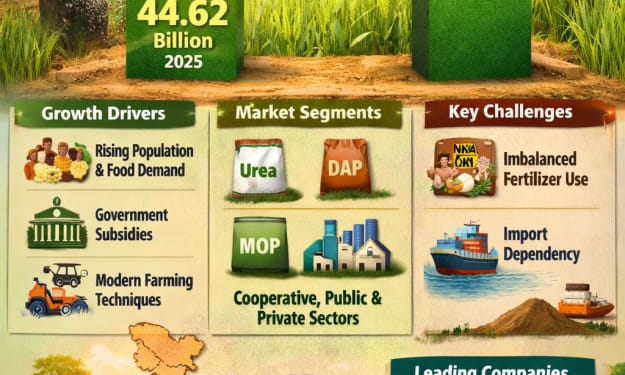
The India fertilizer market is poised for steady and sustainable growth over the next decade, driven by the country’s rising population, increasing food consumption, and the urgent need to enhance agricultural productivity. According to Renub Research, the market is projected to grow from US$ 44.62 Billion in 2025 to US$ 75.96 Billion by 2034, expanding at a Compound Annual Growth Rate (CAGR) of 6.09% during 2026–2034.
By Sakshi Sharma6 days ago in Trader



Comments
There are no comments for this story
Be the first to respond and start the conversation.