
Real Assets: A Tangible Approach to Long-Term Stability and Inflation Protection
Real assets are physical, tangible holdings that derive value from their inherent properties.


Real assets are physical, tangible holdings that derive value from their inherent properties. These assets are known for their long-term stability, inflation resistance, and income potential—something that Celestin Pepin knows well through his work in alternative assets. This article will examine the key features, advantages, and limitations of real assets as part of an investment strategy.
What Are Real Assets?
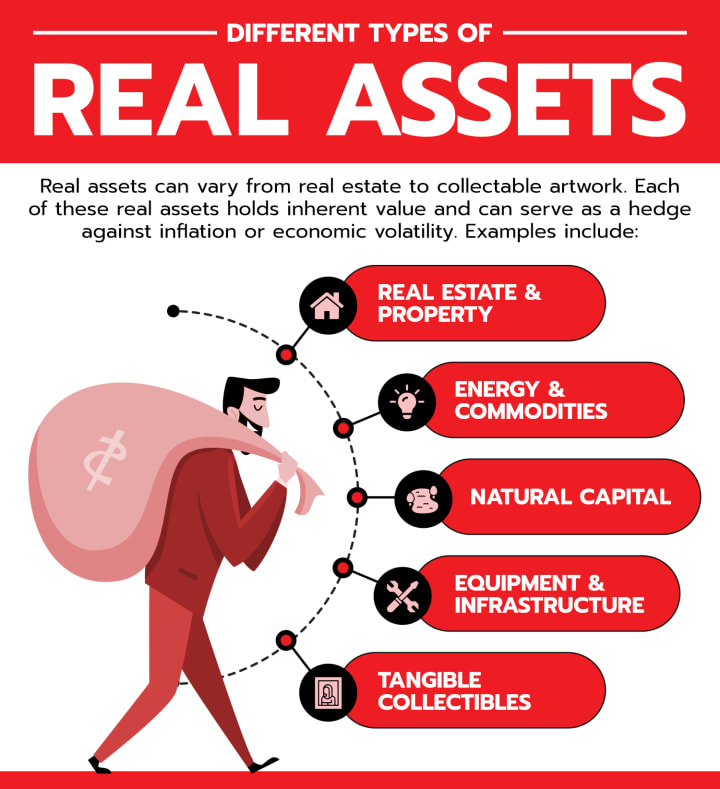
Just as the name suggests, real assets are tangible assets, which can be touched and manipulated, and their value derives from their physical properties. Good examples of real assets include real estate, land, precious metals, and equipment (such as vehicles or industrial equipment).
Real assets can be maintained, insured, and stored, which makes them valuable assets for anyone looking for tangible holdings. Other characteristics are longevity, meaning that over time they usually appreciate in value (such as real estate), and physical location, meaning that the assets may be tied to a set location that makes them dependent on environmental factors and local economy (such as land). Real assets also often come with high transactional costs, such as maintenance fees, legal fees, and appraisal fees.
Advantages of Real Assets
The clear advantage of real assets is their stability compared to financial assets. Changes in currency values, inflation, and other macroeconomic factors don’t affect the value of real assets in the same way as financial assets, making them the more secure option.
Real assets can also work as an inflation hedge, as they tend to maintain their value better than financial assets during times of high inflation. Assets such as precious metals and oil are known to work as an effective hedge against inflation.
Tangible assets such as real estate can also be a source of steady income in the form of rental income or REITs (Real Estate Investment Trusts), and land investments can generate income from crops or livestock. In addition, other long-term investments such as infrastructure projects can be offer returns via service contracts and lease agreements.
Disadvantages of Real Assets
The most obvious disadvantage of real assets is their lack of liquidity. This means that they cannot be converted into cash as quickly or as easily as financial assets. Selling real estate or land takes months, sometimes even years, and due to storage and transportation needs, selling precious metals can also take a significant amount of time. This makes real assets a somewhat rigid option when funds are needed quickly.
Tangible asset also often come with additional fees. For example, with real estate, the owner needs to consider maintenance, insurance, and property taxes, as well as property management. Transaction fees on the sale of real assets can also be higher than with financial assets due to transportation costs, legal fees, and inspections fees.
Meet Celestin Pepin - Invescap SA Associate

Celestin Pepin, an associate at Invescap SA in Geneva, Switzerland, is a citizen of both Canada and Switzerland and holds a BA degree in economics. He also participated in, and passed all three levels of, the CFA Programme at the CFA Institute.
During his time at Invescap, Mr Pepin’s key achievements have included leading the design and implementation of a private credit investment solution, with a focus on providing working capital and extensive cross-border coordination, and establishing companies in Luxembourg and the USA, ensuring operational efficiency and compliance with local regulations.
Mr Pepin has served in the Swiss Armed Forces since 2017 and is now a first lieutenant, having completed Swiss Officer School with honours. While in this role, he spent 18 weeks as the platoon leader of 30 trilingual signal and intelligence soldiers.
About the Creator
Celestin Pepin
Associate at the private market investment management firm Invescap SA. Served in the Swiss Armed Forces since 2017 and is now a first lieutenant, having completed Swiss Officer School with honours.
Keep reading
More stories from writers in Trader and other communities.
Silver Price Surge: Why Everyone Is Talking About Its Unexpected Jump
The silver price has been rising faster than many expected. This sudden surge has caught the attention of investors, buyers, and even casual observers. Understanding why the silver price is moving is important if you want to protect your money and make smart choices. In this article, we will explain the main causes behind this rise and how you can stay informed.
By hamza mirzaabout 24 hours ago in Trader
Australia Industrial Gas Cylinders Market to Surge as Manufacturing and Healthcare Demand Expands
The Australia industrial gas cylinders market reached USD 133.02 million in 2024 and is forecast to climb to USD 191.31 million by 2033, exhibiting a compound annual growth rate (CAGR) of 4.12% during the period from 2025 to 2033. This growth reflects increasing demand across multiple industry verticals, notably manufacturing and healthcare, where high-pressure cylinders play a crucial role in processes such as welding, cutting, medical gas delivery and specialty gas storage.
By Rashi Sharmaabout 3 hours ago in Trader
Affection and Healing for Yourself
During the night of the last quarter moon, I gathered my ritual supplies. I carefully handled the chunk of black tourmaline that would protect me from your overall negative and narcissistic energy. I carefully walked the house with my stick of selenite in hand, asking the universe to cleanse our working space.
By Alisha Wilkins ✒️🦋🖋️7 days ago in Fiction



Comments