
Philippines Retail Market 2026: Set for Rapid Expansion on Digital, Urban & Consumer Trends
With strong consumer demand and omnichannel innovation, the Philippines retail market is projected to nearly double to over USD 1.22 trillion by 2034.

Philippines Retail Market Overview
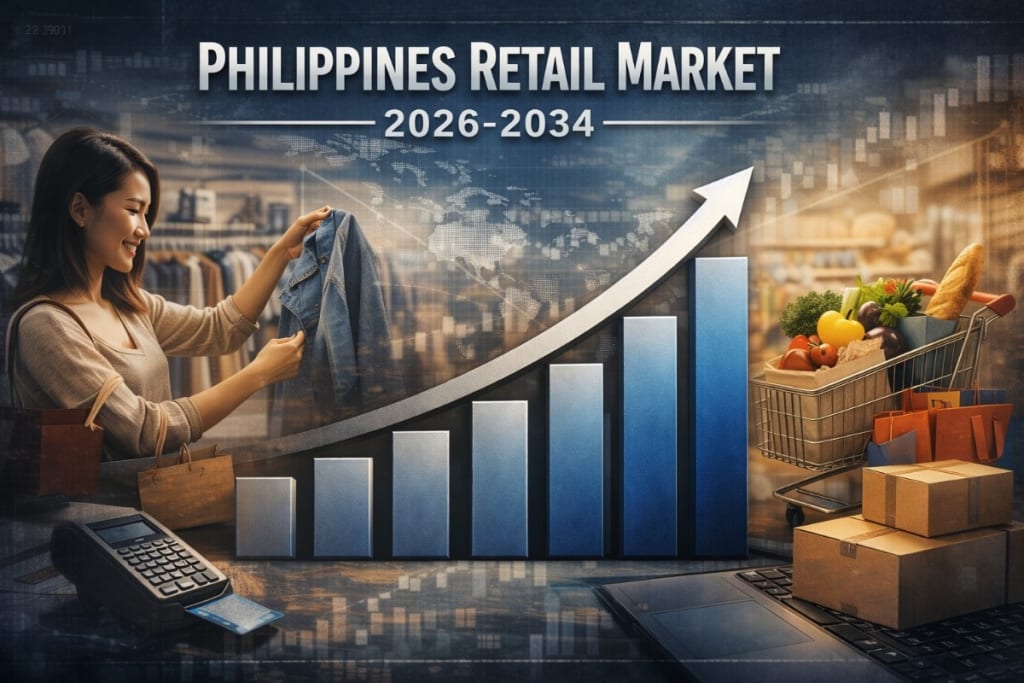
The Philippines retail market is experiencing significant expansion as rising consumer spending, omnichannel retailing, and modern retail innovations reshape how Filipinos shop. According to the latest IMARC Group report, the market size reached USD 648.2 billion in 2025 and is expected to grow to USD 1,223.1 billion by 2034, exhibiting a compound annual growth rate (CAGR) of 7.31% during 2026–2034 — reflecting robust demand across product segments and distribution channels.
This enormous market encompasses a wide range of products — from food and beverages, personal and household care, apparel, and footwear to electronics, household appliances, and more. Distribution channels include supermarkets and hypermarkets, convenience and specialty stores, online stores, and other formats, all contributing to a dynamic marketing landscape.
Retailing in the Philippines is increasingly about experience and convenience, driven by evolving consumer lifestyles, digital transformation, and a growing middle class with higher disposable incomes. As retailers adapt to changing preferences, the sector continues to present compelling opportunities for investors and businesses alike.
Why the Market Is Growing So Rapidly
1. Rising Consumer Spending and Urbanization
A core driver of the Philippine retail boom is the consistent growth in consumer spending, particularly in urban centers such as Metro Manila, Cebu, and Davao. Urbanization has concentrated demand in these cities, where modern mall formats, convenience stores, and lifestyle retail outlets offer a wide array of products and services. Filipino consumers increasingly prioritize convenience and variety, boosting overall retail sales.
2. Expansion of Modern Retail Formats
Modern retail formats such as supermarkets, hypermarkets, and specialty stores are expanding rapidly across the country. Retailers are transforming traditional outlets into experiential destinations featuring integrated services like dining, entertainment, and community events. This shift enhances customer dwell time and encourages higher spending per visit.
3. E-Commerce and Omnichannel Innovation
Digital connectivity and smartphone penetration have been fundamental in reshaping the Philippines retail market. Retailers are increasingly adopting omnichannel strategies, allowing customers to browse online, purchase via mobile apps, and collect in-store. Social commerce and live stream selling events have also grown rapidly, enabling both major retailers and local brands to reach wider audiences.
4. Changing Lifestyles and Product Preferences
Filipino consumers are embracing new lifestyle trends that prioritize convenience, quality, and variety. Ready-to-eat foods, health and personal care products, fashionable apparel, and tech gadgets are among high-demand categories. As incomes rise, consumers are also upgrading to premium and branded products — strengthening retail performance across segments.
5. Local Entrepreneurship and Niche Retail Growth
The Philippines has a vibrant small and medium enterprise (SME) sector that contributes to retail dynamism. Local entrepreneurs are launching lifestyle-based stores, concept boutiques, and pop-up shops that emphasize Filipino craftsmanship and niche interests. These innovations enrich the retail landscape by catering to diverse consumer tastes and promoting community engagement.
Request a Sample Report with the Latest 2026 Data & Forecasts
What the Opportunities Are
1. Omnichannel Retail Strategies
Retailers can integrate online and offline experiences — such as buy-online-pick-up-in-store (BOPIS) and social commerce selling — to meet varied consumer preferences and increase engagement.
2. Expansion in Underpenetrated Regions
While urban areas lead retail activity, there are vast opportunities in provincial cities and island economies where modern retail formats are still emerging.
3. Convenience and Ready-to-Eat Product Segments
Demand for convenience food, quick service outlets, and prepared meals will continue to grow as lifestyles become busier and urban consumers seek time-efficient solutions.
4. Sustainability and Ethical Retailing
Retailers that embrace sustainability — such as eco-friendly packaging, ethical sourcing, and responsible branding — can appeal to younger, value-driven consumers.
5. Data-Driven Personalization
Using artificial intelligence (AI) and analytics to personalize offers, optimize inventory, and tailor customer experiences can help retailers differentiate themselves.
6. Local Brand Showcases and Partnerships
Large retail platforms can partner with local brands and artisans to offer curated segments, enhancing cultural relevance and supporting indigenous commerce.
7. Tech-Enabled Shopping Experiences
Investment in augmented reality (AR) try-ons, virtual store tours, and mobile wallet integrations can make shopping more engaging and convenient, especially for younger demographics.
Recent News & Developments
March 2025: Government Efforts to Strengthen Retail Infrastructure
In March 2025, the Philippine government announced initiatives to improve retail infrastructure and streamline supply chains, aiming to reduce logistical bottlenecks across the archipelago. These efforts include upgrades to port facilities and incentives for warehouses in under-served provincial regions, improving product availability and supporting retail expansion outside metro centers.
June 2025: Major Retail Chain Expands Digital Services
In June 2025, 7-Eleven Philippines announced a major upgrade to its digital platform, including mobile wallet integration and real-time inventory visibility across its 3,000+ convenience stores. The investment enhances customer convenience and supports rapid growth in online orders and loyalty program participation, reflecting broader trends in digital retail transformation.
September 2025: Retail Sales Surge and Metrics Milestone
By September 2025, industry data reported a double-digit year-over-year increase in retail e-commerce sales, driven by greater consumer confidence and expanding mobile commerce adoption. This milestone highlights the accelerating shift toward digital shopping and affirms the strong underlying growth trajectory of the Philippines retail market.
Why Should You Know About Philippines Retail Market?
The Philippines retail market stands as one of the most dynamic and high-potential sectors in Southeast Asia, poised to nearly double in value by 2034 with a projected USD 1.22 trillion market size and a strong 7.31% CAGR. Its expansion reflects broader economic trends — urbanization, rising consumer spending, digital engagement, and lifestyle shifts — that together present significant opportunities for investors, global brands, and local entrepreneurs.
For businesses, understanding these trends can inform product strategies, omnichannel development, and supply chain investments. For investors, the sector’s growth in digital retail innovation, convenience formats, and experiential retail offers diverse avenues for strategic participation. For policymakers, fostering efficient infrastructure and supportive regulatory environments can further enhance retail inclusion and competitiveness. As Filipino consumers increasingly embrace modern, seamless, and personalized shopping experiences, the retail market’s transformation is both a reflection of societal change and a major engine of economic growth.
About the Creator
Keep reading
More stories from Manisha Dixit and writers in Trader and other communities.
Philippines Remittance Market 2026: Strengthens on Global OFW Flows and Digital Innovation
Philippines Remittance Market Overview The Philippines remittance market size remains a cornerstone of the country’s financial ecosystem, fueled by its vast diaspora of overseas Filipino workers (OFWs) and rapid digital transformation in cross-border money transfers. According to IMARC Group’s latest analysis, the market size reached USD 168.1 billion in 2025 and is projected to grow to USD 227.6 billion by 2034, reflecting a compound annual growth rate (CAGR) of 3.32% during 2026–2034.
By Manisha Dixitabout 13 hours ago in Trader
Shopify Stock Analysis: Can Shopify Continue Dominating the E-Commerce Platform Market?
Introduction Shopify stock has become synonymous with the growth of online commerce. Shopify provides a cloud-based platform that enables businesses of all sizes to create online stores, manage inventory, and process payments. With small businesses, entrepreneurs, and large brands increasingly shifting to e-commerce, Shopify stock is closely watched by investors seeking exposure to the digital retail revolution. The central question is whether Shopify can sustain its growth amid rising competition and market saturation.
By Hammad Nawaz24 minutes ago in Trader
Small Molecule API Market: Driving Innovation in Modern Pharmaceutical Manufacturing
Overview – Small Molecule API Market Small molecule APIs are chemically synthesized compounds that form the active components of most conventional pharmaceutical drugs. They dominate the drug development pipeline due to their stability, oral bioavailability, and well-established regulatory pathways. The market includes both innovative and generic small molecule APIs, serving branded pharmaceutical manufacturers, generic drug producers, and contract manufacturing organizations (CMOs). With the growing aging population and increasing healthcare expenditure worldwide, demand for therapeutic drugs continues to rise, strengthening the need for high-quality APIs. Emerging technologies such as artificial intelligence and advanced chemical synthesis methods are also enhancing drug discovery processes and improving production efficiency, contributing to overall market growth.
By James Smith6 days ago in Trader
The Guardian Chapter V
Alexander left his Coming of Age ceremony with Cronos and the elders with as many new questions as he had answers for his old questions. Cronos had confirmed his suspicions were correct. Not only was there a link between the Beast Masters and the inhabitants of the Citadel, but it was the Citadel's fault that the Beast Masters existed in the first place. Instead of banishing the law breakers which allowed them to wreak havoc on the rest of humanity, the Citadel elders should have stripped them of their powers before they became too strong. Now Alexander would need to battle the Beast Masters and the Jikininki. It would be difficult for him to forgive the Citadel Elders because their poor decisions led to the deaths of his parents and more than half the planet's human population.
By Mark Gagnon3 days ago in Chapters



Comments
There are no comments for this story
Be the first to respond and start the conversation.