
Philippines Remittance Market 2026: Strengthens on Global OFW Flows and Digital Innovation
Steady remittance inflows from overseas Filipino workers, expanding digital transfer channels, and supportive policies are driving the Philippines remittance market toward USD 227.6 billion by 2034.

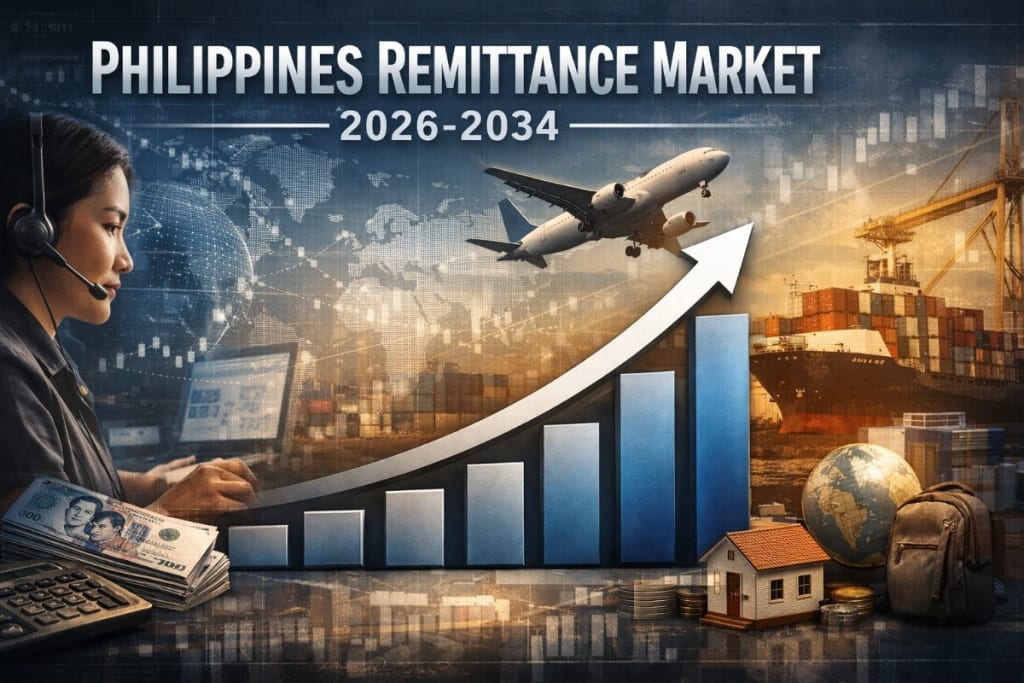
Philippines Remittance Market Overview
The Philippines remittance market size remains a cornerstone of the country’s financial ecosystem, fueled by its vast diaspora of overseas Filipino workers (OFWs) and rapid digital transformation in cross-border money transfers. According to IMARC Group’s latest analysis, the market size reached USD 168.1 billion in 2025 and is projected to grow to USD 227.6 billion by 2034, reflecting a compound annual growth rate (CAGR) of 3.32% during 2026–2034.
Remittance inflows, predominantly from Filipinos working abroad, play a vital role in supporting domestic consumption, household welfare, and small business financing. The market is characterized by a shift toward digital remittance platforms, the persistence of traditional transfer channels, and evolving regulatory support that enhances security and efficiency in cross-border money movements.
Why the Market Is Growing So Rapidly
1. Persistent Demand from a Global Filipino Diaspora
The Philippines has one of the largest migrant worker populations globally, with millions of Filipinos employed in regions like the Middle East, North America, Southeast Asia, and Europe. These OFWs regularly send money home to support family expenses, education, healthcare, and savings, which sustains a high volume of remittance inflows. This cultural and economic reliance on remittances underpins the market’s base demand.
2. Expansion of Digital Remittance Channels
A significant driver of growth is the rapid adoption of digital transfer platforms, mobile wallets, and fintech solutions. These technologies enable faster, more secure, and lower-cost transfers compared to conventional methods like cash pickups. As smartphone penetration increases across the Philippines and overseas markets, digital remittance adoption continues to rise — lowering transaction friction and boosting market participation.
3. Government Policy and Financial Inclusion Initiatives
The Philippine government has actively supported formal remittance channels through initiatives that improve financial literacy, streamline regulatory processes, and encourage the use of official transfer mechanisms. Efforts to enhance consumer protection and bilateral labor agreements further bolster remittance flows by ensuring safer and more reliable employment and transfer pathways for overseas workers.
4. Strengthening Financial Infrastructure
Continued improvements in the country’s financial infrastructure, including banking network expansion and partnerships among banks, money transfer operators, and fintech firms, are enhancing the accessibility of remittance services. This expanding network is particularly impactful in reaching underserved and rural areas, boosting inclusion and usage of formal remittance channels.
5. Economic Resilience and Consumer Spending
Remittances play a stabilizing role in the Philippine economy by supporting consumer spending and remittances-driven demand for goods and services. As households receive steady inflows, they contribute to domestic consumption, which in turn supports broader economic activity and financial market depth.
Request a Sample Report with the Latest 2026 Data & Forecasts
What the Opportunities Are
1. Growth in Digital and Mobile Wallet Solutions
Providers that enhance mobile wallet capabilities, low-cost digital transfers, and real-time settlement services can capture a growing share of the market as consumers prioritize convenience and speed.
2. Expansion of Cross-Border Financial Services
Developing comprehensive cross-border products that integrate remittances with savings, payments, and lending can unlock added value for OFWs and their beneficiaries.
3. Partnerships Across Financial Ecosystems
Collaborations between banks, fintech firms, and money transfer operators can expand service reach, especially in rural and underserved regions, fostering inclusion and formal financial participation.
4. Enhanced Security and Fraud Protection
Investing in advanced fraud detection and cybersecurity technologies can strengthen user trust and support sustained growth, particularly in digital channels.
5. Tailored Solutions for Small Businesses
Developing remittance products tailored to small business needs — including faster settlement and multi-currency solutions — can attract business remittance flows beyond personal transfers.
6. Financial Literacy and Consumer Education
Programs that educate users on safe, cost-effective transfer options and financial planning can deepen engagement with formal remittance channels.
7. Regulatory Collaboration and Innovation
Supporting regulatory frameworks that balance innovation and consumer protection can encourage new entrants while maintaining market integrity and trust.
Recent News & Developments
February 2025: Government Launches Remittance Efficiency Measures
In early 2025, the Philippine government introduced measures aimed at improving remittance efficiency and transparency, including upgrades to regulatory oversight and partnerships with international financial institutions. These reforms are designed to lower transaction costs and strengthen consumer confidence in both digital and traditional transfer channels.
May 2025: Financial Institutions Invest in Digital Remittance Platforms
In May 2025, several leading Philippine banks and fintech companies announced strategic investments in digital remittance platforms, focusing on mobile wallet integrations and AI-driven personalization. These investments are expected to enhance speed, reduce costs, and expand access in both domestic and overseas markets.
July 2025: Remittance Volumes Show Continued Growth
By mid-2025, data from central financial authorities indicated that remittance inflows continued to grow year-over-year, contributing to stable foreign exchange reserves and bolstering household income trends. This growth reflects sustained demand from key markets including the United States, Singapore, and the Middle East.
Why Should You Know About Philippines Remittance Market?
The Philippines remittance market represents a critical economic lifeline that supports millions of households and underpins significant portions of the national economy. With strong projected expansion toward USD 227.6 billion by 2034, this market is not only a reflection of global labor mobility but also a driver of financial inclusion, technological innovation, and cross-border financial integration.
For investors, the sector offers potential in digital payment platforms, fintech innovation, and cross-border financial services. For businesses, understanding remittance flows can inform product development, customer engagement strategies, and partnerships across financial ecosystems. For policymakers, nurturing a secure, efficient, and inclusive remittance environment enhances economic stability and consumer protection. As digital transformation reshapes how remittances are sent and received, the Philippines market stands as a key opportunity within the broader global remittance landscape.
About the Creator
Keep reading
More stories from Manisha Dixit and writers in Trader and other communities.
Philippines Online Food Delivery Market 2026: Powered by Digital Adoption and Changing Consumer Habits
Philippines Online Food Delivery Market Overview The Philippines online food delivery market size is emerging as a high-growth segment within the country’s digital economy, offering consumers unprecedented access to convenient, app-based meal ordering and delivery services. According to the latest IMARC Group analysis, the market was valued at USD 4.8 billion in 2025 and is projected to expand to USD 11.3 billion by 2034, registering a compound annual growth rate (CAGR) of 9.71 % between 2026 and 2034.
By Manisha Dixit5 days ago in Trader
Global Multiple Myeloma Market Size and Forecast 2025–2033
Introduction: A Market at the Crossroads of Innovation and Urgency The global healthcare landscape is undergoing a profound transformation, and nowhere is this more visible than in the field of oncology. Among the many cancers that continue to challenge healthcare systems worldwide, multiple myeloma stands out as both a clinical and commercial focal point. This complex blood cancer, which affects plasma cells in the bone marrow, has historically been difficult to treat. However, rapid advances in medical science are now reshaping patient outcomes—and the market that supports these therapies.
By Sakshi Sharma5 days ago in Trader
Global Cardiac Holter Monitor Market Size and Forecast 2025
Introduction The global healthcare industry is undergoing a significant transformation, driven by technological innovation, rising chronic disease prevalence, and a growing focus on preventive care. Among the many diagnostic tools benefiting from this shift, cardiac Holter monitors have emerged as a critical solution for continuous heart rhythm monitoring. These devices, once bulky and limited to hospital settings, are now evolving into compact, patient-friendly, and digitally connected systems that support early diagnosis and long-term cardiac care.
By Sakshi Sharma7 days ago in Trader



Comments
There are no comments for this story
Be the first to respond and start the conversation.