
Philippines FMCG Market: Consumption Growth, Retail Evolution & Consumer Trends
How changing lifestyles, retail modernisation and affordability drive demand for fast-moving consumer goods in the Philippines

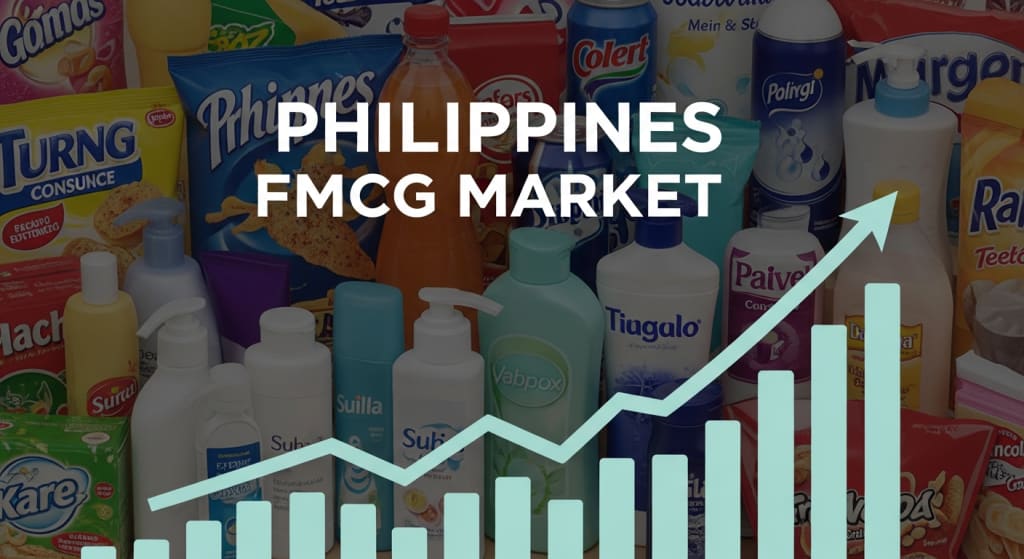
Philippines FMCG Market Overview
The Philippines fast-moving consumer goods (FMCG) market continues to expand robustly as evolving consumer lifestyles, retail innovation and strong domestic consumption fuel consistent demand across essential goods categories. FMCG — encompassing food and beverages, personal care, home care, healthcare products, and other daily-use items — represents one of the most resilient and foundational segments of the Philippine economy. The Philippines FMCG market growth reached USD 8.10 Billion in 2024. Looking forward, the market is expected to reach USD 9.80 Billion by 2033, exhibiting a growth rate (CAGR) of 2.00% during 2025-2033. This growth reflects rising disposable incomes, urbanisation, convenience-oriented buying behaviour, digital retailing and sustained demand for affordable, accessible household products.
FMCG products are daily necessities for consumers across age groups and socioeconomic classes. Their high consumption frequency, rapid turnover and broad distribution networks make the FMCG market a key barometer of consumer confidence, retail dynamics and broader economic trends. The sector’s adaptability — through product innovation, pricing strategies and diverse retail formats — enables sustained penetration even amid economic fluctuations.
What’s Driving Market Growth
Population Growth & Urbanisation
The Philippines’ youthful population and rapid urbanisation strengthen sustained demand for FMCG products. As families settle in urban centres, the need for convenient, ready-to-use products — ranging from packaged foods to personal care essentials — increases. Urban lifestyles also support higher consumption frequency, diversified product adoption and retail variety.
Rising Disposable Incomes & Middle-Class Expansion
As household incomes rise, consumers allocate more spend toward branded FMCG goods that support convenience, quality and perceived value. The growing middle class demonstrates stronger spending patterns for premium variants, health-oriented foods, personal care innovations and lifestyle brands. Higher discretionary spending enhances market value and incentivises product diversification tailored to consumer preferences.
Retail Modernisation & Omni-Channel Growth
Traditional retail formats such as sari-sari (small corner) stores, supermarkets, minimarts and wholesale outlets continue to play a central role in FMCG distribution. However, retail modernisation — including hypermarkets, convenience store chains, pharmacy-led retail and e-commerce platforms — has reshaped how consumers access FMCG products. Online grocery services, digital storefronts, mobile marketplaces and app-driven purchases provide convenience, price transparency and rapid fulfilment.
Product Innovation & Health Trends
Manufacturers increasingly introduce product innovations that align with health, wellness and lifestyle trends. Demand for fortified foods, functional beverages, organic or natural personal care and eco-friendly household products reflects evolving consumer priorities that extend beyond price alone. These trends encourage greater assortment offerings and differentiated pricing strategies that support market growth.
What the Opportunities Are
E-Commerce & Omni-Channel Innovation
Expanding digital retail capabilities — including tailored FMCG storefronts, mobile-first shopping experiences, seamless checkout flows and integrated loyalty programmes — enables brands to capture new consumer segments and elevate convenience. Click-and-collect, subscription models and app-based promotions deepen engagement while reducing friction.
Premium & Health-Centric Product Lines
There is notable opportunity for premiumisation through health-focused, fortified and natural product variants. As interest grows in wellness, functional nutrition and clean beauty, FMCG brands can differentiate portfolios with premium SKUs that cater to evolving needs and justify higher value positioning.
Sustainable Packaging & Eco-Friendly Offerings
Consumers are increasingly seeking products that align with environmental values — including recyclable, biodegradable and low-impact packaging. FMCG players that prioritise sustainability throughout the supply chain can attract conscious consumers while strengthening brand credentials.
Rural Penetration & Distribution Networks
Strengthening distribution reach into rural and underserved regions enhances market saturation for FMCG products. Strategically partnering with micro-distributors, cold-chain services, and local retail networks supports broader penetration and brand awareness beyond metropolitan areas.
Brand Loyalty & Personalisation
Building loyalty through targeted promotions, rewards programmes, personalised digital experiences and customer-centric campaigns helps retain repeat buyers. Tailored offers based on purchase habits and preferences deepen consumer relationships and improve lifetime value.
Recent News and Developments in Philippines FMCG Market
Jul 2025: Several large FMCG companies expanded e-commerce partnerships with digital grocery platforms, enabling faster delivery, broader product visibility and promotional bundles tied to mobile app purchases — driving significant growth in online FMCG sales.
Sep 2025: Retail analysts reported that premium and health-oriented FMCG variants recorded accelerated year-on-year growth, with fortified foods, plant-based personal care and functional beverages gaining traction among health-conscious consumers.
Nov 2025: Industry insights highlighted that modern retail formats continued to expand footprint nationwide, with convenience store chains and supermarket alliances opening new outlets in secondary cities — improving accessibility and stimulating local FMCG demand.
Why should You Know About Philippines FMCG Market?
You should know about this market because FMCG goods are fundamental indicators of consumer behaviour, economic resilience and retail evolution — reflecting how households allocate spending, adopt convenience trends and prioritise quality within everyday purchases. FMCG’s stable demand profile, frequent purchase cycles and broad consumer engagement make it both a resilient and dynamic segment of the Philippine economy.
For investors, the FMCG market presents exposure to consumption-driven growth, diversified product pipelines and recurring revenue streams tied to essential goods. Opportunities linked to digital retail expansion, premiumisation and sustainability create differentiated pathways for long-term value capture.
For brands, retailers and strategists, understanding segmentation, channel dynamics and evolving preferences guides product development, pricing strategies and omnichannel engagement — ensuring relevance and competitiveness in a vibrant market landscape. In essence, the Philippines FMCG market highlights how consumer demand, retail innovation and lifestyle trends intersect — shaping a sector integral to daily life and economic activity.
About the Creator
Amyra Singh
Market research analyst who loves spotting patterns, digging into data, and turning insights into strategies that help brands grow and stay ahead of the curve.
Keep reading
More stories from Amyra Singh and writers in Trader and other communities.
Australia Home Office Furniture Market: Remote Work, Ergonomic Design & Housing Trends
Australia Home Office Furniture Market Overview The Australia home office furniture market share and size continues to expand as work patterns evolve and households adapt to hybrid and remote working arrangements. The Australia home office furniture market size was valued at USD 909.8 Million in 2025. Looking forward, IMARC Group estimates the market to reach USD 1,370.2 Million by 2034, exhibiting a CAGR of 4.66% from 2026-2034. This growth reflects structural shifts in workplace organization, increased awareness of ergonomics and ongoing residential investment.
By Amyra Singha day ago in Trader
vwce forecast 2026: Growth Potential, Risks, and How to Prepare
The vwce forecast 2026 is becoming a key topic for investors who want clear guidance on the coming year. Understanding this forecast helps investors see growth opportunities, recognize risks, and make smart choices. By following vwce forecast 2026, you can plan your investments carefully and reduce surprises. This article explains it in simple, easy-to-understand language.
By John.doe798about 3 hours ago in Trader
Silver and Gold Prices Are Surging: A Clear Summary of What’s Really Happening
Silver and Gold Prices Are Surging: A Clear Summary of What’s Really Happening The recent surge in silver and gold prices has captured global attention, raising serious questions among investors and everyday observers alike. This movement is not accidental or temporary. It reflects deeper changes in the global economic system, investor psychology, and long-term supply and demand dynamics. Understanding why silver and gold are rising together, and why silver in particular is showing sharp volatility, requires looking beyond headlines and short-term speculation.
By America today a day ago in Trader
The Path to Salvation
The late autumn evening air filled the monk's lungs, but it wasn't the season that chilled his bones. The heavy-handed presence of evil he had sensed upon entering the woods surrounding this mountain village had not bothered to conceal itself from him.
By Made in DNA6 days ago in Fiction




Comments
There are no comments for this story
Be the first to respond and start the conversation.