
Philippines Edible Oils & Fats Market: Household Consumption, Food Processing & Nutrition Trends
How cooking habits, food industry demand and health awareness are shaping the edible oils and fats market in the Philippines

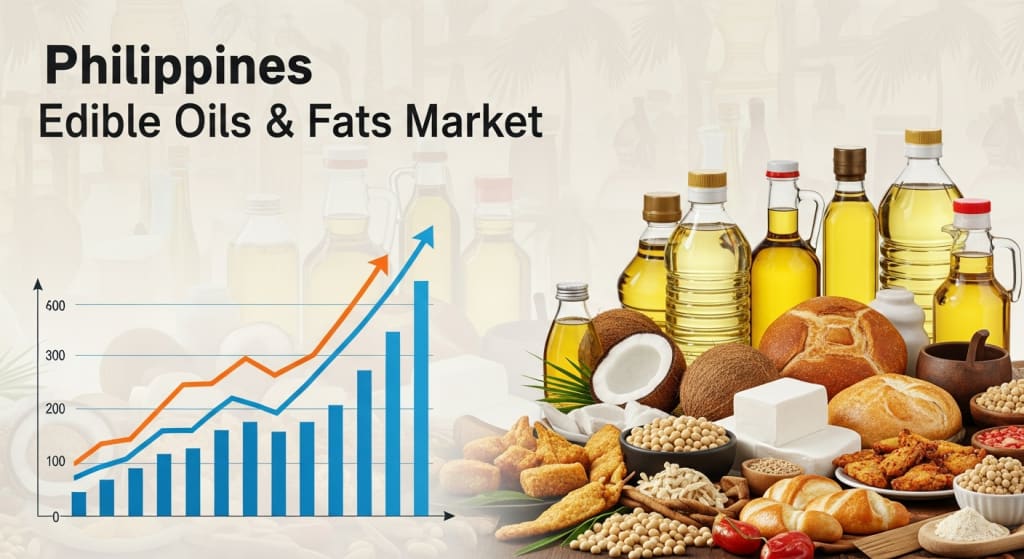
Philippines Edible Oils & Fats Market Overview
The Philippines edible oils and fats market plays a central role in the country’s food ecosystem, supporting both household cooking and large-scale food manufacturing. Edible oils and fats are used daily across residential kitchens, restaurants, bakeries and packaged food production facilities. The Philippines edible oils & fats market growth reached USD 5,067.9 Million in 2025. Looking forward, the market is expected to reach USD 7,758.2 Million by 2034, exhibiting a growth rate (CAGR) of 4.85% during 2026-2034. This steady growth reflects population expansion, urbanization and the continued importance of cooking oils in Filipino diets.
Edible oils and fats include products such as palm oil, coconut oil, soybean oil, canola oil, sunflower oil, butter, margarine and blended vegetable oils. In the Philippines, these products are widely used for frying, sautéing, baking and food processing. Unlike discretionary food categories, edible oils are considered essential staples, which supports consistent demand even during periods of economic uncertainty.
Driving Growth in the Philippines Edible Oils & Fats Market
One of the primary drivers of market growth is stable household consumption. Home-cooked meals remain common across the country, and most traditional dishes rely on cooking oil as a basic ingredient. Population growth and increasing numbers of urban households contribute directly to rising overall consumption volumes.
Another important factor is expansion of the foodservice and food processing sectors. Quick-service restaurants, street food vendors, bakeries and packaged food manufacturers use large quantities of edible oils and fats in daily operations. Growth in ready-to-eat meals, snacks and convenience foods supports industrial-scale demand.
The Philippines’ position as a major coconut-producing country influences market structure. Coconut oil is widely available domestically and is used both as a cooking oil and as an ingredient in processed foods. Local production supports supply availability and encourages further processing and refining activity.
Health awareness is gradually shaping purchasing behavior. Consumers are becoming more attentive to fat content, cholesterol levels and cooking stability when selecting oils. While affordability remains a major consideration, there is growing interest in oils perceived as healthier, such as canola and sunflower oil. This trend supports product diversification rather than reducing overall consumption.
Retail accessibility also supports growth. Cooking oils are widely available through supermarkets, convenience stores, wet markets and online platforms. Improved distribution networks ensure consistent availability across urban and rural areas.
Request a Sample Report with the Latest 2026 Data & Forecasts
What the Opportunities Are
The Philippines edible oils and fats market offers several opportunities focused on value addition and product differentiation.
1. Health-Oriented Oil Variants
There is increasing interest in oils with lower saturated fat content or balanced fatty acid profiles. Producers can develop and promote oils positioned for heart health or everyday cooking.
2. Fortified and Functional Oils
Oils fortified with vitamins such as A and D can support nutritional goals and appeal to health-conscious consumers.
3. Blended and Specialty Oils
Blends designed for specific cooking methods—such as deep frying, baking or sautéing—allow manufacturers to target different usage occasions.
4. Small-Pack and Affordable Packaging
Smaller pack sizes improve accessibility for price-sensitive households and support regular purchase cycles.
5. Local Refining and Packaging Capacity
Investments in refining, bottling and packaging facilities support domestic value creation and supply reliability.
Operational Considerations
Despite steady growth, the market faces several challenges. Raw material price volatility affects production costs, particularly for imported oilseeds and palm oil. Price fluctuations influence wholesale and retail pricing strategies.
Import dependence for certain oils exposes the market to currency movements and global supply disruptions. Efficient inventory management and diversified sourcing are important for stability.
Quality control and regulatory compliance influence manufacturing and labeling practices. Producers must meet food safety standards and ensure accurate nutritional information.
Competition is intense, with both local and international brands operating across multiple price segments. Differentiation through packaging, branding and formulation is necessary to maintain market presence.
Recent News & Developments in the Philippines Edible Oils & Fats Market
• Feb 2025: Food manufacturers reported steady demand for frying oils from quick-service restaurants and snack producers.
• Jun 2025: Several cooking oil brands introduced vitamin-fortified variants aimed at everyday household use.
• Oct 2025: Industry data indicated a 13% year-on-year increase in packaged cooking oil sales, supported by rising urban consumption.
Why Should You Know About Philippines Edible Oils & Fats Market?
Understanding the Philippines edible oils and fats market provides insight into everyday consumption behavior and food industry dynamics. The market reflects how essential food categories evolve through gradual product innovation rather than rapid shifts.
For businesses, the sector highlights opportunities in health-oriented formulations, efficient distribution and local processing. For policymakers, it underscores the importance of food security, price monitoring and nutrition programs. From a broader perspective, the edible oils and fats market demonstrates how staple food products continue to underpin both household nutrition and industrial food production in the Philippines.
About the Creator
Keep reading
More stories from Manisha Dixit and writers in Trader and other communities.
Philippines Data Center Cooling Market: Digital Infrastructure, Energy Efficiency & Capacity Expansion
Philippines Data Center Cooling Market Overview The Philippines data center cooling market share is developing alongside the country’s expanding digital infrastructure, driven by rising demand for cloud computing, data storage and digital services. The Philippines data center cooling market size reached USD 85.6 Million in 2025. Looking forward, IMARC Group expects the market to reach USD 257.3 Million by 2034, exhibiting a growth rate (CAGR) of 13.02% during 2026-2034. This growth reflects the rapid increase in data center capacity and the critical role of cooling systems in maintaining reliable operations.
By Manisha Dixitabout 12 hours ago in Trader
Affection and Healing for Yourself
During the night of the last quarter moon, I gathered my ritual supplies. I carefully handled the chunk of black tourmaline that would protect me from your overall negative and narcissistic energy. I carefully walked the house with my stick of selenite in hand, asking the universe to cleanse our working space.
By Alisha Wilkins ✒️🦋🖋️8 days ago in Fiction




Comments
There are no comments for this story
Be the first to respond and start the conversation.