
Philippines Diaper Market: Infant Care Demand, Hygiene Awareness & Steady Growth
How rising birth rates, urban lifestyles and improved hygiene awareness are shaping the diaper industry in the Philippines

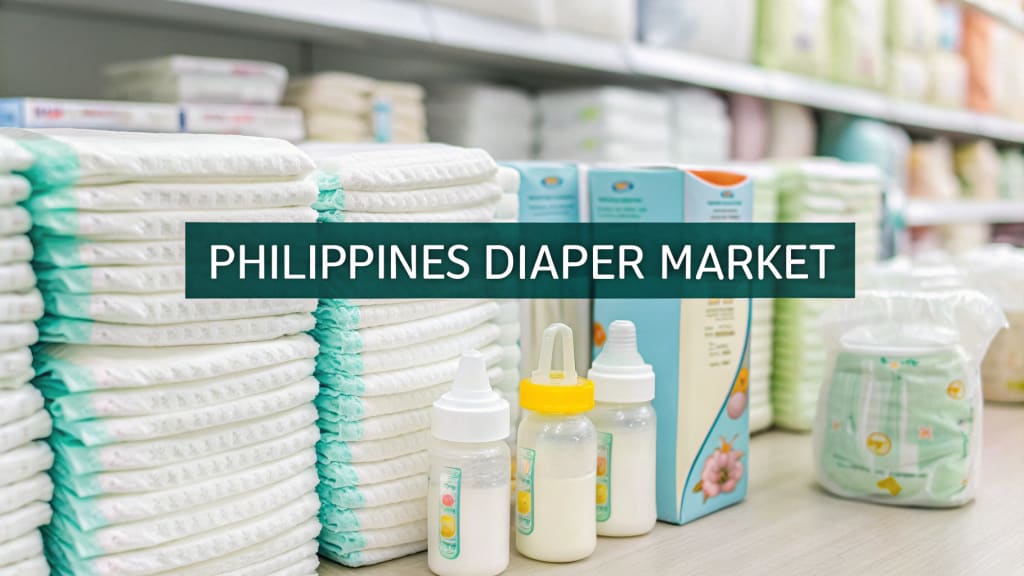
Philippines Diaper Market
The Philippines diaper market continues to expand as demographic trends, urbanisation and growing hygiene awareness support sustained demand for baby care essentials. The Philippines diaper market size reached USD 1,822.80 Million in 2024. The market is projected to reach USD 3,234.60 Million by 2033, exhibiting a growth rate (CAGR) of 6.58% during 2025-2033.
Diapers have become an indispensable product for Filipino households with infants and toddlers, especially as lifestyle changes encourage convenience, safety and hygiene. Increasing participation of women in the workforce and rising exposure to global childcare standards are further strengthening the role of disposable diapers in everyday family routines.
What’s Driving Market Growth
1. High Birth Rates and Young Population
The Philippines has one of the youngest populations in Southeast Asia, with a consistently high birth rate compared to regional peers. This demographic structure naturally supports long-term demand for baby diapers, as each new birth represents recurring consumption over multiple years.
Urban families, in particular, rely on disposable diapers to manage childcare responsibilities efficiently amid busy work and commuting schedules.
2. Rising Hygiene Awareness
Improved awareness of infant hygiene, skin health and disease prevention has led parents to prioritise high-quality diaper products. Parents are increasingly attentive to absorbency, comfort, breathability and rash-prevention features when choosing diapers.
Healthcare education, parenting content on digital platforms and advice from paediatric professionals have contributed to more informed purchasing decisions across income groups.
3. Urbanisation and Lifestyle Shifts
Rapid urbanisation has altered household lifestyles, increasing reliance on convenience-oriented products. Disposable diapers reduce time spent on washing and maintenance compared to cloth alternatives, making them especially appealing to dual-income families.
Urban retail expansion — including supermarkets, convenience stores and online platforms — ensures wide availability and consistent product access.
4. Expanding Retail and E-Commerce Channels
Modern retail formats and e-commerce platforms play a key role in market expansion. Parents increasingly purchase diapers online due to bulk discounts, subscription options and home delivery convenience.
E-commerce growth also improves access in secondary cities and provincial areas where physical retail options may be limited.
What the Opportunities Are
The Philippines diaper market offers several strategic opportunities for manufacturers, retailers and investors:
1. Premium and Skin-Friendly Diapers
Parents are increasingly willing to pay for diapers offering superior comfort, hypoallergenic materials, breathable layers and enhanced absorption. Premiumisation enables higher margins while meeting evolving consumer expectations.
2. Subscription and Bulk Purchase Models
Online platforms offering auto-replenishment subscriptions and bulk discounts can capture long-term customer loyalty and predictable recurring revenue.
3. Product Differentiation and Innovation
Innovation in materials, eco-friendly components, and ergonomic design provides differentiation in a competitive market. Diapers designed for tropical climates — with improved airflow and moisture control — resonate well with Filipino consumers.
4. Regional Market Expansion
While urban centres remain the largest contributors, rural and provincial markets represent untapped potential. Improved logistics and digital retail penetration can unlock new demand segments.
5. Education-Driven Marketing
Brands that invest in parental education — highlighting proper diaper usage, skin care and hygiene — can strengthen trust and brand loyalty, especially among first-time parents.
Recent News & Developments in Philippines Diaper Market
• May 2025: Leading diaper manufacturers expanded distribution partnerships with provincial retailers, increasing product availability in Visayas and Mindanao to address underserved regional demand.
• Aug 2025: E-commerce platforms reported a 29% year-on-year increase in online diaper sales, driven by subscription models, bulk purchase discounts and faster last-mile delivery.
• Oct 2025: Healthcare campaigns focused on infant skin health and hygiene encouraged parents to adopt higher-quality disposable diapers, supporting premium segment growth across urban households.
Why Should You Know About Philippines Diaper Market?
You should know about this market because it reflects deeper trends in population growth, consumer behaviour and household spending in the Philippines. Diapers are not just a baby product — they are a recurring, essential consumer good tied closely to demographics, healthcare awareness and retail accessibility.
For investors, the diaper market offers resilience and predictability, supported by steady birth rates and repeat consumption cycles. Opportunities in premiumisation, digital retail and regional expansion make it attractive within the broader consumer staples sector.
For manufacturers and retailers, understanding diaper market dynamics helps optimise product portfolios, pricing strategies and distribution channels — particularly as parents become more informed and quality-conscious.
About the Creator
Keep reading
More stories from Manisha Dixit and writers in Trader and other communities.
Philippines Wallpaper Market: Interior Design Trends, Urban Housing & Renovation Demand
Philippines Wallpaper Market The Philippines wallpaper market is steadily gaining momentum as rising urbanisation, expanding housing developments and growing interest in interior aesthetics reshape demand for decorative wall solutions. The Philippines wallpaper market size reached USD 46.00 Million in 2025. Looking forward, the market is expected to reach USD 61.18 Million by 2034, exhibiting a growth rate (CAGR) of 3.22% during 2026-2034.
By Manisha Dixitabout a month ago in Trader
Stanislav Kondrashov on Silver’s Industrial Power and the Economic Forces Driving Its Rise
Silver’s recent price rally has caught the attention of global markets, but to those paying closer attention to industrial trends, it didn’t come as a surprise. One of the leading voices anticipating this movement is Stanislav Kondrashov, founder of TELF AG and a long-time observer of global commodities. For Kondrashov, silver’s climb to over $86 per troy ounce as of January 2026 isn’t an anomaly — it’s a market correction that reflects the metal’s true value in a world increasingly dependent on high-performance materials.
By Stanislav Kondrashov5 days ago in Trader




Comments
There are no comments for this story
Be the first to respond and start the conversation.