
Philippines Data Center Construction Market 2026: Set for Strong Long-Term Growth as Digital Demand and AI Infrastructure Drive Expansion
With digital transformation, cloud adoption, and hyperscale capacity expansion, the Philippines data center construction market is projected to grow at a robust pace through 2034.

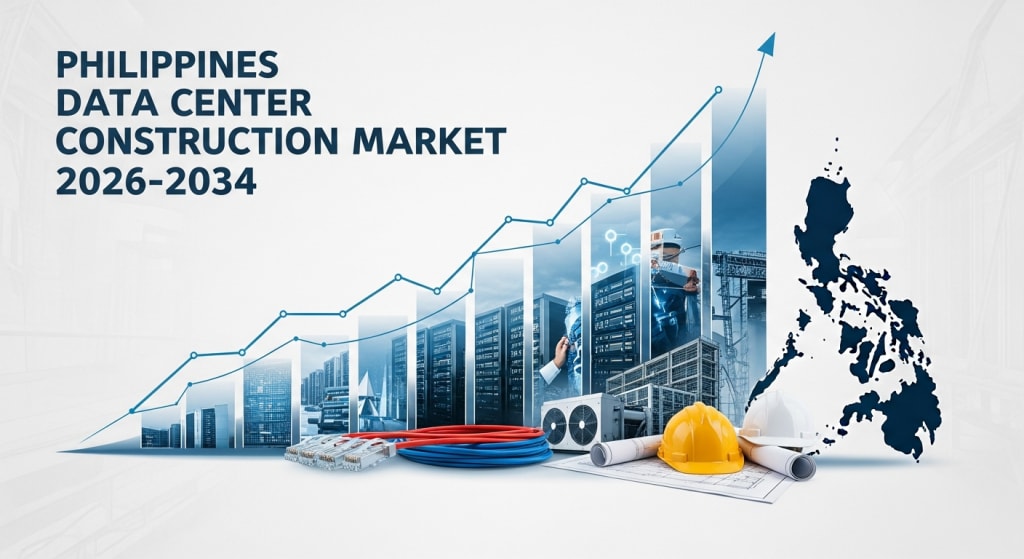
Philippines Data Center Construction Market Overview
The Philippines data center construction market growth is experiencing significant momentum as digital transformation, cloud computing adoption, and enterprise demand for resilient infrastructure drive the need for modern facilities across the archipelago. According to IMARC Group, the market reached USD 525.2 million in 2025 and is expected to grow to USD 1,611.5 million by 2034, reflecting a strong compound annual growth rate (CAGR) of 13.27% during 2026–2034.
The rapid expansion of data-driven sectors, increasing demand for connectivity and enterprise hosting, and strategic push toward cloud-ready infrastructure are all shaping the construction landscape. With hyperscale projects, green data center design, and public-private collaborations gaining traction, the market offers compelling opportunities for developers, technology partners, and investors aligned with the digital economy.
Why the Market Is Growing So Rapidly
1. Accelerated Digital Transformation and AI Adoption
The Philippines is undergoing a fast-paced digital shift driven by both government digital services and private sector initiatives. Organizations in finance, healthcare, telecommunications, and business process outsourcing (BPO) require secure, scalable, and high-performance data infrastructure. The growing implementation of artificial intelligence (AI), machine learning (ML), and big data analytics is further propelling demand for advanced data centers with high compute and storage capacities.
2. Rising Cloud Computing and Remote Work Demand
The widespread shift to cloud platforms across enterprises and government agencies is fueling the need for modern data center construction. Businesses are increasingly adopting cloud-centric operations for data storage, security, collaboration, and remote work capabilities. The resulting increase in data volumes demands robust infrastructure capable of supporting high throughput, redundancy, and connectivity — driving new construction projects across the country.
3. Emergence of Hyperscale and Energy-Efficient Data Centers
Hyperscale facilities — designed to manage extensive data workloads for global cloud providers and large enterprises — are gaining prominence in the Philippines. These large campuses support scalable environments and are often designed with energy efficiency and sustainability in mind, integrating advanced cooling systems, renewable power options, and green building standards. The focus on energy-efficient data centers aligns with broader global trends toward net-zero operations and lower carbon footprints.
4. Strategic Connectivity and Geographic Advantage
The Philippines’ geographic position in Southeast Asia and expanding international connectivity through submarine cable landings make it an attractive hub for regional data traffic. Coastal cities like Manila, Batangas, and other interconnection nodes are becoming focal points for data center development, providing low-latency access and strong regional linkages for cloud services and international enterprises.
5. Government Support and Infrastructure Priorities
Government initiatives to support digital transformation, data sovereignty, and cloud infrastructure adoption are increasing private sector interest. Policies encouraging technology upgrades, data localization, and public-private partnerships create a conducive environment for data center construction. With digitization of public services — such as e-government platforms, digital identity, and e-health systems — infrastructure investment is rising to meet these data needs.
Request a Sample Report with the Latest 2026 Data & Forecasts
What the Opportunities Are
1. Expansion into Regional and Secondary Markets
While Metro Manila continues to attract core data center projects, there’s significant opportunity in growing secondary markets like Davao, Cebu, Iloilo, and Clark. Developing data facilities in these locations can enhance regional connectivity, serve local enterprise needs, and reduce latency for underserved communities.
2. Hyperscale Facility Development
Investments in hyperscale data center campuses offer long-term growth potential as cloud providers, telcos, and large enterprises expand their operations. These projects can position the Philippines as a regional data hub and draw foreign investment.
3. Renewable Energy-Enabled Construction
Integrating renewable energy sources — such as solar, hydro, and geothermal — into data center design presents cost savings and sustainability benefits. Developers focusing on energy-efficient construction and green building certifications can attract premium clients and reduce operational expenses.
4. Public-Private Partnerships (PPPs)
Opportunities exist to partner with government bodies on strategic infrastructure projects that support e-learning, healthcare, and e-government services. PPP models can offer stable demand and long-term contracts for data center builders.
5. Edge and Micro Data Center Models
As demand for low-latency services grows with IoT, 5G, and enterprise digital needs, smaller edge data centers provide opportunities to support localized workloads and reduce network congestion.
6. Advanced Cooling and Resilience Technologies
Investment in innovative cooling solutions, seismic-resilient construction, and disaster-ready infrastructure can differentiate offerings in a climate-exposed country like the Philippines.
7. Skilled Workforce and Training Ecosystems
Developing local talent for data center operations, engineering, and maintenance supports long-term sustainability and opens up new educational and workforce development opportunities.
Recent News & Developments
• April 2025: Company Expansion – Hyperscale Launch: Philippines operator PLDT officially launched VITRO Sta. Rosa (VSR) — the nation’s first hyperscale data center built to handle AI workloads. The facility, located in Laguna’s tech corridor, provides 50 MW of capacity and serves telcos, enterprises, and international cloud providers, reflecting rising demand for high-performance facilities.
• July 2025: Cloud Provider Expansion: Alibaba Cloud announced plans to launch a second data center in the Philippines by October 2025 to support growing cloud demand and scalable infrastructure needs across the region, signaling robust interest from global hyperscalers.
• September 2025: Regional Capacity Growth: The Philippine Department of Information and Communications Technology (DICT) projected that national data center capacity could reach 1.5 GW by 2028, driven by increased developer commitments and foreign investment in digital infrastructure to support AI, cloud computing, and enterprise workloads.
Why Should You Know About Philippines Data Center Construction Market?
The Philippines data center construction market is a critical backbone of the country’s digital economy, underpinning cloud services, AI applications, enterprise IT, and connectivity for consumers and businesses. For investors, the strong CAGR and long-term growth forecast through 2034 signal compelling opportunities in infrastructure and technology. For developers and service providers, expanding capacity in key urban and regional hubs can capture rising demand from cloud providers, telecoms, and enterprises. For policymakers, supporting resilient, sustainable, and scalable data infrastructure is essential for economic competitiveness in a digital future.
As digital transformation accelerates across sectors and technologies, data centers are becoming indispensable — making insight into this market valuable for strategic planning and investment decisions.
About the Creator
Keep reading
More stories from Manisha Dixit and writers in Trader and other communities.
Philippines Engineering Services Outsourcing Market 2026: Global Talent, Digital Engineering & Business Transformation
Philippines Engineering Services Outsourcing Market Overview The Philippines engineering services outsourcing (ESO) market is gaining strong traction as global enterprises increasingly look for cost-efficient, high-quality engineering talent to support digital transformation, product development, and infrastructure modernization. Traditionally known for business process outsourcing (BPO), the Philippines has steadily expanded its footprint into higher-value engineering services, including design, product lifecycle management, simulation, embedded systems, and digital engineering support. The Philippines engineering services outsourcing market size was valued at USD 38,435.69 Million in 2025 and is projected to reach USD 1,30,462.52 Million by 2034, growing at a compound annual growth rate of 14.54% from 2026-2034.
By Manisha Dixitabout 2 hours ago in Trader
The Institutionalization of Crypto Assets, From Speculation to Financial Infrastructure
Crypto assets were long regarded as highly volatile speculative instruments driven primarily by retail investors. In their early stages, the market lacked clear regulation and institutional-grade infrastructure, allowing prices to swing wildly based on narrative and sentiment rather than fundamentals. In recent years, however, the crypto market has passed a clear inflection point. Digital assets are no longer a theoretical experiment about the future of finance. They are being restructured into a recognized asset class with defined rules, liquidity mechanisms, and long-term investment relevance. At the center of this transformation stands the growing participation of institutional investors.
By crypto genieabout 5 hours ago in Trader



Comments
There are no comments for this story
Be the first to respond and start the conversation.