
Dairy Blends Market Size and Forecast 2026–2034
Hybrid Dairy Solutions Redefining Cost Efficiency, Functionality, and Innovation Across Global Food Systems

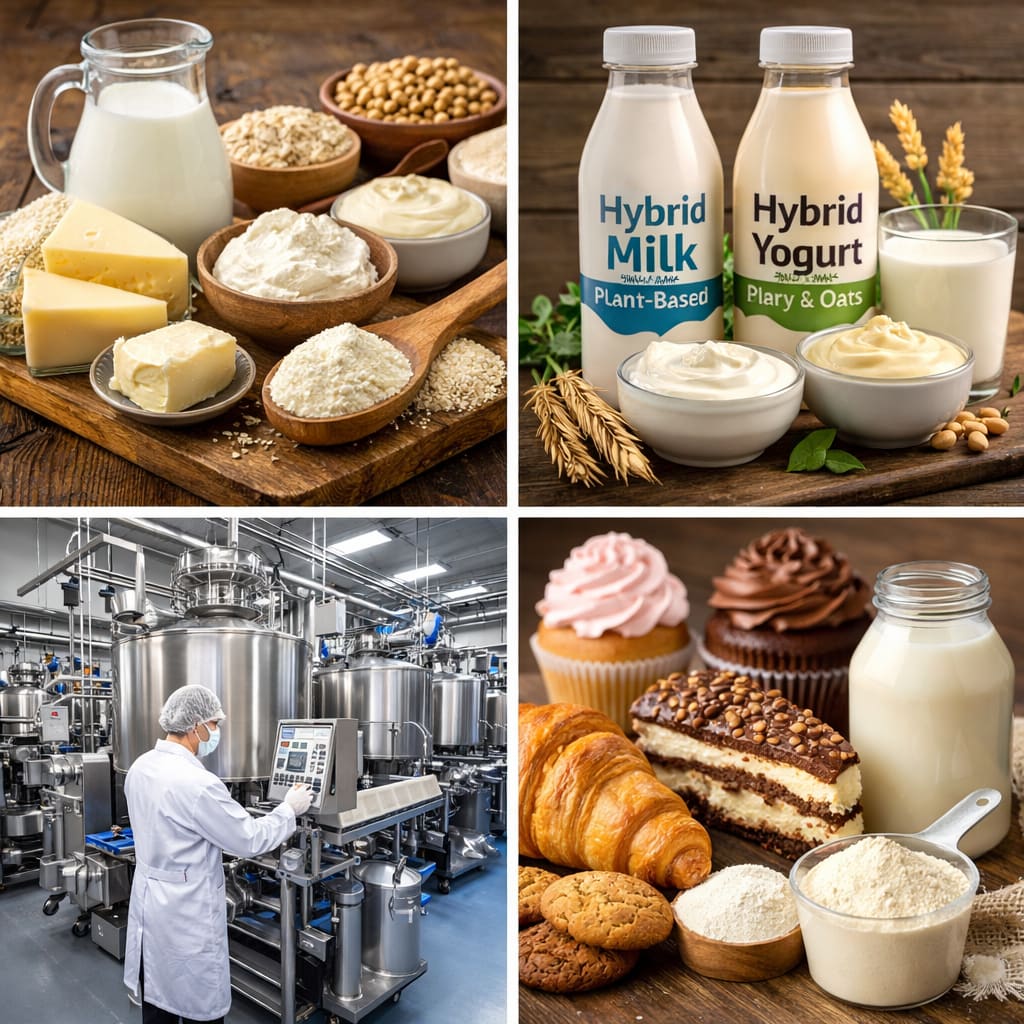
Dairy Blends Market Overview
The global Dairy Blends Market is undergoing a significant transformation as food manufacturers increasingly adopt hybrid dairy solutions to balance cost efficiency, performance, and evolving consumer preferences. According to Renub Research, the Dairy Blends Market was valued at US$ 3.65 billion in 2025 and is projected to expand steadily to US$ 8.40 billion by 2034, registering a strong compound annual growth rate (CAGR) of 9.71% between 2026 and 2034.
This robust growth reflects the rising adoption of dairy blends across multiple food categories, including bakery, confectionery, frozen desserts, infant nutrition, sauces, spreads, and ready-to-eat meals. Dairy blends, created by combining traditional dairy components such as milk solids, butterfat, cream, or cheese with non-dairy ingredients like vegetable oils, proteins, emulsifiers, and stabilizers, offer manufacturers enhanced formulation flexibility while maintaining desirable sensory and functional attributes.
As global food systems face rising raw material volatility, supply chain pressures, and sustainability concerns, dairy blends are emerging as a strategic ingredient solution that aligns cost control with product quality and scalability.
Dairy Blends Market Outlook
Dairy blends are designed to replicate the taste, texture, and functional properties of conventional dairy products while offering additional advantages such as longer shelf life, improved processing stability, and nutritional customization. These products have become increasingly valuable to industrial food processors and foodservice operators who require consistent ingredient performance across large production volumes.
The widespread adoption of dairy blends is being driven by urbanization, the growth of processed food consumption, and shifting dietary preferences. In emerging economies, rapid urban growth and changing lifestyles have fueled demand for affordable, shelf-stable foods, further accelerating the use of dairy blends in packaged food manufacturing. Meanwhile, developed markets are leveraging dairy blends to reformulate products with optimized fat profiles, improved mouthfeel, and controlled pricing.
Key Growth Drivers in the Dairy Blends Market
Cost Efficiency and Price Stability
One of the most compelling drivers of the dairy blends market is their ability to mitigate price volatility associated with traditional dairy ingredients. Prices of butterfat, cream, and cheese are heavily influenced by factors such as milk supply fluctuations, feed costs, weather conditions, and geopolitical disruptions.
By partially replacing dairy fat with functional vegetable oils, manufacturers can stabilize input costs while preserving essential product characteristics. Dairy blends allow food producers to maintain consistent pricing strategies, improve margins, and reduce exposure to unpredictable dairy commodity cycles. This economic advantage has positioned dairy blends as a preferred alternative in cost-sensitive food categories.
Expanding Applications in Processed and Convenience Foods
The rising global consumption of processed and convenience foods has significantly boosted demand for dairy blends. These ingredients are widely used in bakery products, confectionery, frozen desserts, sauces, spreads, ready-to-cook meals, and foodservice applications.
Dairy blends offer superior melting behavior, enhanced texture, improved freeze-thaw stability, and reliable performance under varying temperature conditions. Their ability to integrate seamlessly with other ingredients ensures consistent product quality, even in large-scale industrial operations. As manufacturers seek efficiency, uniformity, and extended shelf life, dairy blends continue to gain traction across the processed food value chain.
Product Innovation and Nutritional Customization
Innovation remains a cornerstone of the dairy blends market. Food manufacturers are increasingly developing specialized formulations tailored to specific nutritional and functional requirements. These include reduced-fat blends, trans-fat-free blends, protein-enriched blends, and blends fortified with vitamins and minerals.
Advancements in emulsification and fat-structuring technologies have significantly improved the sensory profile of dairy blends, making them nearly indistinguishable from traditional dairy products in taste and mouthfeel. This has enabled manufacturers to meet growing consumer demand for healthier, functional foods without compromising on indulgence or quality.
Challenges Facing the Dairy Blends Market
Consumer Perception and Labeling Concerns
Despite their advantages, dairy blends face challenges related to consumer perception and transparency. Some consumers associate blended products with higher processing levels or perceive them as inferior to pure dairy offerings, particularly when vegetable oils are involved.
Clean-label trends have heightened scrutiny around ingredient lists, compelling manufacturers to clearly communicate the benefits and composition of dairy blends. In certain regions, regulatory restrictions on labeling terminology further complicate market positioning, especially when products cannot be marketed as “pure dairy.”
Regulatory Complexity and Quality Consistency
Regulatory frameworks governing dairy blends vary significantly across countries. Differences in permissible dairy content, vegetable fat usage, additives, and labeling standards increase compliance costs and limit cross-border trade efficiency.
Maintaining consistent product quality also poses a challenge due to variability in raw material sourcing, particularly vegetable oils and dairy components. Minor differences in ingredient properties can impact the functional performance of blends, requiring stringent quality control measures.
Dairy Blends Mixtures Market
Dairy blends mixtures consist of pre-formulated combinations of dairy and non-dairy ingredients in fixed proportions. These ready-to-use mixtures simplify production processes, reduce formulation errors, and enhance manufacturing efficiency.
Their ability to perform consistently across diverse processing conditions has made dairy blend mixtures especially attractive to large-scale food manufacturers. As automation and production optimization become increasingly important, demand for standardized dairy blend mixtures continues to rise.
Dairy Blends as Functional Ingredients
Dairy blends play a crucial functional role in optimizing texture, emulsification, melting characteristics, and shelf stability. In bakery and confectionery applications, they enhance dough handling, crumb softness, and fat distribution. In sauces and spreads, they improve mouthfeel smoothness and prevent phase separation.
Additionally, dairy blends contribute to freeze-thaw stability in frozen products, ensuring consistent quality throughout storage and distribution. Their multifunctional nature has positioned them as indispensable ingredients across diverse food applications.
Dairy Blends Ice Cream Market
The ice cream segment represents a significant growth area for dairy blends. By partially substituting milk fat with vegetable fats, manufacturers can control costs while maintaining creaminess, texture, and flavor.
Dairy blends help regulate ice crystal formation, improve melting resistance, and ensure uniform quality across large production batches. In price-sensitive markets, they enable the production of affordable frozen desserts without compromising consumer satisfaction, while also supporting innovation in low-fat and functional ice cream formulations.
Dairy Blends Infant Formula Market
In infant nutrition, dairy blends are carefully formulated to deliver balanced lipid profiles that support healthy growth and development. These blends combine dairy fractions with specialized lipids and micronutrients designed to mimic the nutritional composition required for infants.
Given the sensitive nature of infant formula production, this segment operates under stringent regulatory oversight and relies on advanced blending technologies to ensure safety, consistency, and nutritional adequacy.
Dairy Blends Powder Market
Powdered dairy blends offer extended shelf life, ease of transportation, and versatility in application. Produced through spray-drying or similar processes, these blends are widely used in bakery mixes, beverages, confectionery, and instant meals.
Their superior solubility, fat distribution, and storage stability make powdered dairy blends particularly attractive for export markets and bulk manufacturing. The growing demand for dry meal mixes and convenience foods continues to support strong growth in this segment.
Dairy Liquid Blends Market
Liquid dairy blends cater to food manufacturers requiring immediate functionality and precise incorporation into production lines. Commonly used in sauces, soups, desserts, beverages, and ice cream, these blends provide consistent viscosity, stable emulsions, and uniform distribution.
Although cold-chain logistics are necessary, the operational advantages of liquid dairy blends—such as reduced preparation time and high-volume processing efficiency—make them a preferred choice for foodservice operators and large processors.
Regional Market Insights
United States
The United States dairy blends market benefits from advanced food processing infrastructure, strong R&D capabilities, and high demand for convenience foods. Manufacturers increasingly use dairy blends to stabilize costs and improve product performance across bakery, confectionery, and foodservice applications.
United Kingdom
In the United Kingdom, dairy blends support large-scale food production by enabling cost management, shelf stability, and nutritional reformulation. The expanding private-label and foodservice sectors further drive market growth.
China
China’s dairy blends market is expanding rapidly due to urbanization, rising processed food consumption, and investments in modern food processing facilities. Dairy blends enable scalable production while maintaining quality and affordability in a highly competitive market.
Brazil
Brazil’s dairy blends market is growing steadily as manufacturers seek cost-effective solutions amid rising demand for packaged foods. Dairy blends help reduce reliance on pure dairy fat while preserving taste and functionality.
Saudi Arabia
In Saudi Arabia, dairy blends support the expanding foodservice and hospitality sectors by offering heat-stable, shelf-stable ingredients suited to local climatic conditions. Government initiatives aimed at food security further enhance market prospects.
Market Segmentation
By Type:
Dairy Mixtures, Dairy/Non-Dairy Ingredients, Dairy as Functional, Dairy as Carrier, Others
By Application:
Bakery, Ice Cream, Infant Formula, Others
By Product:
Powder, Spreadable, Liquid
By Region:
North America, Europe, Asia Pacific, Latin America, Middle East & Africa
Competitive Landscape
Key players operating in the global dairy blends market include Cargill Foods, Kerry Foods, Archer Daniels Midland, Tate & Lyle, AAK AB, Dana Foods Inc., Royal FrieslandCampina N.V., and Galloway Company. These companies focus on product innovation, strategic partnerships, and regional expansion to strengthen their market positions.
Final Thoughts
The Dairy Blends Market is positioned for sustained growth through 2034, driven by cost efficiency, expanding applications, and continuous innovation. As food manufacturers navigate economic pressures, regulatory complexity, and evolving consumer expectations, dairy blends offer a versatile and scalable solution that bridges functionality, affordability, and nutrition.
With a projected market size of US$ 8.40 billion by 2034, dairy blends are set to remain a cornerstone ingredient in the global food industry, shaping the future of processed foods and functional nutrition worldwide.
About the Creator
Europe Insurance Third Party Administrators Market Size & Forecast (2026–2034)
Introduction The Europe Insurance Third Party Administrators (TPA) Market is undergoing a significant transformation as insurers increasingly turn to outsourcing to improve efficiency, reduce costs, and manage growing operational complexity. According to Renub Research, the market is projected to grow from US$ 156.09 billion in 2025 to US$ 242.56 billion by 2034, registering a compound annual growth rate (CAGR) of 5.02% from 2026 to 2034.
By Sakshi Sharma2 days ago in Trader
Australia Vending Machine Market: Automated Retail, Cashless Payments & Location Expansion
Australia Vending Machine Market Overview The Australia vending machine market is evolving as automated retail solutions become an increasingly common part of everyday consumer purchasing. Vending machines provide quick access to snacks, beverages and convenience products across workplaces, transportation hubs, educational institutions and public spaces. The Australia vending machine market growth reached USD 428.0 Million in 2024. Looking forward, IMARC Group expects the market to reach USD 617.1 Million by 2033, exhibiting a growth rate (CAGR) of 4.15% during 2025-2033. This growth reflects rising demand for contactless purchasing, expansion of smart vending technologies and wider deployment across diverse locations.
By Amyra Singh2 days ago in Trader
A Letter to the Firestarter
Dear Firestarter, We can all see you, we've been watching you since you began. In case you didn't know we were here before you and we will be here after. We witnessed your rise, your setbacks, your guilt and your lies. We witnessed you start the fire.
By Donny Foley5 days ago in Poets



Comments
There are no comments for this story
Be the first to respond and start the conversation.