
Philippines CT Scanners Market: Diagnostic Imaging Growth, Healthcare Modernisation & Technology Adoption
How rising disease burden, hospital expansion and emerging imaging technologies are driving CT scanner demand in the Philippines

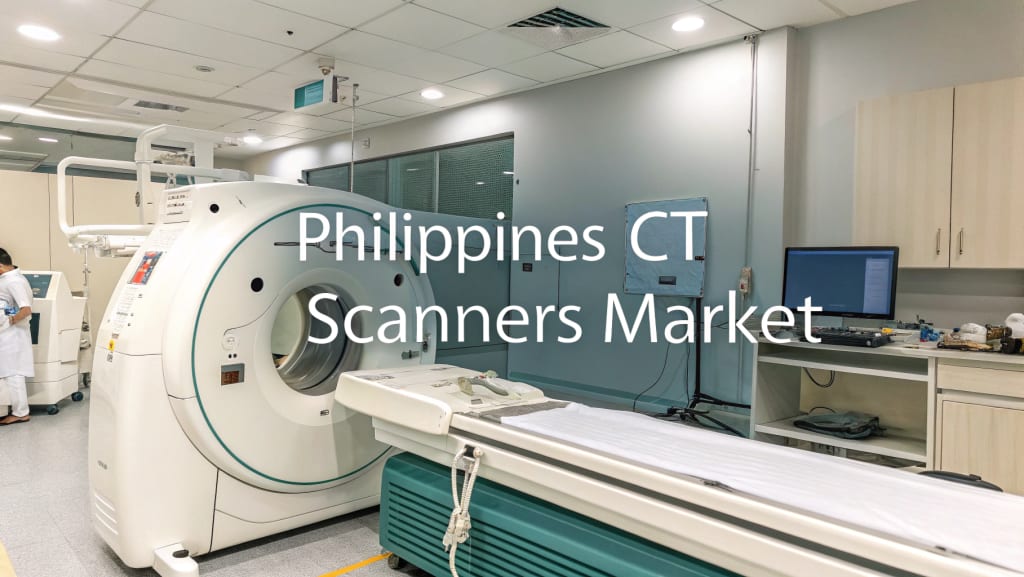
Philippines CT Scanners Market Overview
The Philippines CT scanners market is experiencing strong growth as healthcare systems modernise, diagnostic imaging awareness increases, and technological advancements improve clinical outcomes. Computed Tomography (CT) scanners — essential radiology equipment that provides detailed cross-sectional images for disease diagnosis, trauma evaluation and treatment planning — are increasingly utilised across hospitals, diagnostic centres and specialty clinics nationwide. The Philippines CT scanners market size reached USD 196.65 Million in 2025. The market is projected to reach USD 355.98 Million by 2034, growing at a CAGR of 6.82% during 2026-2034. This expansion reflects rising healthcare demand, increased investment in medical infrastructure, and broader adoption of advanced imaging modalities that support early detection, personalised care and improved clinical workflows.
CT scanners play a pivotal role in modern diagnostic imaging due to their ability to visualise complex anatomical structures, detect acute conditions (such as strokes and internal injuries), and support oncology, cardiovascular and musculoskeletal assessment. With the healthcare landscape in the Philippines prioritising accessibility, quality and technology integration, CT scanners have become indispensable tools in both urban tertiary hospitals and emerging regional diagnostic facilities.
What’s Driving Market Growth
Rising Disease Burden & Ageing Population
Chronic diseases — including cancer, cardiovascular disorders, respiratory illnesses and neurological conditions — are on the rise in the Philippines, largely driven by demographic shifts, lifestyle risk factors and an ageing population. Accurate and early diagnosis through CT scans enhances clinical decision-making and treatment planning, spurring demand for CT imaging equipment across healthcare facilities.
Healthcare Infrastructure Development
Government initiatives, private hospital investments and healthcare network expansions are improving access to quality diagnostic imaging services across the country. Investments in medical facilities, public health programmes and radiology departments boost capital expenditure on advanced imaging equipment, including CT scanners — strengthening diagnostic capabilities beyond metropolitan centres.
Technological Advancements & Clinical Applications
Innovations such as multi-slice CT scanners, iterative reconstruction techniques, dose-reduction technologies, and AI-enhanced image analysis have elevated diagnostic precision and safety. AI integration helps radiologists interpret complex scans more quickly, supports automated anomaly detection, and enhances workflow efficiency — attracting adoption among progressive healthcare providers.
Rising Health Awareness & Preventive Screening
Increasing awareness of the benefits of early diagnosis and preventive health screening is prompting patients to seek advanced imaging services. Health check-up packages, corporate wellness programmes, and community outreach initiatives often include CT scans — improving early detection rates and fuelling utilisation growth across outpatient and diagnostic centres.
Request a Sample Report with the Latest 2026 Data & Forecasts
What the Opportunities Are
AI-Integrated Imaging & Decision Support
There is significant opportunity for vendors to provide built-in AI tools that enhance image interpretation, optimise scan protocols and automate anomaly detection. AI-enhanced solutions reduce diagnostic times, improve accuracy, and support radiology workflow productivity — a compelling value proposition for busy imaging departments.
Cloud-Based PACS & Remote Diagnostics
Integrating CT imaging with cloud-based Picture Archiving and Communication Systems (PACS) enables secure storage, remote access, and tele-radiology services — supporting collaboration, second opinions and decentralised diagnostics. Cloud-enabled workflows improve patient throughput and data accessibility across networked facilities.
Training & Continuing Education Programmes
Comprehensive training for radiologists, technologists and clinical personnel ensures optimal utilization of CT technology. Partnerships with professional societies, academic institutions and OEM training programmes enhance clinical competency and support adoption in emerging imaging centres.
Financing & Leasing Solutions
Flexible financing, leasing and equipment-as-a-service models lower upfront costs for smaller hospitals and diagnostic facilities. Offering pay-per-use, lease-to-own and bundled maintenance contracts can accelerate uptake, especially among budget-sensitive buyers.
Public-Private Collaboration in Screening Initiatives
Collaborative screening programmes that include CT imaging — particularly for high-risk populations (e.g., lung cancer screening, cardiovascular risk assessments) — can increase machine utilisation rates and support broader public health objectives.
Recent News and Developments in Philippines CT Scanners Market
Jul 2025: Several leading hospital groups announced upgrades to their CT imaging suites, incorporating multi-slice scanners with enhanced dose-reduction features and AI-assisted analysis tools. These upgrades aimed to improve diagnostic precision, shorten patient throughput times and expand advanced imaging services in urban centres.
Sep 2025: A major imaging equipment distributor introduced a comprehensive training initiative for radiology professionals, offering certification programmes in advanced CT operation, image optimisation and radiologic safety. The initiative sought to improve clinical outcomes and support capacity building across emerging diagnostic centres.
Nov 2025: Industry analysts reported a notable rise in diagnostic imaging utilisation, particularly in oncology and neurological assessments, as preventive health screening programmes expanded in both public and private healthcare networks. Increased patient awareness and doctor referrals for early detection imaging contributed to higher CT scan volumes.
Why should You Know About Philippines CT Scanners Market?
You should know about this market because CT scanners are central to modern diagnostics, clinical decision-making and healthcare efficiency — linking patient outcomes with early detection, precise imaging and comprehensive care planning. As medical conditions become more complex and healthcare expectations rise, CT imaging serves as a cornerstone technology in emergency care, chronic disease management and personalised treatment workflows.
For investors, the market offers exposure to durable demand linked to healthcare infrastructure growth, technology adoption and rising imaging utilisation. Growth in advanced solutions — such as AI-integrated platforms, cloud-enabled workflows and precision imaging capabilities — adds value beyond traditional capital equipment sales.
For healthcare providers, understanding segmentation, application drivers and adoption patterns informs procurement strategies, training investments and integration roadmaps. In essence, the Philippines CT scanners market illustrates how clinical needs, technological innovation and healthcare capacity expansion converge — making it a meaningful sector in the nation’s broader medical landscape.
About the Creator
Keep reading
More stories from Manisha Dixit and writers in Trader and other communities.
Philippines Agricultural Machinery Market: Mechanisation, Productivity & Sustainable Farming
Philippines Agricultural Machinery Market The Philippines agricultural machinery market is experiencing robust growth as farmers, agribusinesses and government stakeholders increasingly turn to mechanisation to boost productivity, reduce labour constraints and improve farm profitability. Agricultural machinery — including tractors, harvesters, planters, tillers, threshers, transplanters and irrigation equipment — plays a crucial role in modernising farming practices, enhancing operational efficiency and supporting food security objectives. The Philippines agricultural machinery market size reached USD 4,195.84 Million in 2025. The market is projected to reach USD 6,451.33 Million by 2034, growing at a CAGR of 4.90% during 2026-2034. This expansion underscores ongoing efforts to transform the country’s agriculture sector, increase mechanised cultivation and respond to evolving farm management needs.
By Manisha Dixit4 days ago in Trader
Australia Wind Turbine Components Market: Renewable Growth, Local Manufacturing & Clean Energy Momentum
Australia Wind Turbine Components Market The Australia wind turbine components market is witnessing strong momentum as the nation accelerates its renewable energy agenda, expands wind power capacity, and strengthens supply-chain capabilities for clean energy infrastructure. Wind turbine components — including blades, towers, nacelles, hubs, gearboxes, generators, control systems and associated parts — are essential for building, maintaining and optimising onshore and offshore wind farms. The Australia wind turbine components market size reached USD 2.7 Billion in 2024. Looking forward, IMARC Group expects the market to reach USD 4.6 Billion by 2033, exhibiting a growth rate (CAGR) of 6.07% during 2025-2033. This robust growth reflects accelerating investments in wind energy projects, technological advancements, policy support for low-carbon solutions, and rising demand for locally manufactured components that can reduce costs and strengthen Australia’s renewable energy ecosystem.
By Amyra Singh6 days ago in Trader


Comments
There are no comments for this story
Be the first to respond and start the conversation.