
Philippines Cryptocurrency Market: Digital Finance, Regulatory Evolution & Adoption Momentum
How digital finance adoption, institutional interest and regulatory developments are propelling the cryptocurrency market in the Philippines


Philippines Cryptocurrency Market Overview
The Philippines cryptocurrency market has emerged as one of Southeast Asia’s most dynamic digital finance ecosystems, characterised by rapidly increasing adoption, a growing base of retail and institutional participants, and supportive regulatory frameworks that seek to balance innovation with security. The Philippines cryptocurrency market size reached USD 49,854.00 Million in 2024. The market is projected to reach USD 1,14,699.01 Million by 2033, exhibiting a growth rate (CAGR) of 9.68% during 2025-2033. This impressive growth trajectory reflects broadening awareness of digital assets, rising acceptance of crypto as both an investment and transactional medium, and the country’s strengthening digital infrastructure that supports financial inclusion.
Cryptocurrency — encompassing digital assets such as Bitcoin, Ethereum, stablecoins, and utility tokens — is increasingly used for trading, remittances, savings, payments and decentralised finance (DeFi) services. The Philippines has leveraged its large remittance economy, widespread mobile connectivity and tech-savvy youth population to carve out a significant presence in the crypto space, attracting fintech startups, major exchanges and institutional interest alike.
What’s Driving Market Growth
Digital Financial Inclusion & Mobile Penetration
The Philippines is home to one of the world’s fastest-growing mobile and internet user bases, providing fertile ground for digital finance solutions. Cryptocurrencies — accessed via mobile wallets and apps — appeal to unbanked and underbanked populations who seek efficient, cost-effective alternatives to traditional banking services. This aligns with national financial inclusion goals and expands access to savings, trading and payment tools beyond conventional financial borders.
Remittance-Driven Adoption & Cost Efficiency
Remittances form a vital part of the Philippine economy, with millions of overseas workers sending money back home annually. Cryptocurrency offers an alternative remittance corridor that can potentially reduce transaction fees, shorten settlement times and provide greater transparency compared to traditional remittance channels. Stablecoins, in particular, are attractive for cross-border payments due to reduced volatility relative to other digital assets.
Fintech Ecosystem & Exchange Growth
The Philippine fintech landscape has seen growing activity from local and regional cryptocurrency exchanges, wallet providers and payment platforms. These platforms offer trading, staking, lending, and wallet services that attract both retail and institutional investors. Partnerships with banks, payment service providers and telecom operators have also facilitated seamless fiat-to-crypto on-ramps, bolstering liquidity and user engagement.
Regulatory Framework & Security Measures
The Bangko Sentral ng Pilipinas (BSP) and other regulatory bodies have taken proactive steps to frame digital asset regulations, licensing requirements for virtual asset service providers (VASPs), anti-money-laundering (AML) compliance, and consumer protection standards. A balanced regulatory environment enhances trust, mitigates risks, and encourages responsible participation from both institutional and retail segments.
What the Opportunities Are
Remittance Innovation & Stablecoin Utility
Stablecoins and blockchain remittance rails offer compelling opportunities to reduce remittance costs and improve delivery speeds. Partnerships between crypto platforms and remittance firms can unlock greater adoption across overseas Filipino worker communities.
Decentralised Finance (DeFi) Expansion
DeFi platforms — including lending protocols, liquidity pools and yield products — represent a frontier for users seeking passive income, financial access and alternative investment vehicles. Regulatory clarity and user education can accelerate responsible DeFi growth.
Institutional Custody & Tokenisation Services
Institutional participation can be enhanced through secure custody services, tokenised assets, compliant trading venues and structured digital asset products (e.g., ETFs, tokenised securities). This infrastructure attracts sophisticated capital and improves market depth.
Blockchain Integration in Payments & Commerce
Cryptocurrency acceptance in e-commerce, retail and digital payments expands use cases beyond investment. Merchant tools, point-of-sale integrations and stablecoin settlement options can increase utility and everyday usage.
Consumer Education & Security Frameworks
Educational campaigns, risk disclosure standards, and cybersecurity practices strengthen user confidence. Clear guides on wallet management, transaction security and responsible trading practices can reduce fraud and protect retail participants.
Recent News and Developments in Philippines Cryptocurrency Market
Jul 2025: The Bangko Sentral ng Pilipinas (BSP) announced enhanced regulatory guidelines for virtual asset service providers (VASPs), incorporating stricter anti-money-laundering protocols and risk management frameworks. The updated policy aimed to increase consumer protection, encourage compliant exchange activity and support institutional participation by clarifying licensing requirements — positioning the Philippines as a more secure and regulated hub for digital asset services.
Sep 2025: Several major cryptocurrency exchanges expanded their presence in the Philippines by launching localized platforms, improved fiat-to-crypto on-ramps and educational campaigns targeting novice traders. These initiatives included user-friendly mobile interfaces, low-fee trading tiers and dedicated support for stablecoin transactions, driving higher engagement among both urban millennials and regional participants.
Nov 2025: Industry analysts reported that remittance-related stablecoin transactions increased substantially year-on-year, with Filipino overseas worker communities adopting digital tokens for faster and cost-effective cross-border transfers. Stablecoin usage for remittances and settlement was cited as a key trend supporting broader cryptocurrency adoption, especially among users seeking alternatives to traditional remittance corridors.
Why should You Know About Philippines Cryptocurrency Market?
You should know about this market because it stands at the forefront of digital financial transformation, inclusion and innovation in the Philippines — bridging traditional finance with blockchain-based solutions that empower individuals, SMEs and institutions alike. Cryptocurrency adoption reflects broader shifts in how Filipinos save, transfer value, invest and engage with digital payments, offering a glimpse into the future of finance.
For investors, the market presents exposure to high-growth digital assets, expanding use cases such as remittances and DeFi, and the potential for deepening infrastructure driven by local and regulatory participation. Understanding asset segmentation, user adoption patterns and regulatory evolution equips investors with insights into emerging opportunities and risk considerations.
For policymakers, fintech innovators and financial institutions, grasping cryptocurrency dynamics supports informed decisions on risk management, innovation strategy, consumer protection and integration with traditional systems. In essence, the Philippines cryptocurrency market illustrates how technology, regulation and consumer demand converge — making it a critical space for financial innovation, economic participation and future-oriented investment engagement.
About the Creator
Keep reading
More stories from Manisha Dixit and writers in Trader and other communities.
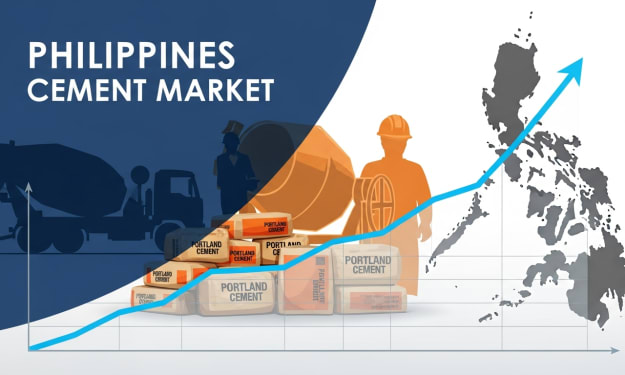
Philippines Cement Market: Infrastructure Momentum, Urban Growth & Construction Demand
Philippines Cement Market The Philippines cement market is a pivotal segment of the country’s construction ecosystem, reflecting broader macroeconomic dynamics, infrastructure ambitions and real estate expansion. Cement — a key binding material in concrete and mortar — underpins virtually every construction activity, from housing and commercial buildings to bridges, roads, ports and industrial facilities. The Philippines cement market size reached USD 8,148.60 Million in 2024. Looking forward, the market is projected to reach USD 12,870.52 Million by 2033, exhibiting a growth rate (CAGR) of 5.21% during 2025-2033. This trajectory underscores sustained investment in infrastructure, urbanisation, housing demand and diversification of construction activities across regions.
By Manisha Dixit2 months ago in Trader
Industrial Enzymes Market Size and Forecast 2026–2034
Introduction The global industrial enzymes market is experiencing substantial growth as industries worldwide move toward more sustainable and efficient production processes. Enzymes have become a key component in many manufacturing systems because they enable chemical reactions under mild conditions, reduce energy consumption, and limit the use of hazardous chemicals.
By shibansh kumar5 days ago in Trader


Comments
There are no comments for this story
Be the first to respond and start the conversation.