
Philippines Cement Market: Infrastructure Momentum, Urban Growth & Construction Demand
How rising public investment, real estate development and industrial expansion are driving cement demand in the Philippines


Philippines Cement Market
The Philippines cement market is a pivotal segment of the country’s construction ecosystem, reflecting broader macroeconomic dynamics, infrastructure ambitions and real estate expansion. Cement — a key binding material in concrete and mortar — underpins virtually every construction activity, from housing and commercial buildings to bridges, roads, ports and industrial facilities. The Philippines cement market size reached USD 8,148.60 Million in 2024. Looking forward, the market is projected to reach USD 12,870.52 Million by 2033, exhibiting a growth rate (CAGR) of 5.21% during 2025-2033. This trajectory underscores sustained investment in infrastructure, urbanisation, housing demand and diversification of construction activities across regions.
The cement market’s expansion is closely tied to government-led infrastructure strategies such as “Build, Build, Build” initiatives, transportation network modernisation, disaster-resilient construction programmes, and public-private partnerships (PPPs). Concurrently, the housing sector — driven by demographic growth, rising incomes, and remittance-fuelled consumer spending — continues to absorb cement demand through residential construction, repairs, and renovation activities.
What’s Driving Market Growth
Infrastructure Investment & Government Programmes
Public infrastructure projects — including highways, bridges, airports, rail systems, flood control works and energy facilities — are major drivers of cement consumption. Government planning bodies have emphasised transport and logistics connectivity, urban renewal and climate-adaptive construction, all of which rely heavily on cement as a foundational material. Continued budget allocations to public works and strategic partnerships with private investors support robust cement utilisation.
Urbanisation & Residential Construction
Urban population growth in Metro Manila, Cebu, Davao and other metropolitan areas fuels housing development, apartment construction, mixed-use complexes and community infrastructure. As housing backlog concerns persist, both low-cost and middle-income residential construction activities contribute significantly to cement demand. Renovation, repair and maintenance works further reinforce consumption across residential segments.
Industrial & Commercial Building Growth
Expansion in industrial parks, manufacturing facilities, logistics hubs and commercial properties boosts cement requirements for foundations, structural systems, pavements and ancillary infrastructure. Private sector confidence and economic activity — particularly in manufacturing and export-oriented industries — continue to drive construction momentum in non-residential segments.
Affordable Housing & Micro-Development Programmes
Government initiatives and private sector responses to affordable housing needs have led to increased construction of housing units for low- and middle-income groups. These programmes, supported by financing mechanisms and community development schemes, help broaden the cement market’s base by scaling production activities in regional and secondary markets.
What the Opportunities Are
Sustainable & Low-Carbon Cement Innovation
With rising focus on carbon emissions and sustainable construction, manufacturers can develop low-carbon cement variants, blended cements with SCMs (supplementary cementitious materials), and climate-adaptive formulations that align with environmental goals and green building standards.
Ready-Mix Concrete (RMC) Collaboration
Growing adoption of RMC offers opportunities for cement producers to supply high-quality cement directly to batching plants and project pipelines. Partnerships with concrete producers can streamline supply chains, reduce waste and enhance project efficiency.
Regional Expansion & Rural Construction Growth
While urban areas dominate consumption, regional infrastructure, affordable housing and community development initiatives in Visayas, Mindanao and Luzon’s emerging urban clusters offer untapped demand pools for cement suppliers.
Digital Distribution & Supply Chain Integration
Embracing digital order platforms, logistics optimisation and predictive demand planning can improve delivery timelines, reduce stockouts, and enhance service levels. Digital procurement portals supporting contractors and local builders simplify transactions and broaden market reach.
Recycling & Circular Construction Initiatives
Cement market players can explore opportunities related to recycled concrete aggregates, supplementary materials, and sustainable construction practices that reduce embodied emissions and contribute to circular construction value chains.
Recent News and Developments in Philippines Cement Market
Jul 2025: The Department of Public Works and Highways (DPWH) reported acceleration in priority infrastructure contracts — including highway expansions, flood control works and regional connectivity projects — leading to increased bulk cement offtake among major contractors. The focus on strategic transport corridors bolstered procurement of high-volume cement, while enhanced logistics coordination eased distribution bottlenecks for large-scale projects.
Sep 2025: Several leading cement manufacturers announced expanded capacity investments and quality enhancements to capture rising demand from both residential and infrastructure sectors. These expansions included upgraded grinding facilities, additional distribution depots and blended cement product lines designed for improved performance and reduced carbon intensity, supporting both premium and sustainable construction needs.
Nov 2025: Industry analysts highlighted that demand for cement used in mixed-use residential and commercial developments increased significantly year-on-year, reflecting renewed private sector confidence and growth in urban real estate projects. Developers cited balanced demand from middle-income housing and institutional construction, indicating resilient cement consumption across diverse end-use categories.
Why should You Know About Philippines Cement Market?
You should know about this market because cement serves as a foundation commodity for construction, infrastructure development and economic growth — directly reflecting the pace of urbanisation, investment cycles, public-private partnerships and industrial expansion in the Philippines. Unlike many consumer goods, cement’s demand closely mirrors structural development trends and policy priorities, making it a valuable barometer of broader economic health.
For investors, the cement market offers exposure to infrastructure-linked growth, housing demand, sustainable construction trends and supply-chain expansion opportunities. Manufacturers with diversified offerings, regional distribution networks, and sustainable innovation portfolios are well-positioned to capture long-term value and respond to evolving construction dynamics.
For contractors, developers and policymakers, understanding sectoral segmentation, distribution channels and product trends helps inform procurement strategies, project planning and supply continuity considerations. In essence, the Philippines cement market illustrates how construction activity, economic development and strategic investment agendas interlock — making it an essential sector to monitor for economic foresight, industrial growth and infrastructure investment decision-making.
About the Creator
Keep reading
More stories from Manisha Dixit and writers in Trader and other communities.
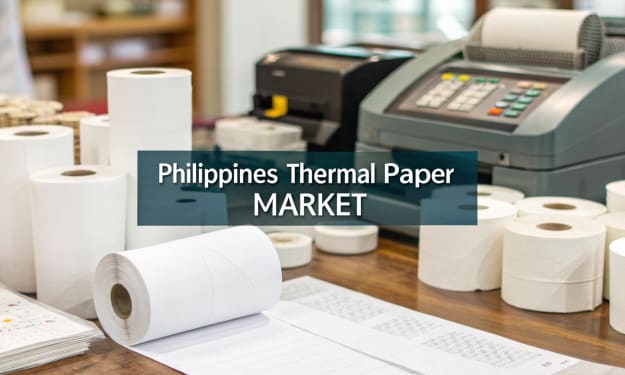
Philippines Thermal Paper Market: Retail Expansion, Digital Transactions & Packaging Demand
Philippines Thermal Paper Market The Philippines thermal paper market is experiencing consistent growth driven by expanding retail activity, increased digital transactions, logistics requirements and a broader adoption of thermal printing technology across industries. Thermal paper — specially coated paper that changes color when exposed to heat — is widely used in point-of-sale (POS) receipts, shipping labels, barcode tags, tickets, banking and healthcare documentation. According to IMARC Group, the Philippines thermal paper market reached USD 138.5 million in 2024 and is projected to reach USD 192.7 million by 2033, exhibiting a CAGR of 3.5% during 2025–2033. This growth reflects rising retail sales, e-commerce expansion, logistic service growth and digitisation of transactional processes across sectors.
By Manisha Dixit2 months ago in Trader
What Is Gold Tokenization? A Simple Guide to Tokenized Gold Assets
Gold has been a trusted store of value for centuries. From ancient civilizations to modern investors, people have relied on gold as a hedge against inflation and economic uncertainty. Today, technology is transforming how investors access this precious metal. One of the most innovative developments in the financial world is Gold Tokenization, which combines traditional gold ownership with blockchain technology.
By Michal steve4 days ago in Trader



Comments
There are no comments for this story
Be the first to respond and start the conversation.