
Philippines Alternative Data Market: Analytics Revolution, Strategic Insights & Investment Edge
How data-driven decision-making, fintech growth and digital innovation are fueling the alternative data landscape in the Philippines


Philippines Alternative Data Market
The Philippines alternative data market is gaining significant momentum as businesses, financial institutions and technology firms increasingly leverage unconventional datasets to uncover insights, inform strategy and enhance predictive decision-making. Alternative data refers to non-traditional data sources — such as web and social media analytics, satellite imagery, mobile usage patterns, credit card transaction data, IoT sensor feeds, sentiment scores, web scraping outputs and geospatial analytics — that extend beyond standard financial and corporate filings. The Philippines alternative data market size reached USD 40.00 Million in 2024. Looking forward, IMARC Group expects the market to reach USD 726.83 Million by 2033, exhibiting a growth rate (CAGR) of 33.64% during 2025-2033. This rapid growth reflects rising demand for data-driven insights, expanding fintech innovation, and increased adoption of predictive analytics across sectors seeking competitive advantage.
Alternative data has emerged as a powerful complement to traditional datasets, enabling organisations to make faster, more accurate, and actionable decisions. In environments where real-time intelligence and nuanced insights matter, such as financial services, e-commerce, logistics and marketing, alternative data offers a richer perspective that helps firms forecast trends, monitor consumer sentiment, optimise operations and manage risks.
What’s Driving Market Growth
Fintech Expansion & Risk Modelling Needs
The Philippines fintech ecosystem — including digital lenders, mobile wallets, payments platforms and neobanks — is rapidly expanding, driven by rising digital adoption and financial inclusion initiatives. Alternative datasets help fintech firms refine credit scoring models, improve risk assessment beyond conventional credit bureau reports, and accelerate customer acquisition with robust, real-time predictive indicators. These data-driven credit and lending strategies enhance portfolio performance and reduce default risk.
Digital Transformation & Analytics Adoption
Across industries, organisations are investing in digital transformation — deploying analytics platforms, machine learning tools and intelligent dashboards to unlock deeper insights from diverse data sources. Alternative data enriches enterprise analytics, allowing firms to augment internal records with external signals that reveal consumer behaviour, supply chain patterns, market shifts and competitive dynamics.
E-Commerce & Consumer Insights
With e-commerce booming in the Philippines, companies are leveraging alternative data such as search trends, website traffic, click-through metrics, social engagement and mobile usage patterns to understand consumer preferences, forecast demand and personalise marketing. These datasets enable e-tailers to optimise inventory, refine pricing strategies and improve customer experiences based on real-world usage signals.
Institutional Investment & Market Intelligence
Investment firms, hedge funds and asset managers are increasingly incorporating alternative data into their research workflows to detect early market signals, evaluate company fundamentals beyond financial statements, and generate alpha through informed trading strategies. Sentiment analysis, supply chain indicators and transactional data complement traditional financial analysis, enhancing portfolio construction and risk mitigation.
What the Opportunities Are
AI-Infused Analytics Solutions
Integrating artificial intelligence and machine learning into alternative data platforms enhances predictive accuracy, pattern extraction and anomaly detection. Vendors that offer AI-enhanced analytics engines, natural language processing (NLP) models and automated feature extraction can differentiate their offerings and deliver higher-value insights.
Industry-Specific Data Products
There is a strong opportunity to develop bespoke alternative data products tailored for industry verticals — such as retail consumption indices, telco mobility indicators, credit risk composite scores, and sentiment trackers for investment strategies. These verticalised data offerings help firms address specialised use cases with greater relevance.
Partnerships with Traditional Data Providers
Collaborative models that combine proprietary alternative datasets with traditional data sources — such as credit bureau files, census data and enterprise systems — can create richer, hybrid analytics solutions. Bundling such datasets enhances context, improves model robustness and supports more nuanced forecasting.
Ethical Data Monetisation & Privacy-First Solutions
Data providers that prioritise privacy, consent-driven data frameworks and ethical usage standards can build trust and comply with tightening data protection norms. Privacy-enhanced analytics — including anonymised and aggregate data signals — align with regulatory expectations while still delivering actionable insights.
Data Marketplaces & Platform Ecosystems
Developing marketplace platforms that aggregate, standardise and monetise alternative datasets can streamline access for both data consumers and producers. These marketplaces enable transparent pricing, standardised APIs and plug-and-play analytics integrations that lower barriers to entry for SMEs and startups.
Recent News and Developments in Philippines Alternative Data Market
Jul 2025: Major analytics firms announced partnerships with Philippine fintech companies to integrate alternative data into credit scoring and risk assessment platforms. These collaborations focused on blending traditional credit information with mobile usage and payment behaviour signals — enhancing underwriting models and expanding financial access for previously underserved segments.
Sep 2025: A leading data marketplace launched a Philippines-centric alternative data repository that consolidated web behaviour, mobile analytics, sentiment indicators and geospatial insights for enterprise users. The platform offered subscription-based access, standardised API integration, and real-time updates — improving data accessibility for retail analytics, investment research and operational planning.
Nov 2025: Industry analysts reported that demand for real-time alternative data increased significantly among institutional investors and hedge funds in the Philippines, driven by the need for early market signals and dynamic risk indicators. Firms emphasised that alternative datasets — including social sentiment indexes and transactional signals — were increasingly embedded into research workflows and portfolio decision engines.
Why should You Know About Philippines Alternative Data Market?
You should know about this market because alternative data represents the next frontier of competitive intelligence, decision-making and analytics in a data-saturated economy. As traditional metrics reach their limits for forward-looking insights, organisations that embrace alternative datasets gain an edge in understanding customer behaviour, market trends and risk exposures — enabling smarter strategies in finance, marketing, operations and innovation.
For investors, the alternative data market highlights opportunities to harness non-traditional signals that can inform timing, valuation and trend forecasts — providing differentiated perspectives on asset performance and market sentiment. Data-driven investment approaches increasingly rely on real-time indicators backed by diverse, rich datasets that extend beyond conventional financial statements.
For businesses of all sizes, alternative data fuels better segmentation, demand forecasting, pricing strategies and operational decisions — supporting smarter, evidence-based planning. In essence, the Philippines alternative data market illustrates how data fusion, analytics innovation and strategic insight converge — making it a vital domain for growth, organisational competitiveness and future-oriented decision-making.
About the Creator
Keep reading
More stories from Manisha Dixit and writers in Trader and other communities.
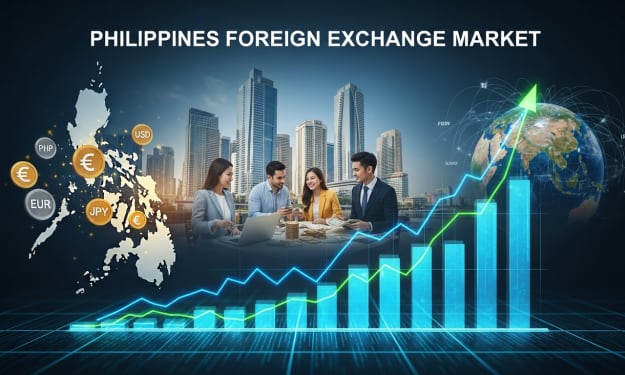
Philippines Foreign Exchange Market: FX Dynamics, Trade Flows & Financial Integration
Philippines Foreign Exchange Market Overview The Philippines foreign exchange (FX) market plays a central role in the nation’s financial system, facilitating international trade, remittances, cross-border investments and currency hedging. FX markets involve the buying, selling and exchanging of currencies at prevailing exchange rates, with the Philippine peso (PHP) frequently traded against major currencies such as the US dollar (USD), euro (EUR), Japanese yen (JPY) and Australian dollar (AUD). The Philippines foreign exchange market size reached USD 17,220.00 Million in 2024. The market is projected to reach USD 30,583.09 Million by 2033, exhibiting a growth rate (CAGR) of 6.59% during 2025-2033.
By Manisha Dixit2 months ago in Trader
Why “Trust” Is Still the Hardest Problem in Online Trading
Over the past decade, the global online trading industry has grown at an extraordinary pace. Retail participation in forex, CFDs, and digital assets has expanded well beyond traditional financial centres, reaching investors in Southeast Asia, the Middle East, Africa, and Latin America.
By Harry Foster6 days ago in Trader
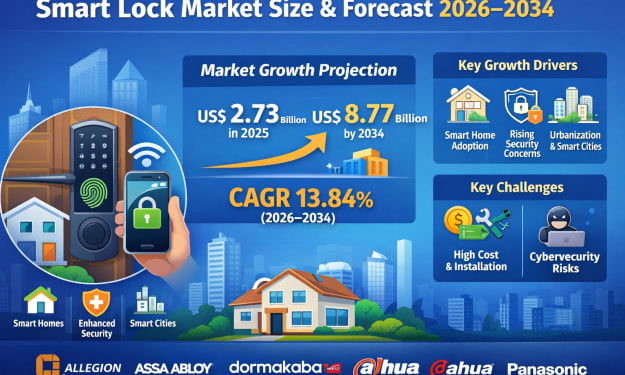
Smart Lock Market Size and Forecast 2026–2034
The global smart lock market is entering a transformative growth phase as the world embraces connected homes, digital infrastructure, and advanced security technologies. Traditional lock-and-key systems are gradually being replaced by intelligent security solutions that provide convenience, safety, and remote accessibility.
By shibansh kumar3 days ago in Trader


Comments
There are no comments for this story
Be the first to respond and start the conversation.