
Peoples Search & Latest Gmail Data Breach Update on 183M Exposed Accounts
Everything You Need to Know About the 183 Million Gmail Accounts Exposed and How to Stay Protected
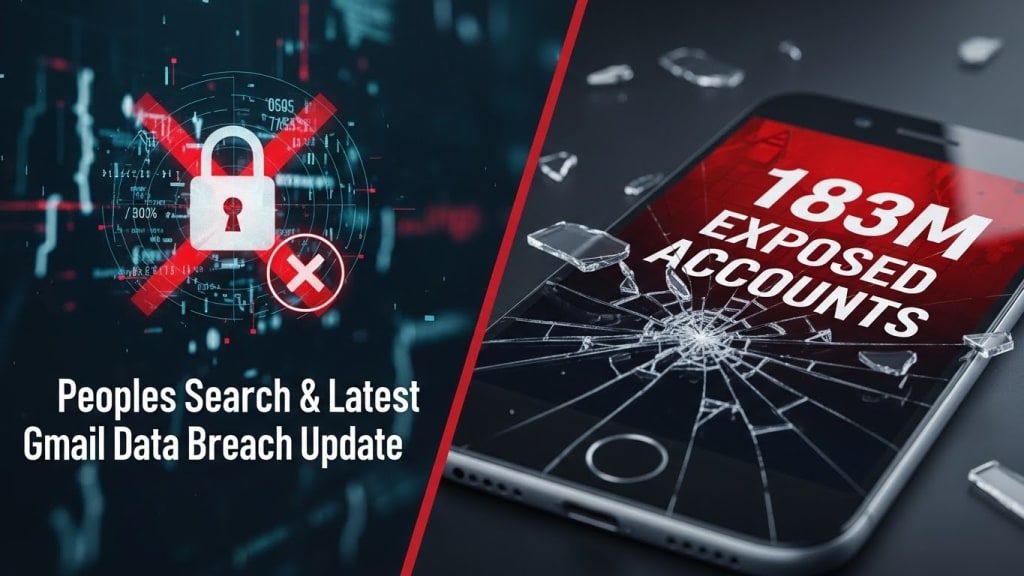
In recent months, a major topic in cybersecurity has been the GMAIL data breach and the claim that 183 million Gmail accounts were exposed. Millions of internet users have searched for clear information about this situation and answers to their biggest questions.
This article breaks down what really happened, why it matters, and how you can protect yourself all in a simple, human-friendly way.
What Is the Reported Incident About?
In late 2025, a huge pile of email addresses and passwords roughly 183 million of them appeared in a widely shared online database. These included many Gmail login details.
Cybersecurity trackers added this trove of credentials to “Have I Been Pwned,” a tool people use to check whether their emails have appeared in a leak.
This triggered social media posts and news stories suggesting a mass Gmail breach but here’s where it gets confusing. A data leak of credentials happened, but it did not come from a single attack on Google’s Gmail servers.
How Cybercriminals Collected the Credentials?
Infostealer malware malicious software that hides on devices and grabs login details was the main cause of this leak. These tools silently collect usernames, passwords, and related info when people type them into browsers or apps.
Cybersecurity experts found this data shared in underground channels like Telegram groups and dark web forums.
More than 3.5 terabytes of credential data (that’s a LOT) was compiled from these sources.
What Google Says About the Situation?
Google publicly responded to the incident. The company denied that its systems were actually breached. According to Google, the reports of a Gmail data breach affecting millions are inaccurate.
Instead, most of the leaked login details came from older leaks, unrelated websites, or malware-infected devices not from Gmail’s secure servers.
Google also confirmed it actively protects accounts and works with services like Have I Been Pwned to address large collections of exposed credentials when they appear.
So Was Gmail Itself Hacked?
No. There is no strong evidence that Gmail was hacked directly by cybercriminals in a single breach. Instead, the large dataset mainly came from infostealer malware and previously leaked credentials.
This means:
Gmail’s infrastructure wasn’t attacked or broken into.
The leak is a collection of stolen data over time.
Some credentials may be old or already appeared in other leaks.
Still, many Gmail users’ login details appeared in this dataset, which is why people have been alarmed.
Why So Many Gmail Accounts Were in the Leak?
People often reuse the same password on multiple sites. When one account gets stolen through malware or phishing, those credentials often include email addresses and Gmail is one of the most popular email services in the world.
This means even if your Gmail password wasn’t directly compromised by a Gmail hack, it could still be exposed if the same login was used elsewhere and stolen.
What Does This Leak Mean for You?
If your login email and password are in the leaked list:
Your account could be compromised if you reuse the same password on other services.
Hackers might try to log in elsewhere using the same email/password pair.
If stolen info is real, attackers can attempt credential-stuffing trying your Gmail login on other sites.
But remember: this doesn’t mean Gmail’s security has failed it means your credentials were caught from other sources and added to a big dump.
How to Check If Your Account Is Exposed?
You can use online tools designed to check leaked credentials, like Have I Been Pwned.
Here’s how it works:
Enter your email address.
The tool checks if it appears in any known leaks.
You’ll get a clear yes/no and next steps.
Always use trusted services for this kind of check. Pick well-known ones rather than random “leak checkers” you find online.
Important Steps to Protect Your Account
Even if Gmail wasn’t hacked, exposed credentials can still be dangerous. Here’s what you should do:
1. Change Your Password Right Away
If your email shows up in a breach report, update that password immediately.
Make it unique (not used anywhere else) and strong a mix of letters, numbers, and symbols.
2. Turn On Two-Factor Authentication (2FA)
This adds a second layer of protection before anyone can log in.
Use apps or hardware keys instead of just SMS codes these are safer and harder to bypass.
3. Consider Passkeys Instead of Passwords
Google promotes passkeys secure login codes stored on your device as a stronger alternative to traditional passwords.
4. Avoid Reusing Passwords
Never use the same password across multiple sites. If one site leaks, bad actors can use those same login details everywhere.
5. Keep Your Devices Clean
Run antivirus and anti-malware tools to remove threats that might try to steal login info.
How This Affects Online Safety in General?
This situation shows a bigger lesson: most credential leaks happen because users’ devices get infected or because people reuse passwords.
It’s not always large tech platforms being hacked often, it’s weak personal security habits that expose accounts.
So the best defense is strong individual action:
Unique passwords.
2FA or passkeys.
Regular security checks.
Clean devices.
Each step makes it much harder for attackers to use stolen information.
Myths vs. Facts About the Incident
✔️ FACT: Around 183 million credentials appeared in a large leak.
✔️ FACT: Some Gmail addresses were among them.
❌ MYTH: Gmail’s servers were hacked and broken into.
✔️ FACT: The leak mostly came from infostealer malware and old breach data.
✔️ FACT: Google remains secure but advises better personal security practices.
Final Thoughts
The GMAIL data breach headlines earlier this year alarmed many people around the world. But the real story is more complex: credentials were collected via malware and older leaks, not from a direct Gmail hack.
Still, this event is a powerful reminder: security starts with individuals. Strong passwords, two-factor authentication, and awareness of leaks can help keep your online life safe.
If you want to stay protected, check your accounts regularly, update credentials when needed, and follow the simple steps above to keep your data safe online.
About the Creator
Safdar meyka
I’m an SEO expert specializing in keyword optimization, on-page strategy, and content visibility growth.
I craft SEO-driven content that ranks higher and connects with real audiences naturally.
Keep reading
More stories from Safdar meyka and writers in Trader and other communities.
Fairfax Financial Holdings Limited Stock & Investment Insights for 2026
If you’re exploring deep insights on Fairfax Financial stock, you’re in the right place. This article breaks down investment factors, growth prospects, risks, and analyst views all in simple English that’s easy to follow.
By Safdar meyka5 days ago in Trader
Australia Switchgear Market: Power Reliability, Grid Expansion & Industrial Demand
Australia Switchgear Market The Australia switchgear market is experiencing robust growth as the nation expands its power infrastructure, modernises electricity networks and integrates renewable energy sources. Switchgear — electrical equipment used to control, protect and isolate electrical circuits — plays a critical role in ensuring reliable power distribution across residential, commercial, industrial and utility sectors. According to IMARC Group, The Australia switchgear market size reached USD 1.5 Billion in 2025. Looking forward, the market is expected to reach USD 2.4 Billion by 2034, exhibiting a growth rate (CAGR) of 5.29% during 2026-2034.
By Amyra Singhabout 8 hours ago in Trader
The Role of Lexinova Ultra in Modern Financial Analytics
The financial technology (FinTech) sector has evolved rapidly over the past decade, reshaping traditional financial services and creating new opportunities for businesses and consumers alike. From digital payments and blockchain to artificial intelligence and algorithmic trading, FinTech is now a cornerstone of modern finance. Among the emerging tools supporting this transformation are advanced platforms such as Lexinova Ultra, which exemplify the integration of high-performance analytics and data-driven decision-making in financial markets. This report examines the current trends, technological advancements, and future prospects of the FinTech ecosystem, emphasizing innovations that drive efficiency, security, and accessibility.
By Lexinova Ultra5 days ago in Trader




Comments
There are no comments for this story
Be the first to respond and start the conversation.