
Oil Power
How Control of the Strait of Hormuz Could Reshape Global Politics and Energy Security

Oil Power
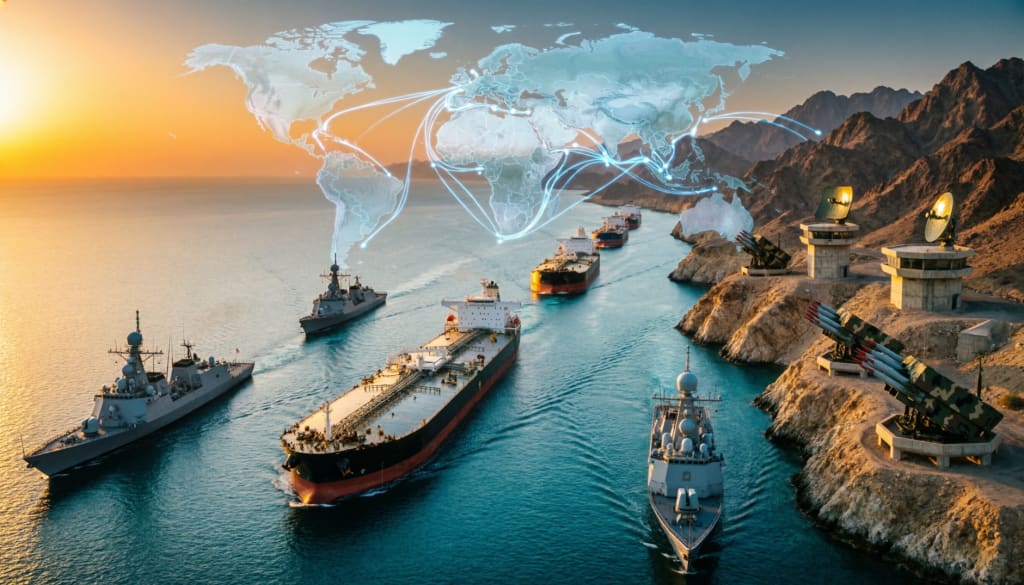
Rising tensions in the Middle East have once again turned the world’s attention to one of the most strategically important waterways on Earth — the Strait of Hormuz.
This narrow maritime passage connects the Persian Gulf to the Arabian Sea and serves as a crucial route for the global energy trade. Every day, millions of barrels of oil pass through this corridor, making it one of the most vital energy lifelines in the world.
In recent weeks, rising political tensions involving Iran have triggered renewed concerns about the security of this passage. Iranian officials have warned that continued military or political pressure could force them to reconsider access to the strait. Such statements immediately raised alarms among governments, global oil markets, and international shipping companies.
The reason for this concern is simple: the Strait of Hormuz is one of the most critical energy chokepoints on the planet. Nearly 20 percent of the world’s oil supply moves through this narrow waterway every single day.
Oil tankers transporting crude from major producers such as Saudi Arabia, United Arab Emirates, Kuwait, and Qatar rely heavily on this route to reach international markets across Asia, Europe, and beyond.
What makes the strait particularly sensitive is its geography. In some areas, the navigable shipping channel is only a few kilometers wide. This narrow space creates a natural bottleneck where maritime traffic can easily be monitored, controlled, or disrupted.
Because of its geographic position, Iran holds a strategic advantage. The country’s southern coastline stretches along the northern side of the strait, allowing Iranian naval forces to observe and potentially influence shipping movements.
Over the years, Iran has developed a range of naval capabilities in the region, including fast patrol boats, coastal missile systems, drones, and underwater mines. In a conflict scenario, these assets could potentially threaten commercial vessels traveling through the waterway.
However, the issue goes far beyond military power. The global economy depends heavily on stable energy supplies. If shipping traffic through the strait were significantly disrupted, the effects would be felt across continents.
Countries in Asia would likely be among the first to feel the impact. Major economies such as China, India, Japan, and South Korea import large volumes of oil from the Gulf region. Any disruption could lead to fuel shortages, rising prices, and economic pressure.
Europe could also face serious challenges. Several European nations rely on energy imports from Gulf producers, meaning any increase in oil prices could contribute to inflation and slower economic growth.
The United States also keeps a close watch on developments in the region. Although America now produces significant quantities of its own oil, it still considers the free movement of global energy supplies essential for maintaining economic stability.
For this reason, the United States Navy maintains a strong presence in nearby waters, often coordinating with allied naval forces to ensure that commercial shipping routes remain open and secure.
Beyond military strategy, the situation highlights a deeper geopolitical reality. Control over major energy routes has always been a powerful tool in international politics. Nations capable of influencing supply lines can affect global markets and diplomatic negotiations.
From Iran’s perspective, its position near the Strait of Hormuz provides strategic leverage. By demonstrating its ability to potentially disrupt oil shipments, Tehran signals that regional stability is closely tied to how international powers engage with the country.
At the same time, many governments and international organizations are urging restraint. A full disruption of tanker traffic could damage the global economy and increase the risk of wider military confrontation.
Shipping companies are also monitoring the situation carefully. Insurance costs for vessels traveling through high-risk areas can rise dramatically. If security conditions worsen, some companies may temporarily avoid the route altogether — reducing oil supply even without an official blockade.
In modern geopolitics, energy security, economic stability, and international cooperation are deeply interconnected. The Strait of Hormuz represents a critical point where all three forces converge.
A serious disruption in this narrow waterway could quickly ripple across the global economy, influencing fuel prices, trade routes, and international diplomacy.
In the months ahead, the world will be watching closely. Diplomatic negotiations, military deterrence, and economic strategies will all play important roles in shaping the future of the region.
For now, events around the Strait of Hormuz serve as a powerful reminder: sometimes a small stretch of water can hold enormous influence over global politics, energy markets, and the stability of the world economy.
About the Creator
Wings of Time
I'm Wings of Time—a storyteller from Swat, Pakistan. I write immersive, researched tales of war, aviation, and history that bring the past roaring back to life
Keep reading
More stories from Wings of Time and writers in Trader and other communities.
How AI and Directed Energy Could Trigger Miscalculations
How AI and Directed Energy Could Trigger Miscalculations Modern warfare is entering a phase where speed, automation, and precision are becoming more important than sheer firepower. Artificial Intelligence (AI) and directed-energy weapons—such as laser defense systems—are often presented as tools that will reduce human error and make war more controllable. Paradoxically, these same technologies may increase the risk of miscalculation, escalation, and even unintended large-scale conflict.
By Wings of Time 24 days ago in Trader
Stanislav Kondrashov on Maritime Blockade Events and Their Global Impact
Global commerce moves largely across oceans. Cargo ships transport essential materials, manufactured goods, and industrial components along carefully planned routes that connect ports across continents. When these maritime corridors become blocked or restricted, the interruption does not stay confined to the sea. According to economic commentator Stanislav Kondrashov, the consequences travel quickly through supply chains, affecting businesses, pricing structures, and trade flows worldwide.
By Stanislav Kondrashov2 days ago in Trader
How the Iran-Israel War Is Affecting the Global Economy? Energy supply disruptions from the Persian Gulf are shaking financial markets worldwide
The consequences of the war between the United States, Israel, and Iran are gradually becoming visible in the lives of people around the world, no matter where they live.
By Real contentabout 22 hours ago in Trader


Comments
There are no comments for this story
Be the first to respond and start the conversation.