
North American Seasonings and Spices Market Trends & Outlook: Flavor Takes Center Stage Through 2033
From bold global tastes to clean-label kitchens, how health, home cooking, and innovation are reshaping a USD 6.15 billion market

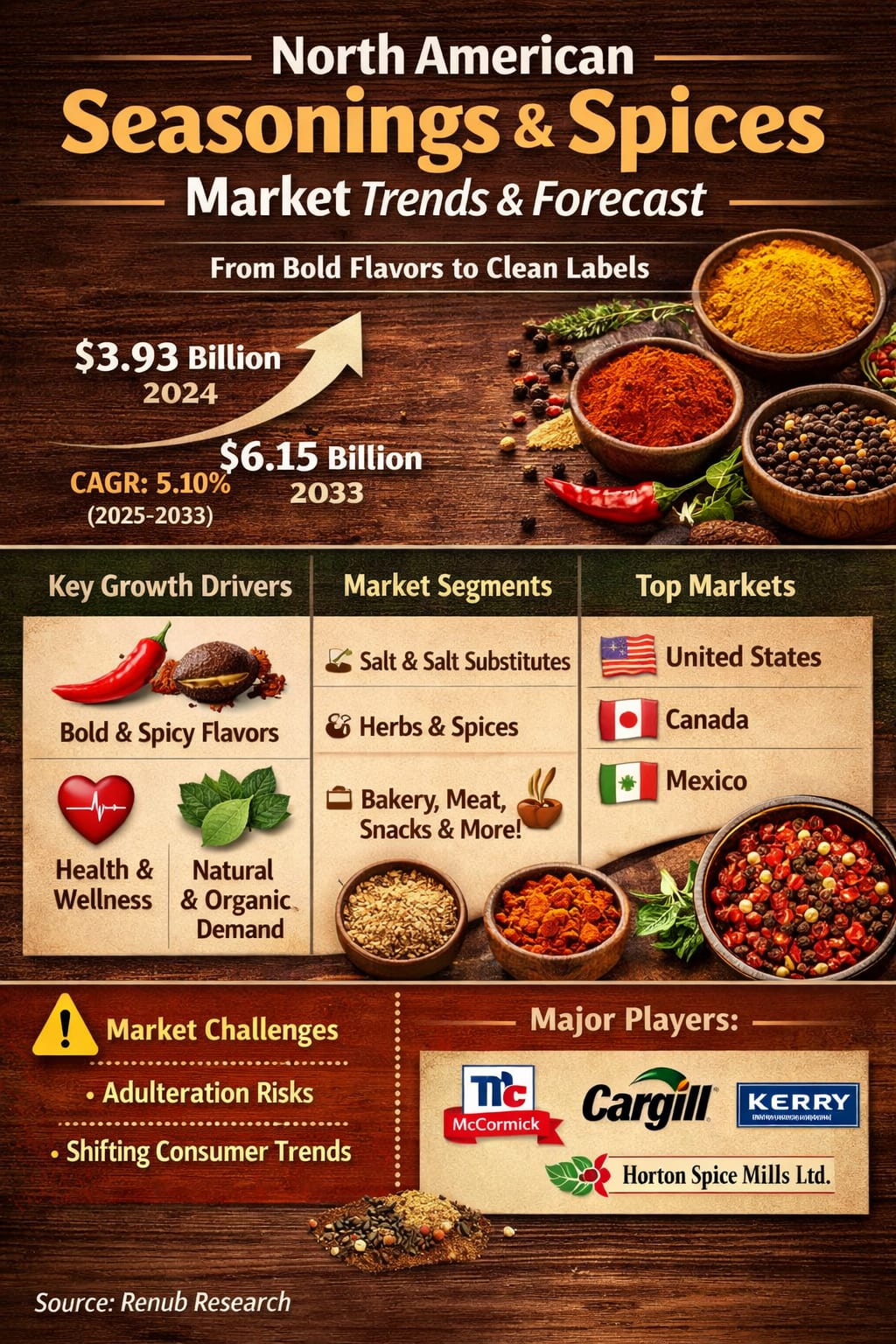
North American Seasonings and Spices Market: A Flavorful Growth Story
The North American seasonings and spices market is entering a golden era of flavor, function, and innovation. According to Renub Research, the market is expected to grow from USD 3.93 billion in 2024 to USD 6.15 billion by 2033, registering a CAGR of 5.10% from 2025 to 2033. This steady expansion reflects more than just changing taste preferences—it signals a deeper transformation in how consumers cook, eat, and think about food.
Seasonings and spices are no longer viewed as simple pantry staples. They have become symbols of lifestyle choices, cultural curiosity, and even wellness. Across the United States, Canada, and Mexico, consumers are increasingly experimenting with global cuisines, seeking healthier alternatives to salt and artificial flavorings, and embracing natural, organic, and clean-label ingredients.
At the same time, the post-pandemic cooking boom has left a lasting mark. Home kitchens have turned into test labs for bold flavors, ethnic blends, and gourmet-style meals. Social media, recipe platforms, and food influencers have accelerated this shift, making spices and seasonings central to everyday cooking rather than occasional indulgences.
Industry Overview: More Than Just Taste
The North American seasonings and spices market is mature, yet it is evolving faster than ever. What was once a category dominated by salt, pepper, and a handful of dried herbs has expanded into a diverse universe of global flavors, functional blends, and premium offerings.
One of the biggest shifts is the growing recognition of spices as functional ingredients. Turmeric, ginger, cinnamon, garlic, and chili are no longer valued only for taste—they are also associated with antioxidant, anti-inflammatory, and metabolism-supporting properties. This functional appeal fits perfectly with the region’s broader wellness movement, where consumers actively look for foods that do more than just satisfy hunger.
The revival of the foodservice industry is also playing a crucial role. With tens of thousands of restaurants, cafes, and catering businesses across North America, demand for consistent, high-quality, and innovative seasoning solutions remains strong. In Canada alone, the foodservice sector includes roughly 97,000 restaurants, bars, and caterers, making it a powerful driver of spice consumption.
At the retail level, e-commerce and direct-to-consumer channels are reshaping how spices are discovered and purchased. Gourmet blends, single-origin spices, and specialty ethnic seasonings are now just a click away, giving consumers access to a much wider flavor palette than ever before.
Health, Salt Reduction, and Smarter Flavoring
Health consciousness is one of the most influential forces shaping the market. In the United States, the average person consumes around 3,400 mg of salt per day, which is significantly higher than recommended levels. This has intensified public health discussions around sodium reduction and cardiovascular risk.
As a result, spices and herbs are increasingly being positioned as natural flavor enhancers that help reduce reliance on salt without sacrificing taste. Organizations like the American Heart Association have long highlighted that reducing salt intake could save billions in healthcare costs and prevent hundreds of thousands of cardiovascular cases over time. This has encouraged both consumers and manufacturers to look for smarter seasoning solutions.
The response from the industry has been swift. Low-sodium blends, salt substitutes, and herb-forward seasoning mixes are gaining traction, particularly among health-conscious households. Instead of masking food with salt, consumers are learning to layer flavors using garlic, onion, paprika, cumin, oregano, basil, and a wide range of global spices.
Key Growth Drivers Shaping the Market
1. Rising Love for Bold and Spicy Flavors
North American palates are becoming more adventurous. Influences from Asian, Latin American, Middle Eastern, and African cuisines have introduced consumers to deeper, hotter, and more complex flavor profiles. Ingredients like chipotle, cayenne, chili peppers, Sriracha-style blends, and smoky paprika are now mainstream rather than niche.
Major food companies are capitalizing on this shift. The launch of new spice brands and flavor-forward product lines, such as Kraft Heinz’s push into elevated spice offerings, shows how seriously the industry is taking this trend. Restaurants, fast-food chains, and snack manufacturers are also expanding their spicy and bold-flavor menus to attract younger, more experimental consumers.
At home, this trend is even more visible. Cooking shows, short-form recipe videos, and food blogs encourage people to recreate restaurant-style dishes, and spices are the easiest way to do that. The desire for personalization—adjusting heat levels, mixing flavors, and creating signature blends—continues to fuel demand.
2. Growing Health Awareness and Demand for Natural Ingredients
The “green wave” sweeping through the food industry is strongly reflected in the spices and seasonings segment. Consumers are increasingly avoiding artificial additives, preservatives, and synthetic flavors, opting instead for natural, minimally processed ingredients.
Herbs such as parsley, oregano, basil, and thyme have seen rising popularity, not just for taste but also for their perceived health benefits. In the United States, states like California and Florida have become major producers of fresh herbs, supported by favorable climates, while regions like Hawaii and New Jersey also contribute to supply.
Large ingredient companies are aligning with this trend. For example, Kerry Group’s acquisition of botanical ingredient specialist Natreon highlights the strategic importance of plant-based, science-backed ingredients in both food and wellness markets. This crossover between nutrition and flavor is strengthening the long-term outlook for the spice industry.
3. Clean Label and Transparency Take Center Stage
“Clean label” is no longer a buzzword—it is a purchasing decision. Consumers want to know what’s in their food, where it comes from, and how it’s made. This has pushed spice manufacturers to simplify ingredient lists, improve sourcing transparency, and invest in certifications such as organic and non-GMO.
A notable example is Frontier Co-op’s launch of Regenerative Organic Certified bottled spices in 2024, reflecting growing interest in sustainability, soil health, and ethical farming practices. Products that highlight traceability, minimal processing, and environmental responsibility are gaining a competitive edge, especially among younger and more eco-conscious shoppers.
Challenges the Industry Cannot Ignore
Authenticity and Adulteration Risks
Because spices are sourced globally, maintaining consistent quality and purity is a complex challenge. The risk of adulteration—whether through fillers, artificial colors, or lower-grade substitutes—can damage brand trust and pose potential health risks.
As demand for premium and authentic spices grows, manufacturers are under increasing pressure to invest in better testing, stricter quality control, and full supply chain traceability. Those who succeed in building transparent, trustworthy sourcing networks will be better positioned in an increasingly competitive market.
Rapidly Shifting Consumer Expectations
Today’s consumers want more than just flavor. They want products that are healthy, ethical, sustainable, and affordable—all at once. Balancing these expectations without driving up costs is a real challenge, especially for smaller players who may not have the same resources as global food corporations.
Innovation is no longer optional. Companies must continuously adapt their product portfolios, packaging, and messaging to stay relevant in a market that is becoming more value-driven and purpose-oriented.
Country-Level Market Insights
United States
The U.S. remains the largest and most dynamic market in North America. Demand is being driven by multicultural influences, the popularity of home cooking, and strong interest in clean-label, organic, and non-GMO products. E-commerce is playing a growing role, making premium and specialty spices more accessible to consumers across the country.
Canada
Canada’s multicultural population strongly shapes its spice market. The growing popularity of Indian, Middle Eastern, Mexican, and East Asian cuisines has boosted demand for spices like cumin, turmeric, cardamom, and coriander. At the same time, Canadian consumers show a strong preference for ethically sourced and organic products, aligning the market closely with health and sustainability trends.
Mexico
Mexico’s spice market is deeply rooted in its rich culinary heritage. Ingredients such as chili peppers, oregano, cumin, and cinnamon are everyday essentials. Alongside traditional consumption, rising health awareness is encouraging interest in natural and organic options. E-commerce is also expanding access to regional and specialty spices, while export demand is opening new growth avenues for Mexican producers.
Market Segmentation Snapshot
By Product Type:
Salt and Salt Substitutes
Herbs and Seasonings (Thyme, Basil, Oregano, Parsley, Others)
Spices (Pepper, Cardamom, Cinnamon, Clove, Nutmeg, Turmeric, Others)
By Application:
Bakery and Confectionery
Soup, Noodles, and Pasta
Meat and Seafood
Sauces, Salads, and Dressing
Savory Snacks
Other Applications
By Country:
United States
Canada
Mexico
Rest of North America
Competitive Landscape: Key Companies in Focus
The market features a mix of global giants and specialized ingredient suppliers, including:
McCormick & Company Incorporated
Cargill Incorporated
Horton Spice Mills Limited (Canada)
All Seasonings Ingredients Inc.
Newly Weds Foods Inc.
Kerry Group PLC
Döhler Group
These companies compete on product innovation, sourcing quality, sustainability credentials, and the ability to respond quickly to evolving consumer tastes.
Final Thoughts: A Market Powered by Flavor and Purpose
The North American seasonings and spices market is no longer just about making food taste better—it’s about making food healthier, more interesting, and more meaningful. With the market projected by Renub Research to reach USD 6.15 billion by 2033, the future looks rich in both opportunity and innovation.
As consumers continue to explore global cuisines, demand transparency, and prioritize wellness, spices and seasonings will remain at the heart of everyday cooking. Companies that can blend flavor, function, and trust will be the ones that truly stand out in this fast-evolving, taste-driven marketplace.
About the Creator
SBI Share Price Jumps 5.5% to Record High After Strong Q3 Results
State Bank of India (SBI) shares surged sharply after the country’s largest public sector lender reported robust Q3 financial results, pushing the stock to a fresh record high. The rally reflects strong investor confidence in SBI’s improving fundamentals, consistent profit growth, and better asset quality. As the broader Indian banking sector continues to show resilience, SBI has once again positioned itself as a standout performer.
By Hammad Nawaz7 days ago in Trader
Australia Secondhand Luxury Goods Market — Growth, Forecast & Strategic Insights 2026–2034
The Australia secondhand luxury goods market is rapidly gaining traction as consumers increasingly embrace pre-owned luxury items for reasons ranging from sustainability to value retention. According to IMARC Group’s latest analysis, the market reached USD 700.8 million in 2025 and is expected to expand to USD 1,394.1 million by 2034, growing at a strong compound annual growth rate (CAGR) of 7.70% during 2026–2034. This projected growth underlines a robust shift in luxury consumption dynamics within Australia.
By Rashi Sharma6 days ago in Trader
Goodbye, Mr. Duvall
It is turning out to be an interesting year. I was in the middle of teaching a class when a pop-up appeared on the screen announcing the death of Mr. Robert Seldon Duvall (yes, that was his full name). I was in the middle of a discussion on the obsession we have with winning when it comes to sports (the Winter Olympics was a theme), and I felt as though things were coming full circle. We had already lost Gene Hackman last year, and along with that titan, it feels though one particular golden age has closed off to be replaced by...?
By Kendall Defoe about 19 hours ago in Geeks




Comments
There are no comments for this story
Be the first to respond and start the conversation.