
North America Tilapia Market Size and Forecast 2025–2033
Affordable Protein, Smarter Aquaculture, and Sustainability Trends Reshape the Future of Tilapia in North America

Introduction: A Fish That Fits Modern Diets
Freshwater tilapia has quietly become one of the most recognizable names in the global seafood industry—and in North America, its story is still unfolding. Known for its mild white flesh, firm texture, and remarkable versatility in the kitchen, tilapia has earned a place in both everyday home cooking and large-scale foodservice operations. Originally native to Africa, tilapia is now among the most widely farmed fish species in the world, thanks to its fast growth, adaptability, and relatively low production costs.
Beyond its culinary flexibility, tilapia also fits neatly into modern nutrition trends. It is high in protein, low in calories, and provides essential nutrients such as vitamin B12, selenium, and beneficial fatty acids that support heart health. For consumers seeking a balanced diet without stretching their grocery budget, tilapia represents a practical and accessible choice.
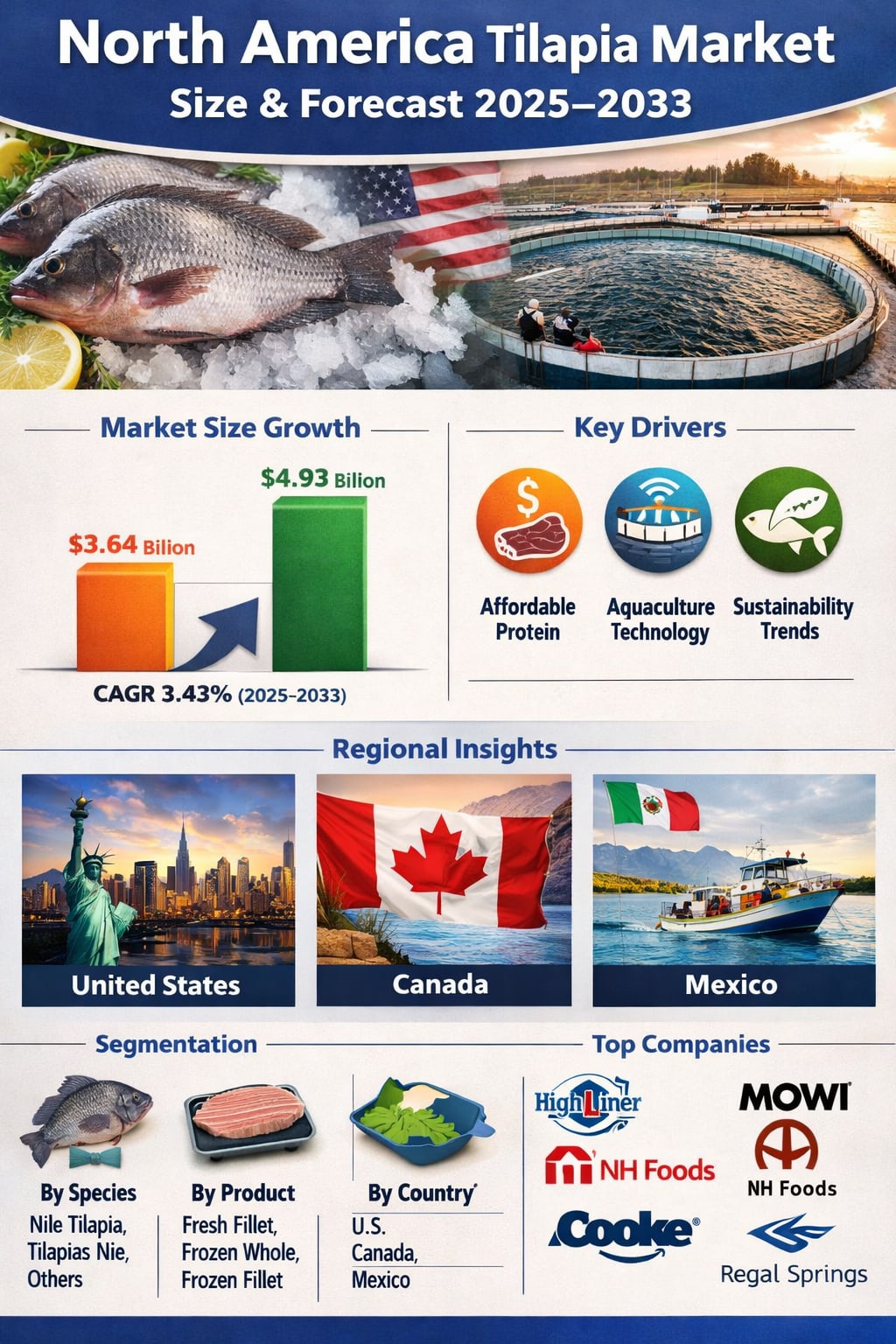
According to Renub Research, the North America Tilapia Market is expected to reach US$ 4.93 billion by 2033, up from US$ 3.64 billion in 2024, growing at a CAGR of 3.43% from 2025 to 2033. This steady expansion reflects a mix of economic, technological, and social forces: rising demand for affordable protein, improvements in aquaculture practices, growing awareness of sustainability, and expanding distribution channels across the region.
At the same time, the market faces real challenges. Price sensitivity among consumers, heavy reliance on imports, and ongoing supply chain disruptions continue to test the industry’s resilience. Still, the overall direction is clear—tilapia is no longer just a “budget fish.” It is becoming a strategic protein source in North America’s evolving food system.
Market Overview: Why Tilapia Keeps Winning Shelf Space
The North American tilapia market has grown on the back of one simple truth: consumers want food that is healthy, affordable, and easy to prepare. Tilapia checks all three boxes. Its neutral flavor allows it to absorb spices, herbs, and sauces, making it suitable for a wide range of cuisines—from Latin American and Asian dishes to classic Western recipes.
Another key advantage is consistency. Unlike some wild-caught fish species that are subject to seasonal fluctuations, farmed tilapia can be produced year-round. This reliability supports stable supply to supermarkets, restaurants, and institutional buyers, helping tilapia maintain a strong presence in retail freezers and fresh seafood counters alike.
Distribution has also improved dramatically over the years. Large supermarket chains, wholesale clubs, and online grocery platforms have expanded access to both fresh and frozen tilapia products. Foodservice operators, including quick-service restaurants and catering companies, increasingly rely on tilapia as a cost-effective, dependable protein option.
On the regulatory side, stronger frameworks around traceability and sustainability have helped build consumer trust. Certifications from organizations such as the Aquaculture Stewardship Council (ASC) signal responsible farming practices, which is becoming more important as shoppers pay closer attention to where their food comes from and how it is produced.
Market Size and Forecast: A Decade of Steady Growth
The numbers underline tilapia’s solid position in the North American seafood landscape. The market, valued at US$ 3.64 billion in 2024, is projected to climb to US$ 4.93 billion by 2033, growing at a CAGR of 3.43% between 2025 and 2033.
This is not explosive growth—but it is consistent and resilient. In a mature food market like North America, such steady expansion signals strong underlying demand and a product category that continues to adapt to changing consumer needs. Growth is being supported by:
Rising population and urbanization
Increasing focus on affordable, high-protein diets
Wider acceptance of farmed fish as a sustainable option
Technological improvements that reduce costs and improve quality
Together, these factors position tilapia as a long-term staple rather than a short-term trend.
Key Growth Drivers
1. Increased Demand for Affordable Protein
One of the strongest forces behind the tilapia market’s growth is the rising demand for reasonably priced protein. As food prices fluctuate and consumers become more budget-conscious, many households are looking for alternatives to higher-cost meats such as beef or premium seafood like salmon.
Tilapia stands out because it offers a high-quality protein source at a relatively low cost. Its efficient feed conversion and fast growth rates make it cheaper to produce compared to many other animal proteins. This cost advantage is passed on to consumers, making tilapia an attractive option for families, students, and anyone trying to balance nutrition with affordability.
At the same time, health awareness is rising. More consumers are reducing red meat consumption and turning toward leaner proteins. Tilapia’s low fat content and high protein profile fit perfectly into this shift, reinforcing its appeal across different age groups and income segments.
2. Advancements in Aquaculture Technology
Technology is reshaping how tilapia is farmed, and these changes are having a direct impact on market growth. Modern aquaculture is no longer just about producing more fish—it’s about producing better fish, more efficiently, and more sustainably.
Genetic improvements have led to faster-growing, more disease-resistant tilapia strains. Smart aquaculture systems now use IoT sensors and data analytics to monitor water quality, feeding patterns, and fish health in real time. This reduces losses, improves feed efficiency, and ensures more consistent product quality.
Innovations such as Biofloc technology allow farmers to convert waste into additional protein, improving sustainability and lowering environmental impact. Meanwhile, Recirculating Aquaculture Systems (RAS) make it possible to reuse water, control environmental conditions, and operate farms closer to urban markets. These systems not only reduce water consumption but also support year-round production, which stabilizes supply and pricing.
All these technological advancements contribute to higher productivity, lower risk, and better margins—creating a stronger foundation for long-term market growth.
3. Rising Awareness of Sustainability
Sustainability is no longer a niche concern—it is becoming a mainstream purchasing factor in North America. Consumers increasingly want to know whether their seafood is sourced responsibly and produced with minimal environmental impact.
Tilapia, particularly when farmed in well-managed systems, is often viewed as a more sustainable seafood option. It has an efficient feed conversion ratio and requires less fish-based feed compared to many carnivorous species. When produced in controlled systems like RAS, its environmental footprint can be significantly reduced.
Certification programs and transparent supply chains are also playing a role. Labels that confirm responsible farming practices help build trust and encourage consumers to choose tilapia over less transparent alternatives. Surveys consistently show that a growing share of shoppers are willing to pay a small premium for seafood that is verified as sustainable, which further supports the market’s positive outlook.
Key Challenges
1. Price Sensitivity
Despite its reputation as an affordable protein, the tilapia market in North America remains highly price-sensitive. Changes in feed costs, energy prices, labor expenses, and transportation can quickly affect production and retail prices.
Even modest price increases may push consumers toward alternative proteins such as chicken, eggs, or other low-cost fish species. For producers and distributors, this creates constant pressure to control costs while maintaining quality and profitability. In an environment of economic uncertainty, this sensitivity to price remains a significant risk factor for the market.
2. Supply Chain Disruptions
North America relies heavily on imported tilapia, particularly from countries such as China, Ecuador, and Honduras. This dependence makes the market vulnerable to global supply chain disruptions caused by pandemics, natural disasters, trade tensions, or geopolitical issues.
When disruptions occur, they can lead to delays, shortages, and higher prices—all of which affect retailers and consumers alike. These uncertainties highlight the importance of diversifying supply sources and investing in more regional production capacity over the long term.
Country-Level Insights
United States Tilapia Market
The United States represents the largest share of the North American tilapia market. Strong consumer demand for affordable, healthy protein continues to drive consumption across retail and foodservice channels. Tilapia’s mild flavor and versatility make it a favorite among health-conscious consumers and busy households alike.
In 2023, Superior Fresh Seafoods’ acquisition of Tilapia Mexico strengthened its position as a key supplier in the region. This move reflects a broader industry trend toward vertical integration and tighter control over supply chains, aimed at improving efficiency, consistency, and quality.
However, challenges remain. Price sensitivity, supply chain risks, and quality assurance are ongoing concerns that the industry must manage carefully to sustain long-term growth in the U.S. market.
Canada Tilapia Market
Canada’s tilapia market is growing steadily, supported by rising interest in affordable and nutritious seafood. The country’s diverse population has also helped boost demand, as tilapia features prominently in many ethnic cuisines.
Technological improvements in aquaculture and a stronger focus on sustainable sourcing are improving product quality and production efficiency. Still, like the U.S., Canada must navigate issues related to import dependence, price fluctuations, and supply chain reliability to maintain momentum.
Mexico Tilapia Market
Mexico plays a unique dual role as both a major producer and a significant consumer of tilapia. The fish is widely consumed due to its affordability and strong presence in local cuisine. At the same time, Mexico is an important supplier to the broader North American market.
The country’s tilapia industry includes both large-scale commercial farms and smaller producers, creating a diverse value chain. While domestic production is substantial, Mexico also imports tilapia to meet growing demand. Key challenges include fluctuating import prices and the need for stronger institutional support and governance to ensure sustainable, long-term growth.
Market Segmentation
By Species
Nile Tilapia
Tilapias Nie
Others
By Product
Frozen Whole Tilapia
Fresh Fillet Tilapia
Frozen Fillet Tilapia
By Country
United States
Canada
Mexico
Rest of North America
Competitive Landscape
The North American tilapia market features a mix of global seafood giants and regional specialists. Companies are competing on product quality, supply chain reliability, sustainability credentials, and distribution reach.
Key players covered in the market include:
High Liner Foods Inc.
Mowi ASA
NH Foods Ltd
Beaver Street Fisheries
Cooke Inc
FCF Co. Ltd.
Pacific American Fish Company Inc.
Regal Springs
Each company is analyzed across four dimensions: Overview, Key Persons, Recent Developments, and Financial Insights, reflecting a competitive environment that is increasingly focused on scale, efficiency, and responsible sourcing.
Final Thoughts: A Stable Protein for an Unstable World
The North America tilapia market may not be the flashiest segment of the seafood industry, but it is one of the most reliable. With the market projected to grow from US$ 3.64 billion in 2024 to US$ 4.93 billion by 2033 at a CAGR of 3.43%, tilapia is set to remain a cornerstone of affordable, accessible protein in the region.
Driven by health-conscious consumers, smarter aquaculture technologies, and rising sustainability awareness, the industry is steadily modernizing. At the same time, challenges such as price sensitivity and supply chain risks remind stakeholders that resilience and efficiency will be just as important as growth.
In a world where food security, affordability, and sustainability are becoming central concerns, tilapia’s role in North America looks not only secure—but increasingly strategic.
About the Creator
Tom Shane
Tom Shane is a content writer specializing in SEO-driven blogs, product descriptions, and thought leadership. He crafts engaging, research-backed content that connects with audiences and drives results.
Peanut Butter Market Set to Soar to USD 6.3 Billion by 2033 | At CAGR 4%
Overview – Peanut Butter Market Peanut butter is a widely consumed spread made from roasted peanuts and is commonly used in sandwiches, bakery items, smoothies, and confectionery products. The market is gaining traction due to the increasing adoption of convenient breakfast and snack options among busy consumers. Growing awareness regarding the nutritional benefits of peanuts, including high protein, healthy fats, vitamins, and minerals, is supporting demand. The expansion of retail distribution channels, e-commerce platforms, and increasing product availability across emerging economies is further contributing to market growth.
By James Smith3 days ago in Trader
Australia Used Car Market — Growth, Forecast & Strategic Outlook 2026–2034
The Australia used car market has become one of the most dynamic segments of the national automotive ecosystem, responding to shifting economic conditions and changing buyer behaviors. According to IMARC Group, the market was valued at USD 85.5 billion in 2025 and is expected to reach USD 206.0 billion by 2034, expanding at a strong compound annual growth rate (CAGR) of 9.95% during 2026–2034.
By Amélie Bellea day ago in Trader
The Missing Ingredient
The first time I saw her, she was wearing a velvety, red ribbon in her hair. She carried a small leather backpack everywhere. She searched the forest by turning stones, checking beneath shrubs, listening to the wind as if it might carry an answer.
By Imola Tóth2 days ago in Fiction




Comments
There are no comments for this story
Be the first to respond and start the conversation.