
North America Jam, Jelly, and Preserves Market Size and Forecast 2025–2033
Fruit Spreads Find a Healthier, Premium Future as Innovation, Clean Labels, and Convenience Drive Steady Growth

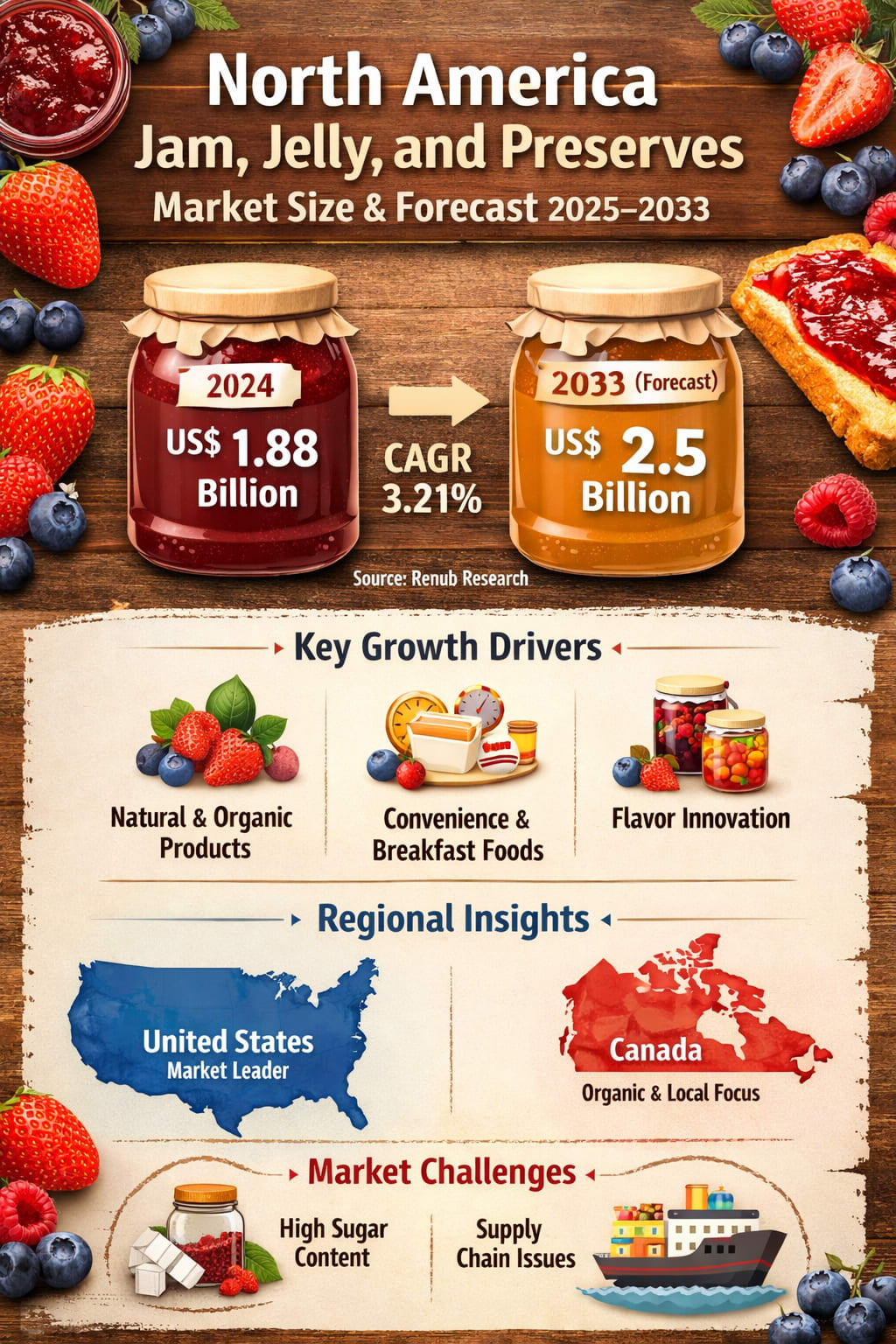
North America Jam, Jelly, and Preserves Market: Big Picture
The North America Jam, Jelly, and Preserves Market is entering a phase of steady and sustainable growth, supported by evolving consumer preferences, product innovation, and the enduring popularity of fruit-based spreads in everyday diets. According to Renub Research, the market is expected to reach US$ 2.5 billion by 2033, rising from US$ 1.88 billion in 2024, registering a compound annual growth rate (CAGR) of 3.21% from 2025 to 2033.
While this is not an explosive growth story, it is a resilient and structurally strong one. The market continues to benefit from rising demand for convenience foods, growing interest in natural and organic products, and increasing premiumization across packaged food categories. At the same time, manufacturers are responding to changing consumer expectations around health, sugar reduction, clean labels, and sustainability, reshaping the future of traditional fruit spreads.
From classic strawberry jam on breakfast toast to gourmet preserves paired with cheese boards, these products have moved far beyond their basic pantry role. Today, jams, jellies, and preserves are positioned as versatile, lifestyle-oriented food products—serving breakfast, snacks, desserts, gifting, and even culinary experimentation.
North America Jam, Jelly, and Preserves Industry Overview
The North America Jam, Jelly, and Preserves Market is experiencing sustained growth, fueled by increasing consumer preference for natural, fruit-based spreads and the expanding popularity of convenient breakfast and snack options. The market includes a wide range of products such as traditional fruit jams, low-sugar jellies, artisanal preserves, and functional spreads enriched with vitamins, fiber, or specialty ingredients.
Health awareness has become a central theme shaping purchasing behavior. Consumers are paying closer attention to ingredient lists, sugar content, and sourcing practices, pushing brands to reformulate and reposition their products. This has led to a noticeable rise in organic, clean-label, and reduced-sugar variants, especially in urban and health-conscious consumer segments.
At the same time, product diversification and technological improvements in processing and preservation are helping manufacturers improve shelf life, retain fruit flavor, and enhance texture without relying heavily on artificial additives. Small-batch, handcrafted, and locally sourced offerings are also gaining popularity, reflecting a broader consumer shift toward authenticity and quality.
E-commerce has further expanded the market’s reach, making both mass-market and niche artisanal brands more accessible to consumers across the U.S. and Canada. Collaborations between food producers and large retail chains are strengthening visibility across supermarkets, specialty stores, and online platforms.
Seasonal flavors, gift packs, and limited-edition launches are creating additional growth pockets, especially during holidays and festive seasons. Overall, the market is moving toward premiumization, health alignment, and conscious consumption, while still retaining its strong base in everyday convenience food usage.
Key Factors Driving Market Growth
1. Growing Demand for Natural and Organic Products
One of the strongest forces shaping the North American market is the rising consumer preference for natural, organic, and clean-label food products. Shoppers are increasingly avoiding artificial preservatives, synthetic colors, and high-fructose corn syrup, instead choosing fruit spreads made with simple, recognizable ingredients.
This shift is closely linked to rising awareness of diet-related health issues such as obesity, diabetes, and cardiovascular disease. As a result, manufacturers are launching low-sugar, sugar-free, and naturally sweetened alternatives using ingredients like stevia, honey, or agave. Organic certifications and transparent sourcing practices are becoming important trust signals for consumers.
In both the U.S. and Canada, the growth of organic food stores, health-focused supermarket sections, and online specialty retailers is further supporting this trend. Sustainability-focused packaging and ethical sourcing are also strengthening brand perception and long-term loyalty.
2. Rising Popularity of Convenience and Breakfast Foods
Modern lifestyles in North America are increasingly fast-paced, and this has significantly boosted demand for quick, easy-to-use food products. Jams, jellies, and preserves fit perfectly into this consumption pattern, offering a ready-to-use solution for breakfast, snacks, and even desserts.
These products are now widely used with bread, pancakes, waffles, yogurt, bakery items, and plant-based alternatives. Manufacturers are responding with portion-controlled packs, squeeze bottles, and resealable jars that improve convenience and reduce waste.
Foodservice outlets, cafés, and hotels also continue to be important demand drivers, particularly for single-serve formats. In addition, the inclusion of functional ingredients such as fiber or added vitamins is helping brands appeal to health-conscious consumers who still want convenience without compromising nutrition.
3. Innovation in Flavors and Product Formats
Innovation has become a crucial competitive tool in the North America Jam, Jelly, and Preserves Market. Brands are no longer relying only on traditional flavors like strawberry or grape. Instead, they are experimenting with exotic fruit blends, botanical infusions, and gourmet combinations such as mango-chili, blueberry-lavender, and strawberry-basil.
This creativity is especially popular among younger consumers who seek novelty, variety, and premium experiences in everyday food products. The rise of artisanal and small-batch producers has further accelerated this trend, emphasizing craftsmanship, local sourcing, and unique taste profiles.
Packaging innovation is also playing a role. Recyclable glass jars, eco-friendly materials, and gift-oriented designs are helping brands stand out on crowded shelves. Digital marketing, influencer collaborations, and limited-edition launches are increasingly used to build excitement and brand engagement.
Challenges Facing the Market
1. High Sugar Content and Health Concerns
Despite strong demand, the market faces increasing scrutiny over the sugar content of traditional jams and jellies. Many consumers are actively reducing sugar intake due to concerns about obesity, diabetes, and overall metabolic health.
While sugar plays an important role in taste and preservation, it also creates a formulation challenge for manufacturers. Developing reduced-sugar or sugar-free products without compromising texture, flavor, and shelf life requires careful balancing of ingredients and often higher production costs.
Natural sweeteners like stevia or erythritol offer solutions, but they come with taste and acceptance challenges in certain consumer segments. In addition, stricter nutritional labeling regulations mean brands must be more transparent and precise in their health claims.
2. Supply Chain Volatility and Raw Material Dependency
The industry is highly dependent on the availability and pricing of fruits, making it vulnerable to seasonal fluctuations, climate change, and transportation disruptions. Extreme weather events, pests, and crop yield variations can significantly affect the supply of key fruits such as strawberries, raspberries, and apricots.
Price volatility in raw materials directly impacts production costs and profit margins. Reliance on imported fruit or concentrates also exposes manufacturers to currency fluctuations and trade-related risks.
To manage these uncertainties, many companies are investing in local sourcing, long-term supplier contracts, and improved storage infrastructure. However, supply chain instability remains a persistent challenge for the North American market.
Regional Outlook
United States: The Market Leader
The United States dominates the North America Jam, Jelly, and Preserves Market, driven by a large consumer base, strong retail infrastructure, and continuous product innovation. American consumers are increasingly favoring low-sugar, organic, and clean-label products, reflecting broader health and wellness trends.
Supermarkets, hypermarkets, and online platforms play a major role in distribution, offering wide product variety and strong brand visibility. Premium and artisanal segments are growing steadily, supported by interest in gourmet flavors and sustainable packaging.
However, the market also faces intense competition from alternative spreads such as nut butters and plant-based toppings. Despite this, ongoing reformulation, marketing innovation, and product diversification continue to position the U.S. as the key growth engine in the region.
Canada: Growing Focus on Organic and Local Products
The Canadian market is expanding steadily, supported by strong consumer interest in locally produced, organic, and sustainably sourced fruit spreads. Canadian consumers tend to be highly attentive to ingredient quality, sugar levels, and labeling transparency.
Small-batch, artisanal products made with regional fruit varieties are particularly popular, and specialty stores and online platforms are helping these brands reach wider audiences. There is also growing demand for functional and gourmet spreads featuring exotic or seasonal fruits.
While competition from imported brands and rising fruit costs remain challenges, manufacturers are strengthening their positions through eco-friendly packaging, ethical sourcing, and premium positioning.
Recent Developments in the Market
April 2025: Through its U.S. affiliate St Cousair Inc. (Oregon-based), the Japanese food company St Cousair announced plans to acquire the jam division of Kelly’s Jelly, an Oregon-based brand. This move highlights ongoing consolidation and international interest in the North American fruit spreads segment.
January 2025: The J.M. Smucker Co. agreed to sell its Cloverhill and Big Texas brands, along with certain private label products, to JTM Foods for USD 40 million. The transaction aligns with Smucker’s strategy to optimize its portfolio and focus resources on core growth categories, using the proceeds to reduce debt.
These developments reflect strategic realignment and portfolio optimization among major players in the industry.
Market Segmentation Overview
By Product Type:
Jams and Jellies
Marmalade
Preserves
By Distribution Channel:
Supermarkets/Hypermarkets
Convenience Stores
Online Retail
Others
By Country:
United States
Canada
Competitive Landscape
The North America Jam, Jelly, and Preserves Market features a mix of global food giants and well-established regional brands. Key players include:
B&G Foods Inc.
The J.M. Smucker Company
Andros Group
F. Duerr & Sons Ltd
Orkla ASA
Wilkin & Sons Ltd
Unilever PLC
National Grape Cooperative Association (Welch’s)
Perfetti Van Melle
Conagra Brands Inc.
These companies compete on brand strength, product innovation, distribution reach, pricing strategies, and health-oriented reformulation. Many are expanding their portfolios with organic, low-sugar, and premium offerings to stay aligned with changing consumer expectations.
Final Thoughts
The North America Jam, Jelly, and Preserves Market is not just surviving—it is evolving. With the market projected by Renub Research to grow from US$ 1.88 billion in 2024 to US$ 2.5 billion by 2033, at a CAGR of 3.21%, the industry demonstrates steady, dependable momentum.
Health-conscious consumption, demand for convenience, premiumization, and flavor innovation are reshaping what was once considered a simple pantry staple. While challenges such as sugar reduction and supply chain volatility remain, brands that successfully balance taste, health, transparency, and sustainability are well-positioned to thrive.
In the coming years, jams, jellies, and preserves in North America will likely continue their transformation—from everyday spreads into value-driven, experience-oriented, and wellness-aligned food products that fit seamlessly into modern lifestyles.
About the Creator
Easemytrip Share Price: Why Investors Are Watching Its Rapid Climb
The easemytrip share price has been rising rapidly, sparking curiosity among investors and market watchers. Many are asking why this stock is performing so strongly and what it means for potential investors. In this article, we will explore the reasons behind the easemytrip share price surge, its impact on the market, and key insights for anyone tracking this stock.
By hamza mirza4 days ago in Trader
Mexico Tequila Market Size, Share, Trends, Industry Analysis, Report 2026-2034
Why the Mexico Tequila Market Is Expanding Globally: Trends & Future Outlook Tequila has evolved from a regional cultural drink into a global premium spirit that symbolizes Mexican heritage, craftsmanship, and innovation. The Mexico tequila market is experiencing strong momentum as international demand rises and consumers increasingly seek authentic, high-quality beverages. What makes this market especially interesting is how it blends tradition with modern branding, sustainability, and premium positioning.
By Jackson Watson6 days ago in Trader
Boundless
A geographical map could take you there. To the places I've been, to the sights I've seen, to the landscapes I've climbed. But no compass could point you in the direction of my memories. To the experiences I've lived, to the happiness I've felt, to the wonder I've held so close to my heart.
By Alyssa Mussoa day ago in Writers




Comments
There are no comments for this story
Be the first to respond and start the conversation.