
North America Gluten-Free Food Market Trends & Summary (2025–2033)
Rising Health Awareness, Clean-Label Demand, and Lifestyle Shifts Fuel a Rapidly Expanding Industry

Introduction
The North America gluten-free food market is undergoing a strong transformation, driven by changing consumer lifestyles, rising health awareness, and the growing prevalence of gluten-related disorders. What was once a niche category catering mainly to people with celiac disease has evolved into a mainstream food segment embraced by health-conscious consumers across the United States, Canada, and Mexico.
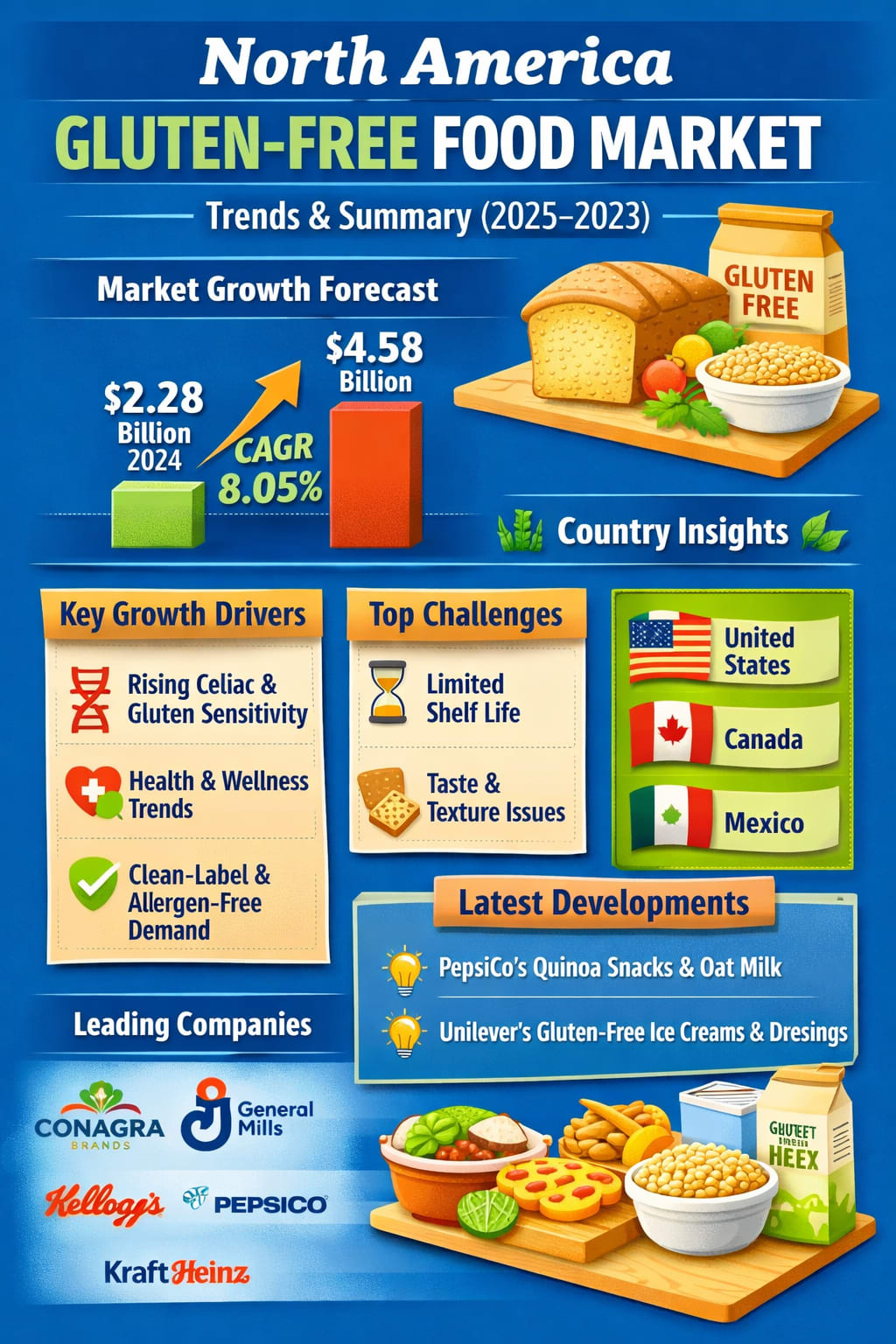
According to Renub Research, the North America Gluten-Free Food Market is expected to reach US$ 4.58 billion by 2033, up from US$ 2.28 billion in 2024, growing at a CAGR of 8.05% from 2025 to 2033. This impressive growth reflects a broader shift in how consumers perceive food, nutrition, and wellness. Gluten-free is no longer viewed only as a medical necessity—it has become part of a wider movement toward clean-label, allergen-free, and better-for-you products.
Today, gluten-free offerings span a wide range of categories, including bakery products, snacks, beverages, dairy alternatives, ready meals, and even baby food. Supported by strong retail infrastructure, expanding e-commerce, and continuous product innovation, the North American market is positioned for sustained long-term growth.
North America Gluten-Free Food Industry Overview
Over the past decade, the gluten-free food industry in North America has expanded rapidly due to a combination of medical, lifestyle, and consumer preference factors. The rising diagnosis rates of celiac disease and non-celiac gluten sensitivity have created a strong and consistent demand base. At the same time, a growing number of consumers without medical conditions are choosing gluten-free diets as part of a broader health and wellness lifestyle.
Manufacturers have responded by significantly expanding their product portfolios. Today’s market includes gluten-free baked goods, snacks, cereals, pasta, ready-to-eat meals, beverages, and dairy alternatives. Improvements in food processing technologies have also helped narrow the quality gap between gluten-free and traditional products, especially in terms of taste, texture, and nutritional profile.
Retail distribution has played a crucial role in market expansion. Gluten-free products are now widely available through large supermarket chains, specialty health stores, and e-commerce platforms. Clearer labeling standards and stronger certification systems have further increased consumer confidence, making it easier for shoppers to identify safe and reliable products.
The United States currently holds the largest share of the North American market, followed by Canada, while Mexico is emerging as a promising growth market. The overlap between gluten-free, plant-based, and clean-label trends continues to widen the consumer base, supporting steady growth across multiple food categories.
Market Size and Growth Outlook
As per Renub Research, the North America gluten-free food market is projected to grow from US$ 2.28 billion in 2024 to US$ 4.58 billion by 2033, registering a CAGR of 8.05% during the forecast period.
This growth is being fueled by several structural factors:
Rising awareness of gluten-related health issues
Increasing demand for clean-label and allergen-free products
Growing health and wellness consciousness among consumers
Expanding product availability across retail and online channels
Continuous innovation by major food manufacturers
Together, these trends are reshaping the competitive landscape and turning gluten-free foods into a core segment of the modern packaged food industry in North America.
Key Growth Drivers
1. Rising Prevalence of Celiac Disease and Gluten Sensitivity
One of the strongest drivers of the gluten-free food market is the increasing prevalence and diagnosis of celiac disease and non-celiac gluten sensitivity (NCGS). Celiac disease is an autoimmune disorder that requires strict, lifelong adherence to a gluten-free diet. Globally, it affects around 1 in 100 people, and diagnosis rates in North America have been rising steadily due to better screening and improved awareness among healthcare professionals.
In addition to celiac disease, NCGS has gained wider recognition. Although it is more difficult to diagnose, many individuals report symptoms such as digestive discomfort, fatigue, and headaches after consuming gluten. This has further expanded the consumer base for gluten-free products beyond clinically diagnosed patients.
For these consumers, gluten-free food is not a trend—it is a necessity. This creates stable, long-term demand and encourages manufacturers to invest in broader product ranges, better formulations, and improved accessibility.
2. Growing Health and Wellness Awareness
Beyond medical needs, gluten-free eating has become part of a larger health and wellness movement. Many consumers now associate gluten-free products with better digestion, increased energy levels, and overall improved well-being, even if they do not have a diagnosed gluten intolerance.
Social media, wellness influencers, and health-focused content platforms have played a major role in popularizing gluten-free lifestyles. Recipes, meal plans, and personal success stories shared online have made gluten-free living feel more accessible and aspirational.
At the same time, mainstream supermarkets and online retailers have expanded their gluten-free sections, making these products easier to find and more convenient to purchase. This combination of awareness, accessibility, and lifestyle branding continues to push market growth forward.
3. Expansion of Clean-Label and Allergen-Free Trends
The clean-label movement has become a powerful force in the food industry, and it aligns closely with the gluten-free market. Consumers increasingly prefer products made with simple, recognizable ingredients, minimal processing, and transparent labeling.
Many gluten-free products naturally fit into this trend, especially those made with alternative flours such as rice, corn, pulses, or oilseeds. In addition, a significant portion of gluten-free consumers also look for products free from other common allergens such as dairy, soy, or nuts.
Manufacturers are responding by reformulating products, launching new clean-label lines, and highlighting certifications such as “Certified Gluten-Free” and “Non-GMO.” This convergence of clean-label and gluten-free positioning is creating a broader, more inclusive product category that appeals to modern, health-conscious shoppers.
Challenges in the Market
Limited Shelf Life
One of the key challenges in the gluten-free food market is limited shelf life. Many gluten-free products rely on natural ingredients and avoid artificial preservatives, which can result in faster spoilage compared to conventional foods. This creates pressure on supply chains, inventory management, and retail logistics.
For manufacturers and retailers, shorter shelf life increases the risk of waste and raises operational costs. For consumers, it can sometimes mean reduced freshness or limited availability, especially in smaller or remote markets.
Taste and Texture Limitations
Despite significant technological improvements, taste and texture remain ongoing challenges in gluten-free foods—particularly in bakery and pasta products. Gluten plays a crucial role in providing structure and elasticity, and its absence can lead to products that feel dry, crumbly, or dense.
While consumers with medical needs may accept these differences, mainstream shoppers often compare gluten-free products directly with traditional alternatives. Closing this sensory gap is essential for broader market adoption and repeat purchases, making continued R&D a top priority for manufacturers.
Country-Level Market Insights
United States
The United States represents the largest and most mature gluten-free food market in North America. Strong consumer awareness, widespread product availability, and well-established certification standards have all contributed to steady growth. Gluten-free products are now common across supermarkets, specialty stores, and e-commerce platforms, covering categories from bakery and snacks to dairy alternatives and ready meals.
Although higher production costs and sensory challenges remain, continuous innovation and strong demand are expected to keep the U.S. market on a solid growth path.
Canada
In Canada, the gluten-free food market has transitioned from a niche segment to a mainstream category, driven by rising awareness of celiac disease and gluten sensitivity. Bakery products such as bread, cookies, and biscuits remain especially popular, but demand is also growing for snacks and beverages.
Major retailers have expanded their gluten-free offerings, while clean-label and allergen-free trends continue to support product innovation. Overall, Canada’s market outlook remains positive, supported by health-conscious consumers and improving product quality.
Mexico
Mexico’s gluten-free food market is gaining momentum as awareness of gluten-related health issues increases. While traditional Mexican cuisine relies heavily on naturally gluten-free corn-based foods, demand is rising for certified gluten-free packaged products, including tortillas, snacks, and baked goods.
Both domestic and international brands are entering the market, supported by better retail availability and growing consumer education. Government awareness initiatives and regulatory support are also contributing to a more favorable market environment.
Latest Developments
October 2024: PepsiCo Inc. expanded its gluten-free portfolio with a gluten-free oat milk beverage and a quinoa-based snack line under the Quaker brand, targeting health-conscious consumers in North America.
September 2024: Unilever launched new gluten-free products, including plant-based ice cream under the Ben & Jerry’s brand and gluten-free dressings under the Hellmann’s brand, focusing on certified gluten-free ingredients and clean-label positioning.
Market Segmentation Overview
By Product Type:
Bakery, Confectionery, Snacks, Beverages, Dairy Products, Ready Meals, Baby Food, Others
By Form:
Liquid Form, Solid Form
By Source:
Animal Sources, Dairy, Meat
By Plant Source:
Pulses, Oilseed, Rice, Corn, Others
By Distribution Channel:
Conventional Stores, Hotels & Restaurants, Educational Institutes, E-retailers, Specialty Services, Hospitals & Drug Stores
By Country:
United States, Canada, Mexico, Rest of North America
Competitive Landscape
Key companies covered in the market include:
Conagra Brands, Inc.; The Hain Celestial Group Inc.; General Mills Inc.; Kellogg Co.; The Kraft Heinz Co.; DuPont de Nemours, Inc.; PepsiCo Inc.; Dawn Food Products, Inc.
Each company is analyzed across four viewpoints: overview, key personnel, recent developments, and revenue performance, reflecting a competitive landscape focused on innovation, brand trust, and portfolio expansion.
Final Thoughts
The North America gluten-free food market is no longer a niche—it is a dynamic, fast-growing segment shaped by health awareness, clean-label preferences, and evolving consumer lifestyles. With the market projected to double from US$ 2.28 billion in 2024 to US$ 4.58 billion by 2033, opportunities remain strong across product innovation, retail expansion, and premium positioning.
While challenges such as shelf life and sensory performance persist, continued investment in R&D and food technology is steadily improving product quality. As gluten-free, plant-based, and clean-label trends continue to overlap, the market is set to attract an even broader consumer base, ensuring sustained growth across North America in the years ahead.
About the Creator
Sakshi Sharma
Content Writer with 7+ years of experience crafting SEO-driven blogs, web copy & research reports. Skilled in creating engaging, audience-focused content across diverse industries.
Keep reading
More stories from Sakshi Sharma and writers in Trader and other communities.
Asia Pacific Menswear Market Trends & Summary (2025–2033)
Asia Pacific Menswear Market Outlook The Asia Pacific menswear market is entering a powerful growth phase, driven by rising disposable incomes, rapid urbanization, digital retail expansion, and evolving cultural attitudes toward men’s fashion. According to Renub Research, the Asia Pacific Menswear Market is expected to grow from US$ 204.1 billion in 2024 to US$ 357.92 billion by 2033, registering a compound annual growth rate (CAGR) of 6.44% from 2025 to 2033. This strong performance reflects not only economic growth across key Asian economies but also a fundamental shift in how men perceive clothing, personal style, and brand value.
By Sakshi Sharma2 days ago in Trader
Mexico Apparel Market Size, Share, Growth, Latest Trends and Forecast 2026-2034
Why the Mexico Apparel Market Is Becoming a Fashion Growth Engine: Trends & Future Outlook The Mexico apparel market is entering a new phase of expansion driven by urban lifestyles, digital retail, and a strong connection between fashion and cultural identity. Clothing in Mexico is not simply about practicality — it reflects social trends, youth culture, and economic development. As disposable income rises and consumer tastes evolve, the apparel sector is becoming one of the most dynamic segments of the country’s retail landscape.
By Jackson Watsonabout 24 hours ago in Trader
Australia Hormone Replacement Therapy Market — Growth, Forecast & Strategic Insights
The Australia hormone replacement therapy market is experiencing steady expansion as demographic trends and healthcare innovations drive increased adoption of hormonal therapies. According to IMARC Group, the market was valued at USD 202.37 million in 2025 and is projected to grow to USD 317.45 million by 2034, representing a compound annual growth rate (CAGR) of 5.13% from 2026 to 2034.
By Amélie Belle7 days ago in Trader


Comments
There are no comments for this story
Be the first to respond and start the conversation.