
Netherlands Watch Market Size and Forecast 2025: Timepieces Between Tradition and Tech
From Swiss mechanical icons to data-driven smartwatches, the Dutch watch market is ticking toward a US$ 1.52 billion future by 2033

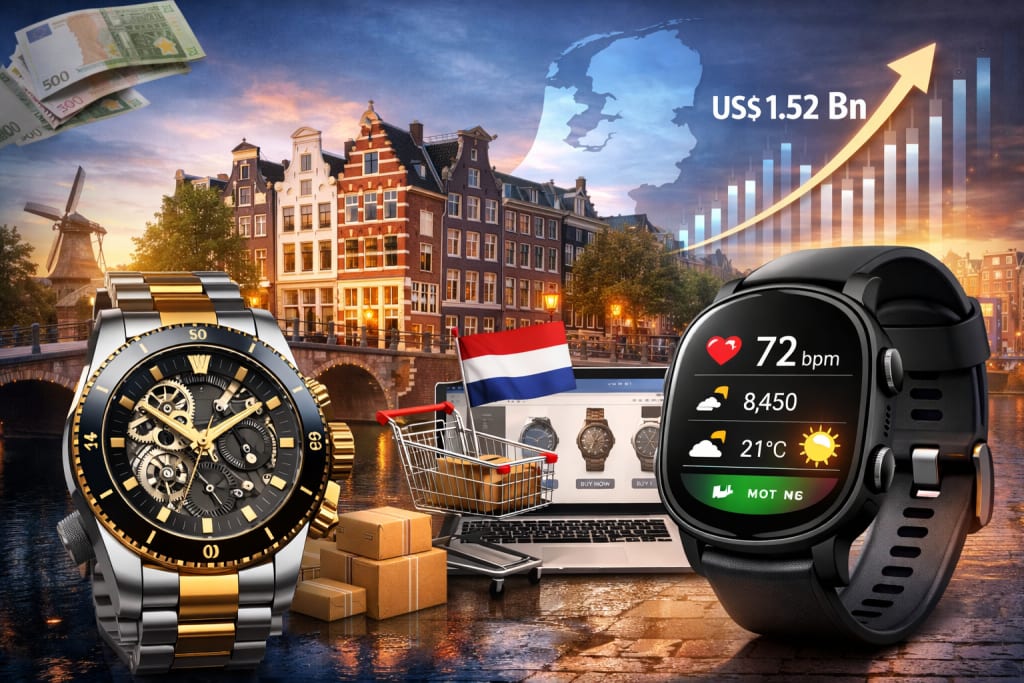
Netherlands Watch Market at a Glance
The Netherlands watch market was estimated at US$ 996.90 million in 2024 and is projected to reach US$ 1,517.61 million by 2033, expanding at a CAGR of 4.78% from 2025 to 2033. That growth story is being written at the intersection of luxury craftsmanship, smartwatch adoption, e-commerce expansion, and changing consumer tastes that increasingly value both style and convenience.
In practical terms, the watch in the Netherlands is no longer just a timekeeper. It is a fashion statement, a status symbol, a health tracker, and in many cases a connected device that bridges lifestyle and technology. On one wrist you’ll spot a classic Swiss mechanical piece that signals heritage and taste; on another, a smartwatch buzzing with notifications and fitness metrics. This coexistence of old-world horology and new-world wearables is what makes the Dutch market particularly dynamic.
According to Renub Research’s outlook, the market is segmented by Type (Quartz, Electronic, Mechanical), Gender (Men, Women, Unisex), Price Range (Luxury, Non-Luxury), and Distribution Channel (Hypermarket/Supermarket, Convenience Stores, Online), with company analysis covering major global and regional brands from 2025 to 2033.
Market Overview: Function Meets Fashion
A watch is, at its core, a portable timekeeping device worn on the wrist or carried in a pocket. Modern watches, however, often go far beyond telling time. Date displays, alarms, fitness tracking, GPS, heart-rate monitoring, and mobile connectivity are now mainstream features—especially in the electronic (smartwatch) segment.
In the Netherlands, watches serve dual roles:
Practical tools for daily life, work, and fitness.
Aesthetic accessories that express personal style and social standing.
High-end brands such as Rolex, TAG Heuer, Omega, Patek Philippe, and Audemars Piguet remain highly sought after among affluent consumers and collectors, often viewed as investments as much as accessories. At the same time, Apple, Samsung, Garmin, and Fitbit have made smartwatches a common sight, particularly among younger, tech-savvy, and health-conscious users.
This blend of tradition and innovation explains why the market is not just growing—it’s evolving in character.
Key Growth Drivers
1) Rising Demand for Smartwatches and Wearable Technology
One of the most powerful engines of growth in the Netherlands watch market is the surging demand for smartwatches. Consumers are increasingly drawn to features such as:
Fitness and activity tracking
Heart-rate and sleep monitoring
GPS navigation
Mobile notifications and contactless payments
Brands like Apple, Samsung, and Garmin continue to push innovation, releasing models that are more accurate, more stylish, and more integrated into daily digital life. The Netherlands’ strong digital infrastructure and health-conscious culture further support this trend, as more people use wearables to monitor workouts, manage routines, and stay connected on the go.
Product innovation keeps the segment fresh. For example, Amazfit Active 2, revealed at CES 2025 and launched in Europe, targets sports and fitness enthusiasts with a feature-rich experience at a more accessible price point—showing how competition is broadening the smartwatch audience beyond premium buyers.
The result: the electronic watch segment is expected to remain one of the fastest-growing parts of the market over the forecast period.
2) A Strong Luxury and Premium Watch Culture
Despite the rise of digital wearables, the Netherlands maintains a robust appetite for luxury mechanical watches. High disposable incomes, an appreciation for craftsmanship, and a collector culture help sustain demand for brands like Rolex, Patek Philippe, Audemars Piguet, Omega, and Breitling.
Luxury watches in the Netherlands are often seen as:
Symbols of status and success
Heritage pieces reflecting tradition and craftsmanship
Long-term investments, as certain models appreciate or hold value over time
Boutiques and authorized dealers in cities such as Amsterdam and Rotterdam play a key role in this segment, offering curated experiences, limited editions, and personalized services. Limited production runs and exclusive materials continue to fuel desire among collectors.
In April 2024, for instance, Hublot (LVMH group) introduced two new ceramic collections—Polished Orange and Dark Green Ceramic—each limited to 250 pieces, underlining how exclusivity remains a powerful driver in the premium segment.
3) Expansion of E-Commerce and Online Watch Retailing
E-commerce has become a transformational force in the Dutch watch market. Platforms such as Bol.com, Amazon, and specialized watch retailers provide consumers with:
Wider product selection
Competitive pricing
Detailed specifications and reviews
Convenient home delivery
Both mass-market and luxury brands are increasingly embracing direct-to-consumer (DTC) models through their own websites, supported by secure payment systems, improved logistics, and even virtual try-on tools.
The broader e-commerce ecosystem is also strengthening. In April 2023, Shopline, an e-commerce software provider, expanded into Europe with an omnichannel approach, enabling merchants to sell across websites, social media, and marketplaces. Such developments make it easier for watch brands and retailers to reach Dutch consumers wherever they prefer to shop.
As digital buying habits continue to mature, online channels are expected to remain one of the most influential growth drivers through 2033.
Challenges Shaping the Market
1) Competition from Smartwatches and Multifunction Wearables
While smartwatches drive overall market growth, they also intensify competition—especially for traditional quartz and mechanical watchmakers. Younger consumers often prefer devices that combine timekeeping, fitness tracking, communication, and apps in one product.
This shift in preference forces heritage brands to make strategic choices:
Integrate smart features into traditional designs
Double down on craftsmanship, heritage, and exclusivity
Reposition their products as luxury or lifestyle statements rather than utility tools
The challenge is not just technological—it’s about brand identity in a digital-first world.
2) Dependence on Imports and Supply Chain Risks
The Dutch watch market relies heavily on imports from Switzerland, Japan, and China. This dependence exposes the market to:
Global trade disruptions
Exchange rate fluctuations
Logistics delays and rising shipping costs
Import duties and VAT, especially on high-value watches
Recent global events have highlighted how fragile supply chains can be, affecting inventory availability and pricing stability. For retailers, this means managing stock and margins carefully; for consumers, it can mean higher prices or longer waiting times for certain models.
Segment Insights
Netherlands Electronic Watch Market
The electronic (smartwatch) segment is expanding rapidly, led by Apple, Samsung, Fitbit, and Garmin. Dutch consumers value:
Health and fitness tracking
Seamless smartphone integration
Contactless payments and navigation features
With ongoing improvements in battery life, AI-driven insights, and design aesthetics, smartwatches are moving from niche gadgets to everyday essentials for many users.
Netherlands Mechanical Watch Market
Mechanical watches remain a cornerstone of the premium market. Demand is driven by:
Appreciation for craftsmanship and precision
Brand heritage and storytelling
Limited editions and high-quality materials
For many high-net-worth individuals and collectors in the Netherlands, mechanical watches are not just accessories—they are assets and heirlooms. This emotional and investment value helps the segment stay resilient despite digital competition.
Netherlands Quartz Watch Market
Quartz watches continue to attract buyers thanks to their affordability, accuracy, and low maintenance. Brands such as Seiko, Casio, and Tissot dominate this space with reliable, stylish, and accessible models.
Quartz watches appeal especially to:
Price-sensitive consumers
Buyers seeking simple, everyday timepieces
Style-conscious users who want variety without high costs
To stay competitive against smartwatches, many quartz brands are focusing on design innovation and sustainable materials.
Netherlands Men’s Watch Market
The men’s segment is diverse and dynamic, spanning:
Luxury mechanical watches for professionals and collectors
Sports and outdoor watches for active lifestyles
Smartwatches for tech-savvy and fitness-focused users
With growing online availability and customization options, brands are increasingly tailoring their offerings to match individual style, functionality needs, and innovation expectations.
Netherlands Luxury Watch Market
Luxury watches enjoy strong demand in the Netherlands, supported by:
A culture that values craftsmanship and prestige
A growing market for pre-owned and vintage timepieces
Boutique retail experiences and limited editions
Collectors often seek rarity and heritage, while new buyers are drawn to luxury watches as symbols of achievement and long-term value holders.
Netherlands Convenience Stores Watch Market
Convenience stores mainly cater to low-cost, practical timepieces, typically quartz models from brands like Casio and Timex. These watches serve:
As quick replacements
As affordable everyday options
For consumers prioritizing function over fashion or features
While not competing with luxury or smartwatches, this segment remains relevant for its accessibility and price appeal.
Netherlands Online Watch Retail Market
The online channel is one of the fastest-growing distribution routes. Consumers benefit from:
Broad product ranges
Transparent pricing and reviews
Secure payments and fast delivery
Luxury brands are also strengthening their digital presence with exclusive online collections and DTC strategies, ensuring that e-commerce is no longer just for mass-market watches.
Market Segmentation Snapshot
By Type:
Quartz Watches
Electronic (Smart) Watches
Mechanical Watches
By Gender:
Men
Women
Unisex
By Price Range:
Luxury
Non-Luxury
By Distribution Channel:
Hypermarket/Supermarket
Convenience Stores
Online
Competitive Landscape: Key Players
The Dutch watch market features a mix of global heritage brands and tech-driven innovators. Major players include:
Seiko Holdings Corporation
Casio Computer Co., Ltd.
Timex Group
Rolex SA
Compagnie Financière Richemont S.A.
The Swatch Group Ltd.
Citizen Watch Co., Ltd.
Fossil Group, Inc.
Google LLC (Fitbit Inc.)
These companies compete across multiple dimensions: design, technology, brand heritage, pricing, and distribution reach. Their strategies increasingly blend physical retail experiences with strong digital channels.
What the Forecast Tells Us
With the market projected to grow from US$ 996.90 million in 2024 to US$ 1,517.61 million by 2033, the Netherlands watch industry is on a steady, innovation-driven path. Growth will not come from one segment alone, but from the combined momentum of:
Expanding smartwatch adoption
Continued strength of luxury mechanical watches
Rising influence of e-commerce
Evolving consumer preferences for both style and functionality
Final Thoughts
The Netherlands watch market is no longer defined by a single idea of what a watch should be. It is a multi-speed market where heritage craftsmanship and cutting-edge technology thrive side by side. On one end, collectors chase limited-edition mechanical masterpieces; on the other, everyday users rely on smartwatches to track health, manage schedules, and stay connected.
As digital retail continues to grow and brands refine their strategies across luxury, mass-market, and wearable technology segments, the industry is set to remain both resilient and innovative. If current trends hold, the journey toward US$ 1.52 billion by 2033 will be shaped not just by timekeeping, but by how well watches continue to reflect modern lifestyles, personal identity, and technological progress in the Netherlands.
About the Creator
What Is Blox Stock? A Beginner’s Guide to Its Rising Popularity
What is blox stock is a question many investors are asking today. As this stock gains attention, people want to know why it is popular and if it is worth their time. This guide explains what is blox stock in easy language, so anyone can understand it and make smart decisions. If you are new to investing, check out our guide on how to invest safely as a beginner for tips before making any moves.
By John.doe7985 days ago in Trader



Comments
There are no comments for this story
Be the first to respond and start the conversation.