
Netherlands Diabetes Device Market Size and Forecast 2026–2034
Smart Monitoring, Preventive Care, and Digital Health Are Reshaping Diabetes Management in the Netherlands

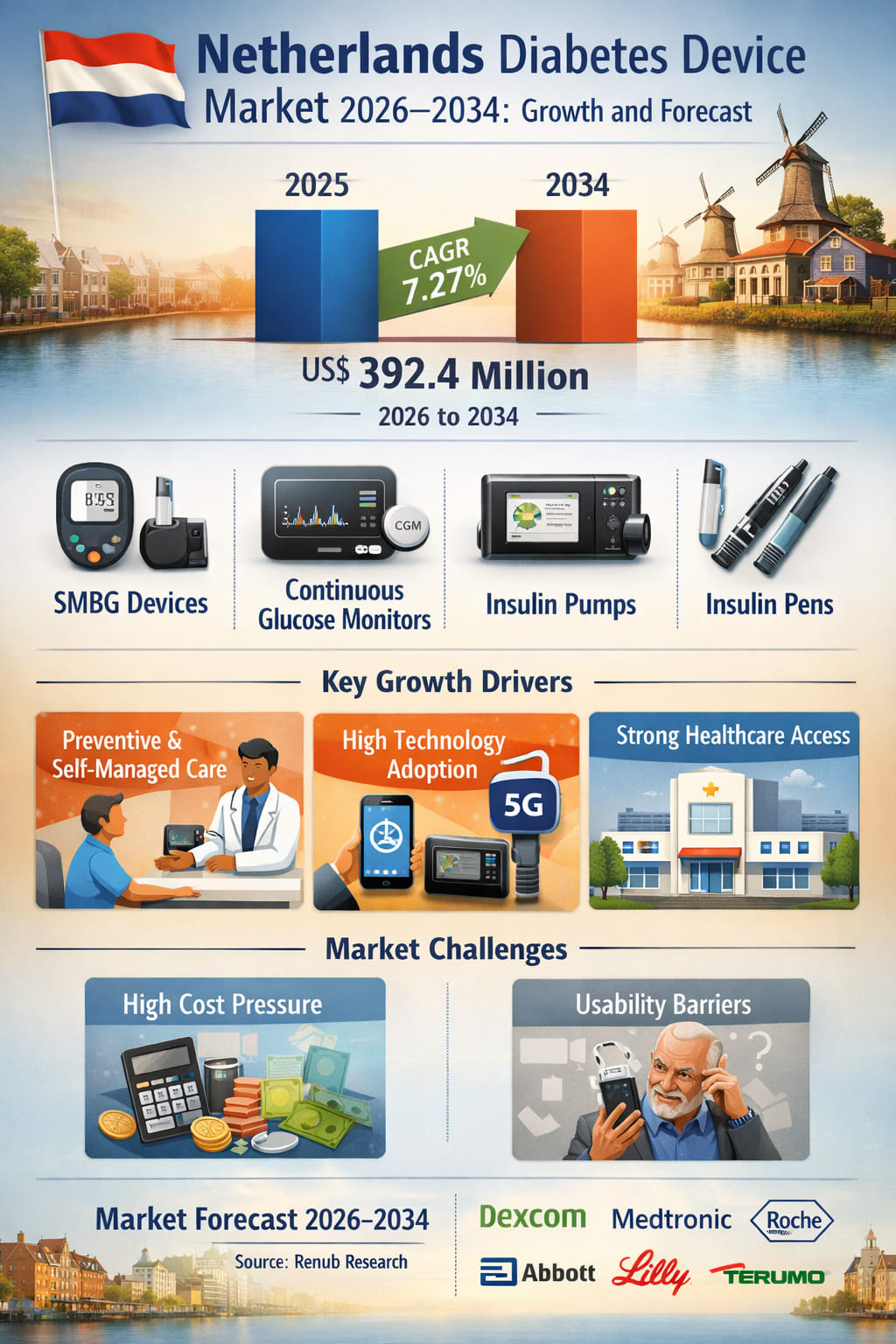
Netherlands Diabetes Device Market Outlook
The market for diabetes care devices in the Netherlands is projected to grow from US$ 392.4 million in 2025 to US$ 737.3 million by 2034, registering a compound annual growth rate (CAGR) of 7.27% between 2026 and 2034. This expansion reflects not only the rising prevalence of diabetes in the country, but also the rapid adoption of advanced monitoring and insulin delivery technologies across the Dutch healthcare system.
Diabetes devices refer to the tools used to monitor blood glucose levels and assist in insulin administration for people living with diabetes. These include self-monitoring blood glucose (SMBG) devices, continuous glucose monitoring (CGM) systems, insulin pumps, insulin pens, and an expanding ecosystem of digital applications and connected platforms that help patients and clinicians track, analyze, and optimize treatment outcomes. Over the past decade, these devices have become central to modern diabetes management, enabling tighter glycemic control, reducing complications, and improving overall quality of life for patients.
In the Netherlands, diabetes care is closely linked to the country’s strong emphasis on preventive healthcare, early diagnosis, and continuous disease management. The Dutch healthcare model encourages patients to take an active role in managing chronic conditions, which has accelerated the uptake of home-based monitoring tools and smart insulin delivery systems. High health awareness, easy access to medical technology, and supportive reimbursement policies have further strengthened the position of diabetes devices as an essential part of long-term disease management.
As digital health infrastructure continues to mature and connected care becomes more mainstream, the Netherlands diabetes device market is expected to remain on a strong growth trajectory throughout the forecast period.
Key Growth Drivers in the Netherlands Diabetes Devices Market
More Emphasis on Preventive and Self-Managed Care
One of the most important factors driving the growth of diabetes devices in the Netherlands is the country’s strong focus on preventive care and self-management. Diabetes care guidelines increasingly encourage individuals to monitor their glucose levels regularly and take a proactive role in managing their condition. Devices such as SMBG meters, CGMs, and insulin pens are central to this approach.
Patients are educated on how to use these tools to make informed decisions about diet, physical activity, and medication dosing. This not only improves clinical outcomes but also encourages long-term and repeated use of devices and consumables, supporting sustained market growth. Managing diabetes outside hospital settings has become the norm, which further increases the demand for reliable, user-friendly monitoring and insulin delivery solutions.
In the Netherlands, it is estimated that around 1.2 million people are living with diabetes, of which approximately 10% have type 1 diabetes. Genetic factors, lifestyle changes, and rising rates of overweight and obesity continue to contribute to the overall diabetes burden. This expanding patient population creates a stable and growing user base for diabetes care devices across all categories.
High Rate of Technology Acceptance Among Citizens
The Netherlands is known for its high adoption of digital health technologies, and this cultural readiness for innovation plays a significant role in shaping the diabetes devices market. Both patients and healthcare professionals are increasingly comfortable using smart glucose management systems, connected insulin pens, and app-based platforms that provide real-time data and actionable insights.
Access to continuous, real-time glucose data has transformed patient engagement. Individuals can now track trends, receive alerts, and share data directly with healthcare providers, enabling more personalized and responsive treatment plans. Clinicians, in turn, rely more heavily on digital data streams to optimize therapy and adjust insulin regimens.
This trend is further supported by ongoing product innovation. For example, in February 2024, Dexcom launched its Dexcom ONE+ real-time continuous glucose monitoring system in Europe, offering a customizable CGM that can be worn on multiple body sites. Such innovations reinforce the market’s shift toward smarter, more flexible, and more patient-friendly devices.
Strong Healthcare Access and Reimbursement Support
Easy access to healthcare services and a supportive reimbursement framework are crucial factors behind the widespread adoption of diabetes devices in the Netherlands. Patients can obtain advanced monitoring tools and insulin delivery systems with reduced out-of-pocket burden, making early adoption more feasible, especially for insulin-dependent individuals.
This supportive environment encourages long-term compliance with device-based therapy and strengthens demand for both durable devices and recurring consumables such as sensors, test strips, and infusion sets. In 2023, Roche introduced the Accu-Chek Guide system in the Dutch market, offering a more user-friendly solution for blood glucose testing and reinforcing the ongoing modernization of diabetes care tools in the country.
Key Challenges in the Netherlands Diabetes Devices Market
Healthcare Cost Pressure
Despite high adoption rates, cost remains a significant challenge in the Netherlands diabetes devices market. Advanced technologies such as CGMs and insulin pumps involve not only high upfront costs but also recurring expenses for sensors, accessories, and maintenance. From a healthcare system perspective, ensuring cost-effectiveness and budget sustainability is a constant concern.
While reimbursement policies mitigate some of this burden, ongoing cost pressures may slow the pace of adoption for the most advanced technologies, especially as healthcare authorities continue to evaluate long-term value and economic impact.
Clinician Adoption and Usability Barriers
Although awareness of diabetes technologies is high, not all patients are equally comfortable using advanced digital devices. Older patients and those less familiar with technology may face challenges related to device setup, data interpretation, or daily maintenance. Concerns about wearing sensors continuously or navigating digital platforms can also affect long-term adherence.
Addressing these barriers requires ongoing education, training, and support, which adds complexity to diabetes care delivery. While the clinical benefits are clear, usability and user confidence remain critical factors influencing broader adoption.
Segment Analysis: Netherlands Diabetes Devices Market
Netherlands SMBG Device Market
The self-monitoring of blood glucose (SMBG) segment represents a mature and stable part of the Dutch diabetes care market. Glucometers and test strips remain essential tools for people with both type 1 and type 2 diabetes, particularly for those on insulin therapy or managing their condition through lifestyle changes and oral medications.
Affordability, simplicity, and ease of use continue to support consistent demand, especially among older patients and newly diagnosed individuals. While growth in this segment is slower compared to advanced monitoring systems, replacement demand and routine clinical use ensure steady market performance.
Netherlands CGM Device Market
The continuous glucose monitoring (CGM) segment is one of the fastest-growing areas in the Netherlands diabetes devices market. CGMs provide continuous, real-time glucose readings, trend analysis, and alerts, enabling patients to achieve better glycemic control and reduce the risk of hypoglycemic episodes.
These devices are particularly popular among type 1 diabetes patients and insulin-dependent type 2 patients. Integration with smartphones and digital health platforms further enhances convenience and remote monitoring capabilities. As awareness and reimbursement coverage continue to expand, CGMs are becoming a cornerstone of modern diabetes management in the Netherlands.
Netherlands Insulin Pump Industry
The insulin pump market in the Netherlands is driven by the need for precise, continuous insulin delivery and improved quality of life for patients requiring intensive insulin therapy. Insulin pumps offer greater flexibility and more stable glucose control compared to multiple daily injections.
Although these devices are relatively expensive and require thorough training, strong support from healthcare professionals and patient education programs has helped sustain demand. Insulin pumps remain a high-value, advanced segment within the broader diabetes devices market.
Netherlands Insulin Pen Device Market
Insulin pens are widely used in the Netherlands due to their convenience, portability, and dosing accuracy. They are commonly prescribed for both type 1 and type 2 diabetes patients, particularly for those beginning insulin therapy.
Both disposable and reusable insulin pens are available, catering to different patient needs and preferences. Recent innovations, including smart insulin pens with dose-tracking features, are further strengthening this segment’s position in the market.
End-User and Distribution Landscape
Diabetes Devices and Diagnostics Centers
Diagnostic centers play a vital role in the Dutch diabetes care ecosystem by supporting early diagnosis, ongoing monitoring, and treatment optimization. These centers use SMBG tools, professional CGM systems, and insulin management solutions to analyze glucose patterns and assess therapy effectiveness.
With the growing emphasis on preventive care and early intervention, diagnostic centers continue to drive demand for accurate and reliable diabetes devices across the country.
Retail Pharmacy Market
Retail pharmacies represent a key distribution channel for diabetes devices in the Netherlands. Patients rely on pharmacies for access to glucose meters, test strips, insulin pens, CGM sensors, and other essential consumables.
As home-based diabetes management becomes more common, retail pharmacies play an increasingly important role in improving accessibility and continuity of care, supporting both routine monitoring and long-term disease management.
Market Segmentation Overview
By Type:
Self-Monitoring Devices
Test Strips
Lancets
Blood Glucose Meters
Continuous Glucose Monitoring Devices
Sensors
Transmitter
Receiver
Insulin Pumps
Patch Pumps
Tethered Pumps
Consumables
Insulin Pens
Disposable Insulin Pens
Reusable Insulin Pens
By End User (Volume):
Hospitals
Diagnostic Centers
Homecare
By Cities:
Amsterdam
Rotterdam
The Hague
Utrecht
Eindhoven
Groningen
Tilburg
Almere
Breda
Nijmegen
Competitive Landscape and Company Profiles
The Netherlands diabetes devices market is characterized by the presence of major global players focusing on innovation, product reliability, and digital integration. Companies are evaluated across five viewpoints: Overview, Key Person, Recent Developments, SWOT Analysis, and Revenue Analysis.
Key Companies Covered:
Dexcom Inc.
Medtronic
Roche
Abbott Laboratories
Eli Lilly
Terumo Corporation
BD
Competition in the market is increasingly centered on smart, connected solutions, user-friendly designs, and ecosystem-based approaches that combine hardware, software, and data analytics to improve patient outcomes.
Final Thoughts
The Netherlands diabetes device market is entering a phase of sustained and technology-driven growth, supported by strong healthcare infrastructure, high digital adoption, and a clear focus on preventive and self-managed care. With the market expected to expand from US$ 392.4 million in 2025 to US$ 737.3 million by 2034, the sector offers significant opportunities for device manufacturers, healthcare providers, and digital health innovators alike.
While challenges such as cost pressures and usability barriers remain, continuous innovation, supportive reimbursement policies, and rising patient engagement are likely to keep the market on a positive trajectory. As diabetes management becomes more personalized, connected, and data-driven, diabetes devices will continue to play a central role in improving outcomes and quality of life for patients across the Netherlands.
About the Creator
Australia Bed Linen Market: Home Comfort, Material Innovation & Retail Trends
Australia Bed Linen Market Overview The Australia bed linen market continues to expand as consumers place greater emphasis on home comfort, interior aesthetics and sleep quality. Bed linen products—including sheets, pillowcases, duvet covers and mattress protectors—are considered essential household items and are replaced periodically based on wear, hygiene considerations and changing design preferences. The Australia bed linen market size reached USD 11,221.7 Million in 2025. Looking forward, IMARC Group expects the market to reach USD 21,099.5 Million by 2034, exhibiting a growth rate (CAGR) of 7.27% during 2026-2034. This steady growth reflects a combination of housing activity, lifestyle changes and evolving material preferences.
By Amyra Singh2 days ago in Trader
Instructions Included Challenge Winners
For the Instructions Included challenge, we asked writers to tell a story through instructions and to trust the form to carry what could not be said outright. Across the top entries, that trust paid off in many different ways.
By Vocal Curation Team7 days ago in Resources




Comments
There are no comments for this story
Be the first to respond and start the conversation.