
Global Seafood Market Size & Forecast 2026–2034
Rising Protein Demand, Aquaculture Expansion, and Processed Seafood Trends Shape the Global Outlook

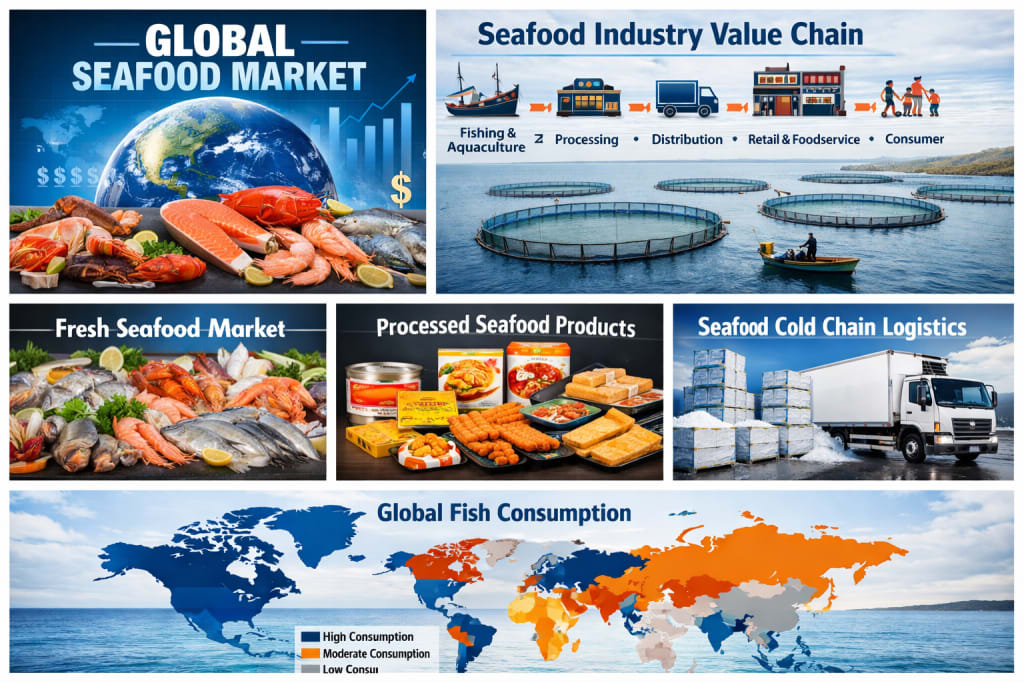
Global Seafood Market Overview
The Global Seafood Market continues to play a vital role in global food security, nutrition, and international trade. Seafood includes a broad range of edible aquatic organisms such as fish, crustaceans, mollusks, and marine plants. Commonly consumed varieties include salmon, tuna, cod, shrimp, crabs, oysters, mussels, and seaweed. These products are valued worldwide for their high protein content, omega-3 fatty acids, essential vitamins, and minerals that support cardiovascular, cognitive, and metabolic health.
According to Renub Research, the global seafood market is forecasted to grow steadily from US$ 365.44 billion in 2025 to US$ 490.32 billion by 2034, registering a compound annual growth rate (CAGR) of 3.32% during 2026–2034. This sustained expansion reflects rising global protein demand, increasing health awareness, improvements in aquaculture productivity, and the growing popularity of processed and value-added seafood products.
Seafood consumption has long been deeply rooted in coastal regions across Asia-Pacific, Europe, and Latin America. However, changing dietary patterns, globalization of cuisine, and enhanced cold-chain infrastructure have significantly expanded seafood consumption in inland regions of North America, the Middle East, and emerging economies. As global populations grow and nutritional awareness rises, seafood remains a cornerstone of balanced and protein-rich diets.
Key Growth Drivers in the Global Seafood Market
Rising Demand for Nutritious and Protein-Dense Diets
One of the strongest drivers of the global seafood market is the increasing demand for healthy, protein-rich foods. Seafood is widely regarded as one of the leanest and most nutrient-dense protein sources, offering significant health benefits while containing lower saturated fat levels than red and processed meats.
With lifestyle-related disorders such as obesity, cardiovascular disease, and diabetes on the rise, consumers are actively shifting toward healthier dietary choices. Medical professionals and nutritionists frequently recommend seafood as a core dietary component due to its omega-3 fatty acids, which are linked to improved heart and brain health.
Globally, billions of people rely on seafood as their primary source of animal protein, reinforcing its importance in ensuring nutritional security, particularly in developing regions where alternative protein sources may be limited.
Expansion and Modernization of Aquaculture
Aquaculture has emerged as a critical pillar of the global seafood supply chain. As wild fish stocks face increasing pressure from overfishing, climate change, and environmental degradation, farmed seafood now accounts for a growing share of total global production.
Technological advancements in fish breeding, feed efficiency, disease management, and water quality control have significantly improved aquaculture yields. Modern aquaculture enables year-round availability of seafood products, stabilizing supply and reducing dependence on seasonal wild catches.
The adoption of sustainable aquaculture practices has also strengthened consumer confidence, making farmed seafood more acceptable across premium and mass-market segments. Aquaculture’s scalability and efficiency position it as a long-term solution to meet rising global seafood demand.
Increasing Demand for Processed and Value-Added Seafood
Urbanization and fast-paced lifestyles are accelerating demand for processed and value-added seafood products. Consumers increasingly prefer convenient, ready-to-cook, and ready-to-eat options that minimize preparation time while maintaining nutritional value.
Products such as frozen fish fillets, canned tuna, smoked salmon, breaded seafood, and pre-seasoned meals benefit from extended shelf life, improved storage, and consistent quality. Innovations in packaging, freezing technology, and food safety standards have further enhanced consumer trust.
The expansion of modern retail formats and e-commerce platforms has also increased accessibility to packaged seafood, supporting market growth in both developed and emerging economies.
Challenges Facing the Global Seafood Market
Overfishing and Environmental Sustainability
Overfishing and environmental sustainability remain critical challenges for the global seafood industry. Declining wild fish stocks, habitat destruction, ocean warming, and acidification threaten marine biodiversity and long-term supply stability.
Governments worldwide have introduced stricter fishing quotas and sustainability regulations, increasing compliance costs for producers. While necessary for environmental protection, these measures can constrain supply and contribute to price volatility.
Complex Supply Chains and Price Volatility
Seafood products are highly perishable, requiring efficient cold-chain logistics from harvest to consumption. Any disruption—whether due to transportation delays, energy costs, or infrastructure gaps—can result in significant losses.
Additionally, seafood prices are influenced by fuel costs, seasonal availability, weather patterns, regulatory changes, and shifting consumer demand. These factors create volatility that affects both producers and end consumers.
Market Segmentation Analysis
Global Fresh Seafood Market
The fresh seafood segment includes chilled and freshly harvested fish, crustaceans, and mollusks sold through wet markets, supermarkets, and specialty fishmongers. Fresh seafood is prized for its superior taste, texture, and nutritional integrity, making it particularly popular among health-conscious consumers.
Demand remains strongest in coastal regions and countries with long-standing seafood consumption traditions. Advances in cold-chain logistics and rapid transportation have extended the reach of fresh seafood, though challenges such as short shelf life and price fluctuations persist.
Global Ambient Seafood Market
Ambient seafood products include dried, smoked, salted, and preserved seafood that can be stored at room temperature. This segment plays a vital role in regions with limited refrigeration infrastructure, particularly in parts of Asia, Africa, and Europe.
These products offer affordability, long shelf life, and ease of transportation, making them a reliable protein source. Growing interest in traditional and ethnic cuisines continues to support this segment globally.
Global Canned & Processed Seafood Market
Canned and processed seafood is one of the fastest-growing segments in the global market. Products such as canned tuna, sardines, salmon, frozen fillets, and ready-to-eat meals appeal strongly to urban consumers seeking convenience.
Improvements in food safety, packaging innovation, and portion-controlled offerings have enhanced consumer confidence. Developed markets in North America and Europe show particularly strong demand for premium and functional seafood products.
Global Crustaceans Seafood Market
Crustaceans—including shrimp, prawns, crabs, and lobsters—represent one of the most valuable segments of the seafood industry. Shrimp dominates global consumption due to its affordability, versatility, and widespread use in foodservice and retail channels.
Despite strong demand, this segment faces challenges such as disease outbreaks in aquaculture, sustainability concerns, and price sensitivity.
Global Molluscs Seafood Market
The molluscs segment includes oysters, mussels, clams, scallops, and squid. These products are favored for their distinct flavors, high nutritional value, and role in premium and traditional cuisines.
Advancements in mollusc farming have helped stabilize supply, although environmental vulnerability remains a concern. Growing demand for sustainably farmed molluscs supports long-term growth prospects.
Distribution Channel Insights
International Seafood Retail Market
Seafood retailing spans supermarkets, hypermarkets, specialty stores, and online platforms. Supermarkets dominate sales by offering fresh, frozen, and processed seafood under both private labels and branded offerings.
E-commerce has emerged as a significant growth channel, driven by convenience, improved packaging, and doorstep delivery options.
Global Seafood Foodservice Market
The foodservice segment includes restaurants, hotels, catering services, and quick-service restaurants. Seafood plays a central role in casual dining, fine dining, and international cuisines.
Tourism recovery, rising disposable incomes, and increased dining-out trends are driving foodservice demand. Frozen and processed seafood is increasingly preferred for cost control and consistency.
Regional Market Highlights
United States Seafood Market
The United States seafood market is mature and highly diversified, supported by strong consumer awareness of health benefits. Salmon, shrimp, tuna, crab, and cod dominate consumption.
While domestic fisheries contribute significantly, the U.S. relies heavily on seafood imports. Growth is strongest in frozen, ready-to-eat, and processed segments, supported by supermarkets, warehouse clubs, and online grocery platforms.
United Kingdom Seafood Market
The UK seafood market combines traditional fishing heritage with modern retail dynamics. Cod, haddock, salmon, and shellfish remain staples, while demand for frozen and convenience products continues to rise.
Sustainability certifications play a crucial role in purchasing decisions, with supermarkets leading distribution through private-label offerings.
China Seafood Market
China is both the world’s largest producer and consumer of seafood. Strong aquaculture capacity and deep cultural integration of seafood drive sustained demand.
Rising incomes and urbanization have increased demand for premium, imported, and processed seafood products, positioning China as a critical growth engine for the global market.
Brazil Seafood Market
Brazil represents a developing seafood market with growing consumption driven by health awareness and expanding tilapia farming. While meat remains dominant, seafood demand is steadily increasing in urban and coastal regions.
UAE Seafood Market
The UAE has one of the highest per-capita seafood consumption rates globally, fueled by tourism, hospitality, and expatriate populations. The country relies heavily on imports, supported by advanced cold-chain infrastructure.
Government initiatives promoting food security and local aquaculture are gradually strengthening domestic production.
Competitive Landscape
Key players operating in the global seafood market include:
Agrosuper S.A.
Asian Sea Corporation Public Company Limited
Austevoll Seafood ASA
Bolton Group SRL
Grieg Seafood ASA
Maruha Nichiro Corporation
Sysco Corporation
Thai Union Group PCL
Each company is evaluated across five viewpoints: overview, key personnel, recent developments, SWOT analysis, and revenue performance.
Final Thoughts
The Global Seafood Market is set for stable and sustained growth through 2034, supported by rising protein demand, aquaculture expansion, and increasing preference for convenient seafood products. While environmental sustainability and supply-chain complexities pose challenges, technological advancements and responsible sourcing practices are reshaping the industry.
With evolving consumer preferences, expanding retail and foodservice channels, and strong demand across both developed and emerging markets, seafood will remain a critical component of the global food system in the years ahead.


Comments
There are no comments for this story
Be the first to respond and start the conversation.