
MTF vs Normal Trading: 5 Key Differences You Should Understand
MTF vs Normal Trading


MTF vs Normal Trading: 5 Key Differences You Should Understand
Introduction: Why This Choice Matters
Every trader, at some point, faces a critical decision. You spot the perfect stock. The charts look strong, your conviction is high, but your available cash feels too small.
Do you stay within your limit and trade only with your own funds? Or do you take the broker’s help and use Margin Trading Facility (MTF) to expand your buying power?
This decision can define your trading journey. While MTF offers opportunities to amplify gains, it also brings higher risks and costs. Normal trading, on the other hand, is safer but slower.
To help you make the right choice, let’s explore the five key differences between MTF and normal trading, backed by real-world examples and expert insights.
What is Margin Trading Facility (MTF)?
Margin Trading Facility, or MTF, allows investors to buy stocks even when they do not have the full purchase amount. The broker funds the additional requirement, while the investor contributes a margin, either in the form of cash or pledged securities.
- Regulated by SEBI and stock exchanges (NSE, BSE)
- Brokers usually provide 4x to 5x leverage
- Collateral can be cash, shares, or liquid mutual funds
- Interest rates range from 8% to 18% annually
Example: If you have ₹1 lakh and your broker offers 4x leverage, you can take a position worth ₹4 lakh. The catch is that profits and losses both get magnified.
What is Normal Trading?
Normal trading is straightforward. You buy and sell securities only with your own funds.
- No borrowing, no leverage
- No interest charges
- Lower risk compared to MTF
Example: If you have ₹1 lakh, your maximum buying capacity is ₹1 lakh. It may not multiply your exposure, but it gives you complete control and peace of mind.
MTF vs Normal Trading: 5 Key Differences You Should Understand
1. Capital and Leverage
Normal Trading: You are limited to your own funds.
MTF: Brokers extend additional capital, often up to 4–5 times your margin.
- Comparison Table: Capital Requirement
- Feature Normal Trading MTF Trading
- Own Capital Needed 100% 20–25% (rest funded by broker)
- Buying Power Limited 4–5x higher
- Example (₹1 lakh) Buy ₹1 lakh Buy ₹4–5 lakh
Leverage can be tempting, but it comes with responsibility. It has the power to multiply profits, but it can also magnify losses.
2. Risk and Returns
Normal Trading: Risk is limited to your invested capital.
MTF: Both gains and losses scale with exposure.
Case Study: Infosys (2025)
- Stock rises 10% in a week.
- Normal Trading (₹1 lakh): Profit = ₹10,000
- MTF (₹4 lakh exposure): Profit = ₹40,000 – Interest ≈ ₹38,500
- If the stock falls 10%:
Normal Trading: Loss = ₹10,000
MTF: Loss = ₹40,000 plus interest and margin call risk
As Bloomberg analysts put it, “Leverage doesn’t create risk—it magnifies it.”
3. Costs and Charges
Normal Trading: Brokerage and statutory taxes only.
MTF: Brokerage, taxes, daily interest, and margin pledge fees.
- Comparison Table: Cost Structure
- Cost Type Normal Trading MTF Trading
- Brokerage Yes Yes
- Taxes (STT, GST) Yes Yes
- Interest Charges No Yes (daily basis) Margin Pledge Fee No Yes (₹20–₹50 per pledge)
Interest charges often surprise traders. Even small daily costs compound into significant amounts over time, eating into potential profits.
4. Holding Period
Normal Trading: You can hold shares for years without restrictions.
MTF: Holding is conditional on maintaining margin requirements and broker limits.
If the value of your pledged collateral falls, the broker may issue a margin call. Failure to add funds can result in an automatic square-off of positions. This risk makes MTF unsuitable for long-term investing.
5. Suitability and Investor Type
Normal Trading: Best for beginners, conservative investors, and long-term wealth builders.
MTF: Suitable for experienced traders with strong risk management and the ability to monitor markets closely.
- Beginner Investor Normal Trading
- Long-Term Investor Normal Trading
- Short-Term High-Risk Trader MTF
- Swing Trader with Risk Discipline MTF
- Retired / Conservative Investor Normal Trading
Real-Life Example: When MTF Went Wrong
In 2023, SEBI highlighted several retail traders who lost over 70% of their capital during sudden market corrections because of margin calls.
Example: A trader with ₹2 lakh used MTF to take a ₹10 lakh position in small-cap stocks. When markets corrected by 12%, his losses exceeded ₹1.2 lakh. The broker squared off his position, leaving him with a fraction of his capital.
If he had relied on normal trading, his loss would have been just ₹24,000—a setback, but not financial ruin.
The takeaway is clear: MTF without strict discipline can destroy portfolios.
Actionable Tips for Safer Trading
- Use MTF only for short-term trades where you have high conviction.
- Avoid carrying leveraged positions during events like budgets, elections, or global rate announcements.
- Always calculate breakeven returns after factoring in interest costs.
- Pledge only surplus shares, not your core holdings.
- Treat leverage like a sharp tool—helpful when used carefully, harmful if misused.
FAQs
Q1: Is MTF trading safe for beginners?
No. MTF carries high risk and should not be used by beginners.
Q2: What is the maximum leverage allowed in India?
As per SEBI regulations (2025), brokers can provide up to 5x leverage in approved securities.
Q3: Can MTF be used for long-term investment?
Not recommended. Interest charges and margin calls make it unsuitable for long-term holding.
Q4: Which is better—MTF or normal trading?
For long-term safety and wealth-building, normal trading is better. MTF is only for skilled short-term traders.
Q5: Do brokers charge daily interest on MTF?
Yes. Interest is calculated on borrowed funds daily, which reduces net profitability.
Conclusion: The Final Word
The debate between MTF and normal trading is really a question of risk appetite.
If you value safety, peace of mind, and wealth-building, normal trading is the smarter choice.
If you are an active trader, disciplined, and willing to take short-term risks, MTF can provide an edge.
Ultimately, leverage is neither good nor bad—it is powerful. In the right hands, it creates opportunities. In the wrong hands, it destroys capital.
Choose wisely. Trade responsibly.
About the Creator
The $14,008.5 Billion USD Bet: How Mobile Commerce is Reinventing the Future of Shopping
Imagine waking up, reaching for your phone, and before your coffee brews, you've reordered groceries, grabbed concert tickets, and settled last night's dinner bill — all with a few taps. For billions of people around the world, this isn't a distant aspiration. It's Monday morning.
By James Smith5 days ago in Trader
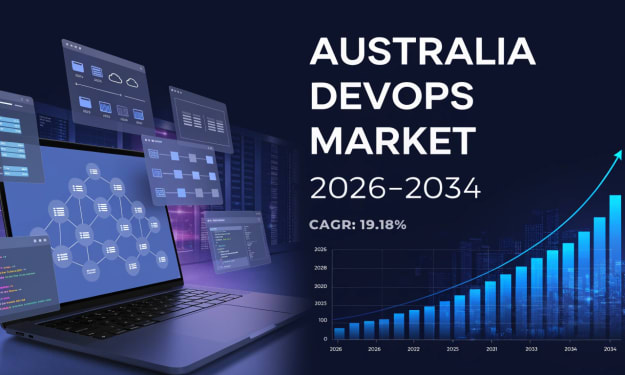
Australia DevOps Market 2026: Digital Transformation, Cloud Adoption & Agile IT Growth
Australia DevOps Market Overview Australia’s DevOps market is experiencing robust growth as organisations increasingly adopt agile practices, cloud-native architectures and automation to accelerate software delivery and improve operational resilience. DevOps — integrating development, operations and quality assurance through collaborative workflows and continuous integration/continuous delivery (CI/CD) pipelines — is becoming essential for enterprises seeking faster time-to-market, improved application quality and streamlined IT operations. As digital transformation accelerates across sectors such as finance, healthcare, telecommunications and public services, demand for DevOps tools, platforms and services continues to rise.
By Amyra Singh6 days ago in Trader



Comments
There are no comments for this story
Be the first to respond and start the conversation.