
Japan Flexible Packaging Market Size and Forecast 2025–2033
Sustainability, E-Commerce, and Smart Materials Are Reshaping Japan’s Packaging Future

Introduction
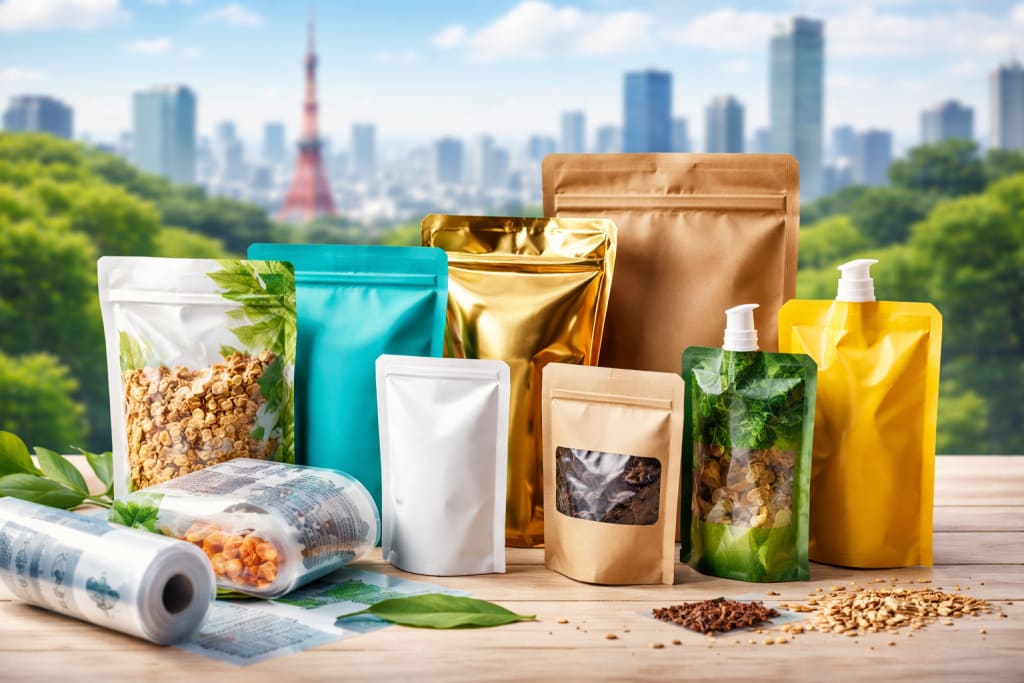
Japan’s packaging industry is undergoing a quiet but powerful transformation. Once dominated by rigid formats such as glass, metal, and hard plastics, the market is increasingly shifting toward lighter, smarter, and more sustainable solutions. At the center of this shift is flexible packaging—an adaptable format that is rapidly gaining ground across food & beverage, personal care, pharmaceuticals, and household products.
According to Renub Research, the Japan Flexible Packaging Market is expected to reach US$ 9.15 billion by 2033, growing from US$ 6.56 billion in 2024, at a CAGR of 3.77% from 2025 to 2033. This steady growth reflects not just rising consumption, but also deeper structural changes in how Japanese companies design, distribute, and present products to consumers.
Key forces such as sustainability initiatives, the expansion of e-commerce, changing consumer lifestyles, and advancements in barrier and material technologies are redefining packaging priorities. In a country known for its precision manufacturing, quality standards, and environmental awareness, flexible packaging is increasingly seen as a strategic solution that balances performance, convenience, and responsibility.
Japan Flexible Packaging Industry Overview
The Japanese flexible packaging industry is evolving rapidly to meet the growing demand for lightweight, convenient, and environmentally responsible packaging solutions. Sectors such as food, healthcare, and personal care are driving this shift, as brands look for packaging that extends shelf life, improves user experience, and reduces overall material usage.
Technological advancements play a crucial role in this evolution. Improvements in barrier technologies, along with the development of recyclable, biodegradable, and mono-material structures, are enabling flexible packaging to compete with traditional rigid formats on both performance and sustainability. Japan’s strong focus on quality, precision engineering, and innovation further strengthens the industry’s ability to deliver high-performance, application-specific packaging solutions.
Urban lifestyles and the continued rise of e-commerce are also reshaping packaging needs. Consumers increasingly prefer pouches, wraps, and resealable packs that are easy to store, carry, and dispose of. These formats not only save space but also align well with modern retail logistics and home delivery systems.
Sustainability has become a central pillar of industry strategy. The development of materials with recycled content and the promotion of circular economy models are now core priorities. A notable example is the collaboration in October 2024 between TOPPAN Holdings Inc., RM Tohcello Co., Ltd., and Mitsui Chemicals, Inc., where film waste was collected, de-inked, and repurposed into pellets to create recycled BOPP film suitable for mass production. This initiative supports Japan’s 2025 goals for reusable and recyclable plastics and highlights the industry’s commitment to horizontal recycling.
At the same time, digital transformation is entering the packaging production process. In March 2024, Fujifilm Corporation launched the Jet Press FP790, a water-based digital inkjet press for flexible packaging. This technology enables efficient, high-quality, and flexible production, especially for small-batch and customized packaging—an increasingly important capability in today’s fast-changing consumer markets.
Together, these trends show that Japan’s flexible packaging market is not just growing—it is modernizing, with innovation, sustainability, and efficiency at its core.
Key Factors Driving the Japan Flexible Packaging Market Growth
1. Sustainability Initiatives
Sustainability has become one of the most powerful forces shaping Japan’s packaging industry. Government regulations, such as the Containers and Packaging Recycling Law, encourage companies to reduce waste and improve recycling rates. At the same time, national policies promote the use of recycled plastics, bioplastics, and paper-based alternatives.
Japanese consumers are also increasingly environmentally conscious. Many actively prefer brands that demonstrate a commitment to reducing environmental impact. This shift in consumer behavior is pushing companies to rethink packaging design, material selection, and end-of-life recyclability.
Flexible packaging, when designed with recyclable or mono-material structures, offers a lower material footprint compared to rigid packaging. It uses less raw material, reduces transportation emissions due to lighter weight, and can support longer shelf life, helping to reduce food and product waste. As a result, companies investing in sustainable flexible packaging solutions not only meet regulatory requirements but also strengthen brand trust and competitiveness in a green-minded market.
2. E-Commerce Expansion
Japan’s booming e-commerce sector is another major growth driver for flexible packaging. Online sales of groceries, electronics, cosmetics, and household products continue to rise, creating strong demand for packaging that is durable, lightweight, cost-effective, and protective.
Flexible packaging meets these needs exceptionally well. It reduces shipping weight, lowers logistics costs, and provides excellent protection against moisture, air, and contamination. Features such as tamper-evidence, resealability, and compact design make flexible formats especially suitable for direct-to-consumer delivery models.
In the highly competitive e-commerce environment, packaging also plays a branding role. Flexible packaging allows for high-quality printing, customization, and attractive designs, helping brands stand out while maintaining efficiency. As Japan’s digital economy continues to grow, the link between e-commerce and flexible packaging innovation is expected to become even stronger.
3. Consumer Preferences for Convenience
Japan’s demographic and lifestyle trends strongly favor convenience-oriented packaging. The rise of single-person households, busy urban lifestyles, and on-the-go consumption has increased demand for packaging that is easy to open, reseal, store, and dispose of.
Flexible packaging formats such as stand-up pouches, sachets, and resealable bags cater perfectly to these needs. They support portion control, reduce food waste, and fit well into compact living spaces. These features are especially important in categories like ready-to-eat meals, snacks, personal care products, and household essentials.
Consumers also value packaging that combines functionality with aesthetics. Modern flexible packaging offers sleek designs, clear product visibility, and premium finishes, enhancing shelf appeal without sacrificing practicality. This balance between convenience, design, and performance continues to fuel market growth.
Challenges in the Japan Flexible Packaging Market
Environmental Concerns and Waste Management
Despite its many advantages, flexible packaging faces significant challenges related to recycling and waste management. Many flexible packages use multi-layer structures that are difficult to separate and recycle, leading to lower recycling rates compared to some rigid formats.
In Japan, where environmental responsibility is taken seriously, both regulators and consumers are demanding better solutions. Manufacturers are under pressure to develop packaging that is truly recyclable or biodegradable without compromising barrier performance, durability, or cost efficiency.
Balancing functionality, sustainability, and economic viability remains a complex challenge. Companies must invest in research, new materials, and cross-industry collaboration to create next-generation flexible packaging that supports Japan’s circular economy goals while remaining competitive.
Competition from Alternative Packaging
Flexible packaging also faces growing competition from rigid packaging and newer sustainable alternatives such as paper-based and compostable materials. Glass, metal, and rigid plastics are often perceived as more durable or easier to recycle in certain applications, making them attractive to some brands and consumers.
At the same time, eco-friendly packaging solutions are gaining popularity as companies aim to reduce environmental impact and meet sustainability targets. This puts pressure on flexible packaging manufacturers to continuously improve recyclability, material innovation, and environmental communication.
To maintain and expand market share, the flexible packaging industry must clearly demonstrate its advantages—such as lower material usage, reduced carbon footprint, and superior logistics efficiency—while continuing to address sustainability concerns.
Market Segmentation
By Application
Food & Beverage
Personal Care
Pharmaceutical
Household Care
Industrial
Others
The food & beverage segment remains the largest contributor, driven by demand for extended shelf life, convenience, and attractive presentation. Pharmaceuticals and personal care are also growing steadily due to increasing focus on safety, hygiene, and premium packaging.
By Packaging Type
Stand-up Pouch
Films
Bag-in-Box
Others
Stand-up pouches and films dominate the market due to their versatility, cost efficiency, and strong shelf presence. These formats are widely used across food, beverages, and personal care products.
By Material
Paperboard
Plastic
Aluminum Foil
PET Film
Others
Plastics and PET films continue to hold a significant share due to their superior barrier properties and flexibility, while aluminum foil is used for high-protection applications. At the same time, paper-based and hybrid materials are gaining attention for sustainability-focused solutions.
Competitive Landscape and Company Analysis
The Japan flexible packaging market is supported by both global and regional players focusing on innovation, sustainability, and performance. Major companies covered in the market include:
Amcor plc
Berry Global Group, Inc.
Sealed Air
DS Smith Plc
Huhtamaki PPL Limited
Graphic Packaging Holding Company
These companies are actively investing in:
Sustainable material development
Lightweight and high-barrier packaging solutions
Recycling-friendly structures
Digital and smart manufacturing technologies
Their strategies focus on product innovation, strategic partnerships, capacity expansion, and sustainability commitments to strengthen their presence in the Japanese market.
Market Outlook: 2025–2033
Looking ahead, Japan’s flexible packaging market is set to grow steadily, supported by:
Strong sustainability regulations and consumer awareness
Continued expansion of e-commerce and home delivery services
Rising demand for convenient, lightweight, and high-performance packaging
Ongoing innovation in materials, barrier technologies, and digital printing
With the market projected to reach US$ 9.15 billion by 2033, flexible packaging will remain a critical part of Japan’s packaging ecosystem, bridging the gap between efficiency, functionality, and environmental responsibility.
Final Thoughts
Japan’s flexible packaging market is no longer just about cost savings or convenience—it is about smart, sustainable, and future-ready packaging solutions. As brands, regulators, and consumers align around environmental goals and modern lifestyles, flexible packaging is emerging as a strategic enabler of change.
Driven by innovation, supported by technology, and guided by sustainability, the industry is well-positioned for long-term growth. While challenges around recycling and competition remain, the ongoing shift toward circular economy models and advanced materials suggests a promising future.
In the years ahead, flexible packaging will play a central role in how Japanese products are protected, presented, and delivered—making it not just a packaging choice, but a key pillar of modern commerce and sustainability in Japan.
About the Creator
Keep reading
More stories from shibansh kumar and writers in Trader and other communities.
Europe Diesel Gensets Market Size and Forecast 2025–2033
Introduction The Europe Diesel Gensets Market is entering a decisive decade shaped by two powerful and sometimes conflicting forces: the urgent push toward decarbonization and the equally urgent need for reliable, uninterrupted power. According to Renub Research, the Europe Diesel Gensets Market is expected to reach US$ 10.31 billion by 2033, up from US$ 5.69 billion in 2024, growing at a CAGR of 6.83% from 2025 to 2033.
By shibansh kumarabout 10 hours ago in Trader
Australia’s Instant Coffee Market 2026: Convenience Culture, Premium Blends and Home Consumption Growth
Australia Instant Coffee Market Overview Australia’s instant coffee market continues to demonstrate steady expansion as convenience-led consumption, product innovation and omnichannel retail availability reshape consumer behaviour. Instant coffee has evolved beyond its traditional perception as a basic alternative to brewed coffee, emerging as a diversified category offering premium blends, specialty formats and single-serve innovations. As Australians increasingly balance strong café culture with rising at-home beverage preparation, instant coffee remains a practical and cost-effective solution for daily consumption.
By Amyra Singhabout 15 hours ago in Trader
Mexico Generic Drug Market Size, Share, Trends, Growth Factors and Forecast 2026-2034
How the Mexico Generic Drug Market Is Expanding Access to Affordable Healthcare Access to affordable medicine is one of the most important pillars of public health. In Mexico, generic pharmaceuticals have become a critical tool for making healthcare more accessible to millions of people. The Mexico generic drug market reflects a broader effort to balance medical innovation with affordability, ensuring that essential treatments reach diverse populations.
By Jackson Watson5 days ago in Trader
There's A Hole in My Bucket
It’s a well-known fact that Liza Dufresne was always the brains in the family. She was the one who always came up with the brilliant schemes the Dufresne kids carried out when they were younger. Like when they tricked Mrs. Claybourn into paying for a trip to Disney World. Liza convinced her that their parents had been kidnapped and were being held for ransom for the total price of three tickets. In reality, they were away on a weekend getaway for their anniversary. When they returned, Liza told the Claybourns that they did not like to talk about the ordeal. Their parents never found out how they got the money. Mrs. Claybourn never found out that the Dufresne parents were never really in any danger.
By David E. Perrya day ago in Fiction



Comments
There are no comments for this story
Be the first to respond and start the conversation.