
Is AI Making Us Stupid? How Convenience Is Slowly Killing Our Minds
"Over-relying on AI may erode your thinking, creativity, and humanity—but using it wisely can amplify your power."

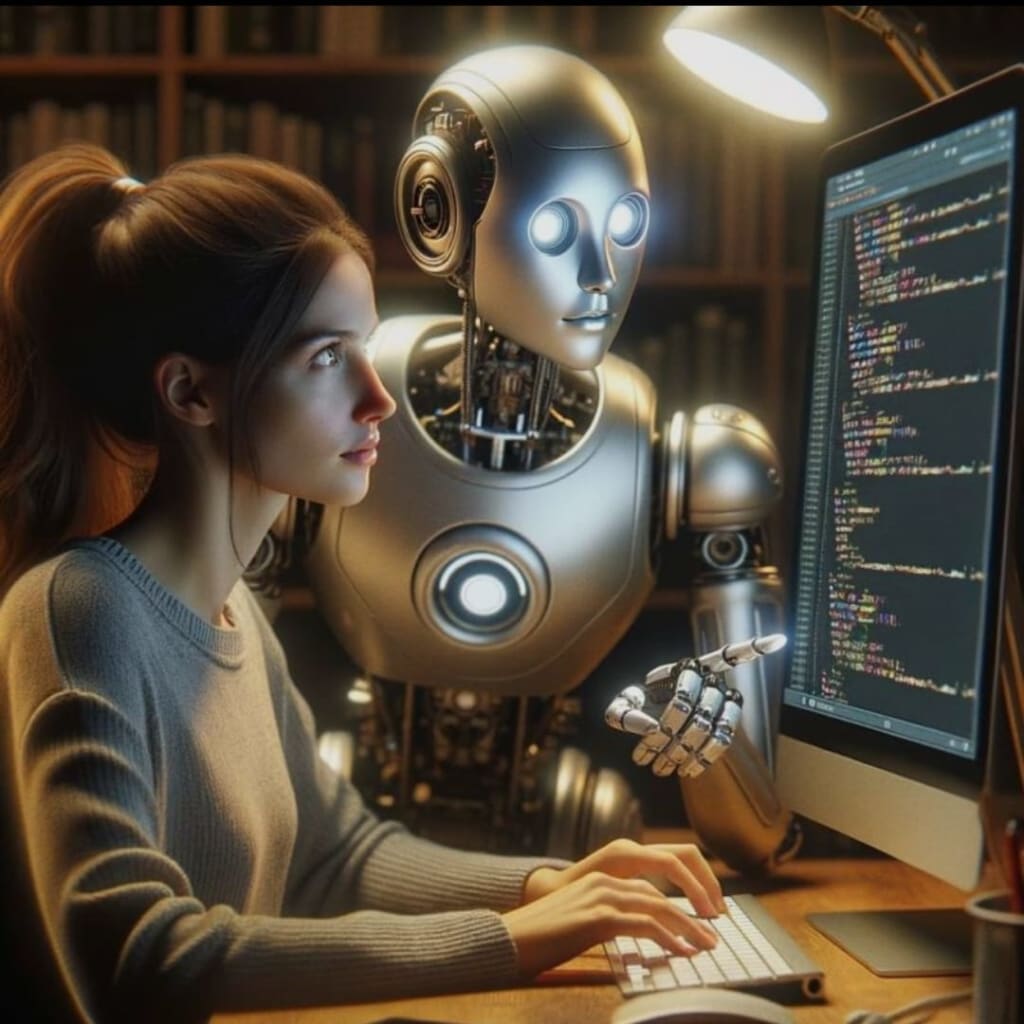
Introduction: The Hidden Danger of Convenience
We live in a time of unprecedented technological convenience. Artificial Intelligence (AI) is everywhere—embedded in our smartphones, laptops, and smart devices, quietly guiding many aspects of our daily lives. From writing essays and composing emails to helping us navigate unknown streets, AI seems capable of almost anything. At first glance, this appears miraculous: tasks once tedious or complex can now be completed with just a few clicks or spoken commands. Convenience has never been so effortless.
But there is a hidden danger lurking behind this veneer of efficiency. Slowly, almost imperceptibly, humans are surrendering their cognitive responsibilities to machines. Our reliance on AI encourages passivity, diminishes effort, and erodes critical thinking skills. We are not just outsourcing tasks—we are outsourcing thought itself. The convenience AI offers may come at the expense of our mental independence, creativity, and judgment.
AI is Not Intelligent—It’s Human-Made
One of the most critical misunderstandings about AI is the belief that it is “intelligent” in the human sense. AI does not think, feel, or understand; it does not possess consciousness, intuition, or morality. Every response an AI generates is the product of algorithms, data inputs, and human-designed frameworks. It mimics understanding, emotion, and logic, but it does not experience them.
For example, when an AI writes a poem that seems profound or emotionally moving, it is merely recombining patterns from vast datasets of existing literature. It does not feel joy, sorrow, or inspiration. It cannot suffer, imagine, or question the human condition. In every way, AI operates within the limits imposed by human creators. Even when it seems clever, it is at best a reflection of collective human thought—never an independent mind.
This distinction matters because it reminds us that AI, however sophisticated, is a tool. It can be incredibly useful, but it cannot replace the nuanced reasoning, empathy, or ethical discernment that humans bring to any decision.
The Real Threat: Human Decline
The danger is not AI itself. AI is not a villain plotting to overthrow humanity. The real threat is our over-reliance on it. As we increasingly depend on AI for cognitive tasks, the subtle decline of human capabilities becomes almost invisible.
Consider who controls AI and benefits from it. The companies and individuals developing AI systems are often driven by profit, efficiency, and influence. By shaping AI to suit their goals, they can subtly steer human behavior, preferences, and decisions. For instance, recommendation algorithms on social media and shopping platforms may seem convenient, but they are designed to maximize engagement and spending. Over time, humans are influenced not just by AI but by the incentives built into AI—an invisible form of guidance that can weaken autonomy.
In other words, the threat is not machines replacing humans; it is humans being manipulated by humans through machines. AI amplifies existing societal, economic, and psychological pressures. If we are not vigilant, convenience becomes compulsion, and assistance becomes dependency.
Humans vs. AI: The Fundamental Difference
The distinction between humans and AI is profound. Humans possess:
Thought and reflection:We question, doubt, and rebuild knowledge from scratch.
Emotions and empathy: We feel love, grief, joy, and moral responsibility.
Creativity and imagination: We generate truly novel ideas, art, and inventions.
Ethical judgment: We discern right from wrong, often in ambiguous situations.
AI, in contrast, cannot generate original thought or genuine creativity. It cannot feel, imagine, or reflect independently. Its outputs are derived from pre-existing data and patterns. While AI can generate impressive results, these results are always bounded by the knowledge and biases of its human trainers.
When humans rely too heavily on AI, the consequences are subtle but real. Our creativity dulls, our moral reasoning flattens, and our capacity for independent thought wanes. Convenience lulls us into passivity, creating a slow, almost invisible erosion of mental autonomy.
Everyday Consequences: The Quiet Erosion of Skill
The impact of over-reliance on AI is already visible in everyday life:
Education: A student who depends on AI to solve math problems may lose the ability to understand fundamental concepts. Problem-solving becomes mechanical, and critical reasoning diminishes.
Workplace: Office workers who rely on AI for emails, reports, or presentations risk weakening organizational and communication skills. Without regular mental exercise, the ability to structure complex ideas independently can fade.
Creative professions: Writers, designers, and artists who use AI for inspiration or content generation may produce work that feels polished but emotionally hollow. Genuine human nuance—subtlety, intuition, and emotional resonance—cannot be replicated by algorithms.
Daily decision-making: Even simple choices, like planning a meal, navigating traffic, or budgeting, can become dependent on AI suggestions. Over time, this reduces our capacity to weigh options, predict outcomes, and make informed judgments.
This is not hypothetical. It is happening now, in real classrooms, offices, and studios around the world. Convenience, when unchecked, becomes a form of self-degeneration.
AI as a Tool—Not a Crutch
Despite these risks, AI is not inherently harmful. When used wisely, it can enhance human capabilities rather than replace them:
Efficiency: AI can handle repetitive or time-consuming tasks, freeing humans to focus on more complex problems.
Information processing: AI can analyze massive datasets, helping humans make informed decisions more quickly.
Idea generation: AI can suggest possibilities we might not have considered, sparking creativity rather than substituting for it.
The key is conscious, disciplined use. AI should remain an assistant, not a master. Thinking, analysis, and judgment must stay human-driven. For example, a student might use AI to check solutions or explore alternative approaches, but the learning process—the reasoning, questioning, and problem-solving—must remain their own. Similarly, a writer can use AI to overcome writer’s block, but the story’s emotional depth, thematic choices, and style should originate from the author.
The Choice is Ours
Throughout history, humans have faced new tools and technologies. Each generation must decide whether to use these tools to enhance human potential or to allow them to diminish it. For us, AI is that tool. It can broaden our horizons, accelerate discovery, and inspire innovation—but it can also shrink our minds if misused.
Surrendering our thinking, creativity, and judgment does not make AI superior—it makes us passive participants in our own lives. Those who allow AI to replace mental effort may find themselves creatively stunted, ethically disoriented, and intellectually dependent. Meanwhile, those who maintain active engagement—thinking critically, imagining boldly, questioning assumptions—will remain at the forefront of progress.
The lesson is clear: convenience is a double-edged sword. While it saves time, it can steal mental sharpness if used unmindfully. Our challenge is to balance ease with effort, guidance with independence, and assistance with self-reliance.
Conclusion: Humans at the Forefront
The allure of convenience is powerful, but it must never outweigh the value of human thought. Technology, no matter how advanced, cannot replicate imagination, emotional depth, or moral reasoning. Machines can assist, accelerate, and inspire—but they cannot replace the spark that makes humans truly human.
The future belongs to those who think, feel, and create—even in an era of unprecedented technological convenience. AI is not the enemy, but neither is it the savior. It is a tool, a mirror of human ingenuity, and a reminder of our responsibility to remain active participants in our own minds.
To remain human in an AI-driven world, we must choose to think, question, create, and feel. We must ensure that convenience does not become a cage. In the end, those who lead the future will not be the machines we create—they will be the humans who refuse to let machines replace their minds.
About the Creator
Dicson Ho
I craft stories that bring complex ideas to life, from travel and finance to technology and the animal world, making information engaging and relatable.
Intel Stock: Could This Tech Leader Make a Big Comeback in 2026?
Intel Stock is drawing attention again after years of slow growth. Investors are asking: Could Intel Stock make a big comeback in 2026? For anyone looking for long-term potential, understanding Intel Stock now may be important. Intel Stock represents a company that has shaped the computer world for decades. While the stock price has struggled recently, changes in leadership, technology, and global demand suggest that Intel Stock could rise again. They will explore why Intel Stock may be undervalued, what is changing, and why it could become a top choice for patient investors. You can also read more about top tech stocks to watch in 2026 for further insights.
By hamza mirza3 days ago in Trader




Comments
There are no comments for this story
Be the first to respond and start the conversation.