
Investing Through Your HSA: The Tax-Savvy Strategy You Can’t Afford to Ignore
How to Transform Your Health Savings Account Into a Wealth-Building Powerhouse


Most people treat a Health Savings Account (HSA) as little more than a medical piggy bank. They set aside pre-tax dollars, swipe their HSA card when a doctor’s bill arrives, and move on. What’s often overlooked is that an HSA can be much more than a tool for covering co-pays and prescriptions. It can become a cornerstone of your long-term financial strategy.
When structured correctly, an HSA isn’t just about saving on medical costs—it’s about building wealth. With unmatched tax advantages and flexible rules, it has the potential to rival your 401(k) or IRA in long-term growth.
Why HSAs Are More Than Just Savings Accounts
Unlike Flexible Spending Accounts (FSAs), which are “use it or lose it,” HSAs have no expiration date. Once money goes in, it’s yours indefinitely. That makes the account a powerful tool, especially when paired with its triple tax advantage:
Contributions are tax-deductible. Every dollar you contribute reduces your taxable income for that year. For someone in the 24% tax bracket, contributing $4,000 could save nearly $1,000 in taxes right away.
Earnings grow tax-free. Any interest, dividends, or capital gains generated by your investments compound without the drag of annual taxation.
Withdrawals for qualified medical expenses are tax-free. Unlike a traditional IRA, you won’t owe taxes if the money is used for healthcare.
This “triple benefit” sets HSAs apart from nearly every other account. A Roth IRA lets you grow money tax-free, but you don’t get the upfront deduction. A traditional IRA gives you the deduction, but withdrawals are taxed. Only an HSA offers all three advantages in one package.
Why Investing Beats Holding Cash
The majority of HSA owners leave their funds in the default cash option. While this feels safe, it also means their money barely grows—especially with inflation eroding purchasing power over time.
Imagine two scenarios
- You contribute $4,000 a year for 20 years but leave it in cash earning 0.5% annually. After two decades, you’ll have about $82,000.
- You invest that same $4,000 annually in a diversified index fund averaging 7% annual returns. After 20 years, your balance grows to nearly $164,000.
That’s a difference of over $80,000—money that could cover long-term care, prescriptions, or even retirement income.
HSAs and Retirement Planning: The Overlooked Secret
Healthcare costs in retirement are one of the biggest financial concerns Americans face. Fidelity estimates that a 65-year-old couple retiring today will need more than $300,000 to cover medical expenses throughout retirement.
This is where an HSA shines. Unlike a 401(k), which forces you to pay taxes on withdrawals, your HSA lets you cover these rising healthcare costs without tax penalties. Even better, after age 65, the account becomes as flexible as a traditional IRA. You can withdraw for non-medical expenses, and while you’ll pay income tax, there’s no 20% penalty.
Think of it as a dual-purpose account:
- Healthcare fund now and later. Covers everything from prescriptions to dental work.
- Backup retirement account. Provides additional income flexibility once you reach 65.
Proven Strategies to Maximize HSA Growth
If you want to get the most out of your HSA, you need to approach it like any other investment vehicle—strategically and with discipline.
1. Max Out Contributions Every Year
For 2025, the limits are $4,300 for individuals and $8,550 for families. If you’re 55 or older, you can contribute an extra $1,000 annually. Consistently hitting these limits builds a powerful financial cushion.
2. Invest Beyond the Cash Balance Threshold
Many HSA providers require a minimum cash balance (e.g., $1,000–$2,000) before allowing you to invest. Once you cross that, move the rest into low-cost index funds or ETFs.
3. Pay Expenses Out of Pocket When Possible
Instead of draining your HSA for every medical bill, cover smaller costs with cash or credit. Letting your HSA funds grow untouched allows compounding to do the heavy lifting.
4. Save Every Medical Receipt
HSAs don’t impose a deadline on reimbursements. That means you could pay a $200 bill today, keep the receipt, and decades later withdraw that $200 tax-free while your investments kept growing in the meantime.
5. Choose the Right Provider
Not all HSAs are equal. Some charge monthly fees, others offer limited investment choices. Look for one with broad fund options and low costs, similar to how you’d evaluate a brokerage account.
Coordinate With Other Retirement Accounts
If you’re already maxing out your 401(k) and IRA, an HSA becomes a perfect additional shelter. But if you can’t max everything, decide strategically where each dollar has the most impact.
Who Benefits Most From HSA Investing?
While everyone eligible can gain from an HSA, certain groups stand to benefit the most:
- Young professionals with high-deductible health plans. They often have lower medical costs and longer investment horizons.
- High-income earners. The tax deduction is especially valuable for those in higher brackets.
- People focused on retirement planning. If you’re already funding your 401(k) or IRA, adding an HSA supercharges your tax-advantaged savings.
Risks and Considerations
Of course, investing your HSA isn’t risk-free. Markets fluctuate, and you could lose money in the short term. Fees can also eat into returns if you’re not careful. Additionally, if you face unexpected medical bills and your funds are tied up in volatile investments, you may be forced to sell at a loss.
That’s why balancing is critical. Keeping a small cash buffer for emergencies while investing the majority ensures you have both safety and growth potential.
The Smart Tax-Savvy Move
Health Savings Accounts are often underestimated. Too many people see them as limited, short-term tools when in reality, they can be one of the most powerful tax-advantaged accounts available. By contributing regularly, investing wisely, and leveraging the triple tax benefit, your HSA can grow into a substantial source of healthcare security and retirement wealth.
If you’ve been letting your HSA sit in cash, it may be time to rethink your approach. Treat it as an investment account, not just a savings bucket, and you’ll be taking a smart, tax-savvy step toward financial independence.
About the Creator
Richard Bailey
I am currently working on expanding my writing topics and exploring different areas and topics of writing. I have a personal history with a very severe form of treatment-resistant major depressive disorder.
Keep reading
More stories from Richard Bailey and writers in Trader and other communities.
How to Start Investing with Low Income
When money is tight, the idea of investing often feels out of reach. Many people believe you need thousands of dollars to get started, but that simply isn’t true. Thanks to modern technology, fractional investing, and low-cost financial tools, anyone—even someone living paycheck to paycheck—can begin building wealth.
By Richard Bailey6 months ago in Trader
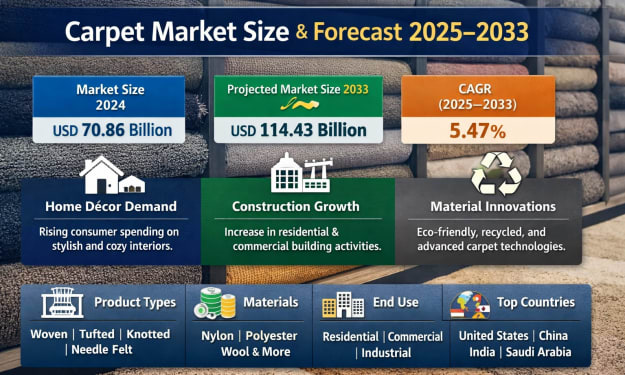
Carpet Market Size and Forecast 2025–2033
The global carpet market is witnessing steady expansion as consumer demand for comfortable, stylish, and energy-efficient flooring solutions increases worldwide. According to Renub Research, the global carpets market was valued at USD 70.86 billion in 2024 and is projected to grow from USD 74.73 billion in 2025 to USD 114.43 billion by 2033, registering a compound annual growth rate (CAGR) of 5.47% during 2025–2033.
By Sakshi Sharma2 days ago in Trader
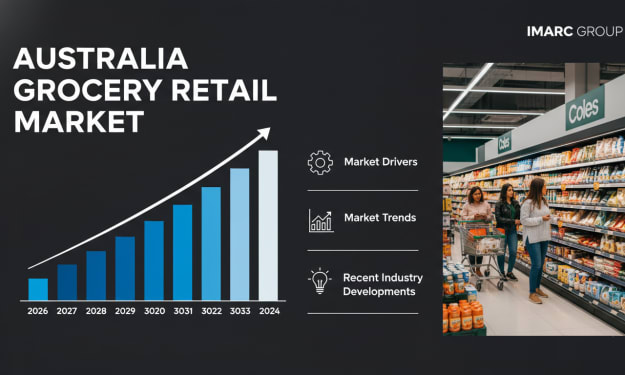
Australia Grocery Retail Market Growth, Forecast, and Strategic Insights by 2034
The grocery retail sector plays a vital role in Australia’s economy, serving millions of consumers who rely on supermarkets, convenience stores, and online platforms for everyday essentials. Over the past decade, the industry has evolved significantly as retailers adapt to changing consumer preferences, technological innovations, and new competitive pressures.
By Amélie Belle4 days ago in Trader


Comments
There are no comments for this story
Be the first to respond and start the conversation.