
Global Footwear Market Size and Forecast 2025–2033: Fashion, Performance, and Sustainability Reshape a US$492 Billion Industry
Rising e-commerce, health awareness, and eco-conscious consumers propel the global footwear market into a new growth decade


Global Footwear Market Outlook
The global footwear market continues to evolve as one of the most dynamic segments of the consumer goods industry, driven by fashion trends, lifestyle changes, and technological innovation. According to Renub Research, the global footwear market was valued at US$ 350.62 billion in 2024 and is expected to expand to US$ 492.60 billion by 2033, growing at a compound annual growth rate (CAGR) of 3.85% from 2025 to 2033.
This steady expansion reflects the growing importance of footwear not just as a functional necessity, but as a key fashion statement, a performance enhancer, and increasingly, a symbol of sustainability and ethical consumption. Rising disposable incomes, greater penetration of e-commerce, increasing participation in sports and fitness activities, and innovation in materials and design are reshaping the market across regions and demographics.
Footwear today goes far beyond protecting the feet. It represents identity, comfort, mobility, and style. From luxury leather shoes to high-performance running sneakers and eco-friendly sandals, the global market is becoming more diverse, more competitive, and more technology-driven than ever before.
What Is Footwear and Why It Matters
Footwear refers to garments worn on the feet for protection, comfort, performance, and fashion, including shoes, boots, sandals, slippers, and sneakers. Its core function is to protect feet from environmental elements such as rough terrain, extreme temperatures, and sharp surfaces. However, modern footwear has evolved into a multi-purpose product that enhances posture, improves athletic performance, and reduces injury risks.
In addition to utility, footwear plays a crucial role in personal appearance and cultural expression. Different styles are associated with professional environments, sports, social events, and casual lifestyles. Technological advancements have further transformed footwear, introducing breathable materials, lightweight soles, cushioning systems, and smart features that monitor performance.
Key Growth Drivers of the Global Footwear Market
1. Rising Health Awareness and Sports Participation
The global shift toward healthier lifestyles has significantly boosted demand for athletic and sports footwear. More people are engaging in running, gym workouts, yoga, and outdoor sports, creating sustained demand for performance-oriented shoes.
Brands are heavily investing in research and development to deliver specialized footwear for different sports, foot types, and performance needs. Innovations such as smart shoes, enhanced grip soles, and shock-absorbing materials are attracting fitness-conscious consumers.
In August 2023, ZERO10 introduced AR Mirrors at JD Sports flagship stores in New York and Chicago, allowing customers to virtually try Nike products—an example of how technology is enhancing the consumer experience and boosting sales.
2. Expansion of E-Commerce Platforms
E-commerce has transformed the global footwear industry by providing convenience, variety, price transparency, and easy returns. Consumers now browse thousands of designs online, compare prices instantly, and receive personalized recommendations.
Online platforms allow brands to access global consumers without physical stores, while data analytics enables targeted marketing. In February 2024, South African brand Veldskoen Shoes expanded into the U.S., strengthening its North American presence through online channels.
The integration of AI-based personalization and virtual try-on technologies is further accelerating online footwear sales, especially among younger consumers.
3. Growing Demand for Sustainable and Ethical Footwear
Sustainability is no longer optional—it is a key purchase driver. Consumers are increasingly choosing footwear made from recycled, plant-based, and biodegradable materials, while also expecting ethical labor practices.
In February 2025, Metro Brands Limited launched a footwear recycling campaign to address environmental waste, signaling a major shift toward circular economy practices. Brands that prioritize sustainability are gaining trust, loyalty, and long-term market advantage.
Challenges Facing the Global Footwear Market
High Competition and Price Sensitivity
The global footwear market is intensely competitive, with global giants, regional brands, and local manufacturers all competing for consumer attention. This saturation leads to price wars, squeezing margins—especially in emerging economies where consumers remain price-sensitive.
Premium brands often face difficulties expanding into developing markets without adjusting pricing or offering affordable product lines.
Supply Chain Disruptions and Regulatory Barriers
Global supply chains have been impacted by geopolitical tensions, pandemics, and logistical bottlenecks, increasing costs and delaying deliveries. Additionally, varying regulations regarding materials, labor standards, and environmental compliance create complexity for manufacturers operating across borders.
Segment-Wise Market Analysis
Global Athletic Footwear Market
The athletic footwear segment is growing rapidly due to rising fitness participation and professional sports engagement. Consumers are seeking footwear that enhances performance, durability, and comfort. Smart shoes and eco-friendly sports footwear are emerging trends shaping this segment.
Global Leather Footwear Market
Leather footwear remains a symbol of quality, durability, and luxury. Demand is particularly strong for formal and premium shoes. However, synthetic alternatives and counterfeit products pose challenges. Design innovation and sustainable leather sourcing are helping brands maintain growth momentum.
Global E-Commerce Footwear Market
Online footwear sales continue to expand at a rapid pace. Consumers value convenience, reviews, and price comparison tools. Virtual try-ons, augmented reality, and AI-based suggestions are improving conversion rates and reducing returns, making online platforms essential to brand strategies.
Global Men’s Footwear Market
Men’s footwear is seeing growth as men increasingly prioritize style alongside comfort. Athleisure, casual wear, and multifunctional shoes are driving demand, particularly among urban consumers.
Global Women’s Footwear Market
Women’s footwear remains the largest segment due to higher purchase frequency and variety of styles. The rise of women’s sports participation has also boosted demand for athletic footwear. Fashion-driven purchases continue to dominate this segment.
Regional Market Insights
United States Footwear Market
The U.S. footwear market is characterized by high consumer spending, innovation, and strong e-commerce adoption. Sustainability and technology are key trends. Athleisure footwear continues to dominate as consumers seek comfort with style.
In April 2024, Adidas launched seven new footwear styles, including Gazelle variations and retro-inspired sneakers, reflecting the growing demand for classic yet modern designs.
France Footwear Market
France represents a blend of luxury fashion and functional footwear. Women consumers drive fashion trends, while sports-inspired footwear is gaining popularity. In June 2024, Bata partnered with SARENZA.com to expand accessibility and online reach in France.
India Footwear Market
India’s footwear market is expanding rapidly due to urbanization, rising incomes, and growing fashion awareness. The growth of e-commerce has increased brand access across regions. However, counterfeit products and price sensitivity remain key challenges.
In May 2025, Skechers agreed to be taken private by 3G Capital in a US$ 9.42 billion deal, marking the largest footwear buyout in history amid rising tariff pressures in the U.S.
Saudi Arabia Footwear Market
Saudi Arabia’s footwear market is shifting toward premium and branded products, supported by higher disposable incomes and global fashion influence. Sustainability and technology-driven footwear are gaining traction. In September 2023, Level Shoes hosted a pre-launch pop-up for New Balance in Riyadh, highlighting growing demand for global brands.
Market Segmentation Overview
By Product
Athletic
Non-Athletic
By Material
Leather
Non-Leather
By Distribution Channel
E-Commerce
Offline Stores
By End User
Men
Women
Children
By Region
North America (U.S., Canada)
Europe (France, Germany, Italy, Spain, UK, Belgium, Netherlands, Turkey)
Asia Pacific (China, Japan, India, South Korea, Thailand, Malaysia, Indonesia, Australia, New Zealand)
Latin America (Brazil, Mexico, Argentina)
Middle East & Africa (Saudi Arabia, UAE, South Africa)
Competitive Landscape: Key Players Covered
Nike Inc.
Adidas AG
New Balance Athletics, Inc.
ASICS Corporation
LVMH Moët Hennessy Louis Vuitton SE
Fila Holdings Corp.
The Bata Corporation
VF Corporation
Each company is analyzed through four strategic viewpoints:
Overview
Key Persons
Recent Developments & Strategies
Revenue Analysis
Final Thoughts
The global footwear market is entering a transformative phase where fashion, performance, digitalization, and sustainability converge. With the market projected to reach US$ 492.60 billion by 2033, brands that adapt to changing consumer expectations, invest in technology, and embrace ethical practices will lead the next decade of growth.
As footwear becomes a reflection of lifestyle, values, and identity, the industry’s future will be shaped by innovation, agility, and responsibility—making it one of the most exciting consumer markets to watch through 2033.
About the Creator
Sushant. Renub Research
I’m Sushanta Halder, Digital Marketing Manager at Renub Research with 15+ years in SEO, content, PPC & lead generation. Passionate about data-driven growth strategies.
Keep reading
More stories from Sushant. Renub Research and writers in Trader and other communities.
Global Car Rental Market Size and Forecast 2025–2033: The Future of Flexible Mobility
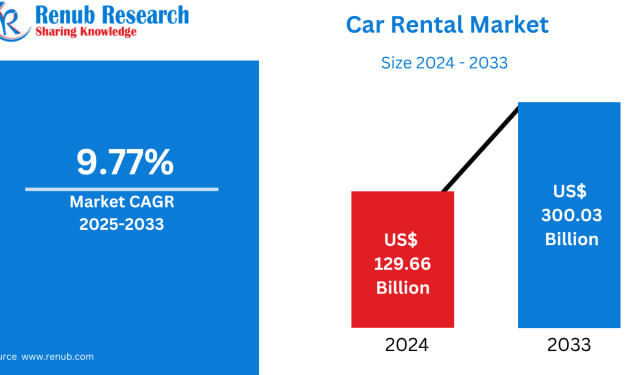
Global Car Rental Market Overview The Global Car Rental Market was valued at USD 129.66 billion in 2024 and is projected to surge to USD 300.03 billion by 2033, growing at a robust CAGR of 9.77% during the forecast period. This impressive growth reflects a structural shift in how consumers and businesses approach transportation—moving away from ownership toward flexible, on-demand mobility solutions.
By Sushant. Renub Researchabout 3 hours ago in Trader
Oil and Gas Market Outlook: Trends, Growth, and Global Demand
Overview — Oil and Gas Market The global oil and gas market remains one of the world’s most vital energy sectors, underpinning industrial activity, transportation, and economic growth. Despite rising pressure from the global energy transition and decarbonization goals, demand remains robust—supported by expanding petrochemical needs, transport energy requirements, and infrastructure growth. Digital transformation, including artificial intelligence (AI), is reshaping exploration, production, refining, distribution, and safety monitoring, enhancing efficiency and lowering costs across the value chain. Technological adoption is now a key differentiator among major players as they seek operational resilience and competitive advantage.
By James Smithabout 13 hours ago in Trader
Rachel Reviews: The Spiral Archive by Pieter Hendrik
It's difficult for me to know where to start with a review of this book as it was, for me, an entirely unique experience and one that I'll probably never have again. I don't want that to be interpreted as unenjoyable but it has left me scratching my head a little and ruminating on its content, its themes and its characters.
By Rachel Deeming5 days ago in BookClub



Comments
There are no comments for this story
Be the first to respond and start the conversation.