
GCC Egg Powder Market Trends & Summary (2025–2033)
Convenience, Nutrition, and Food Processing Boom Drive a Quiet but Powerful Growth Story in the Gulf

Introduction: A Small Ingredient with Big Market Impact
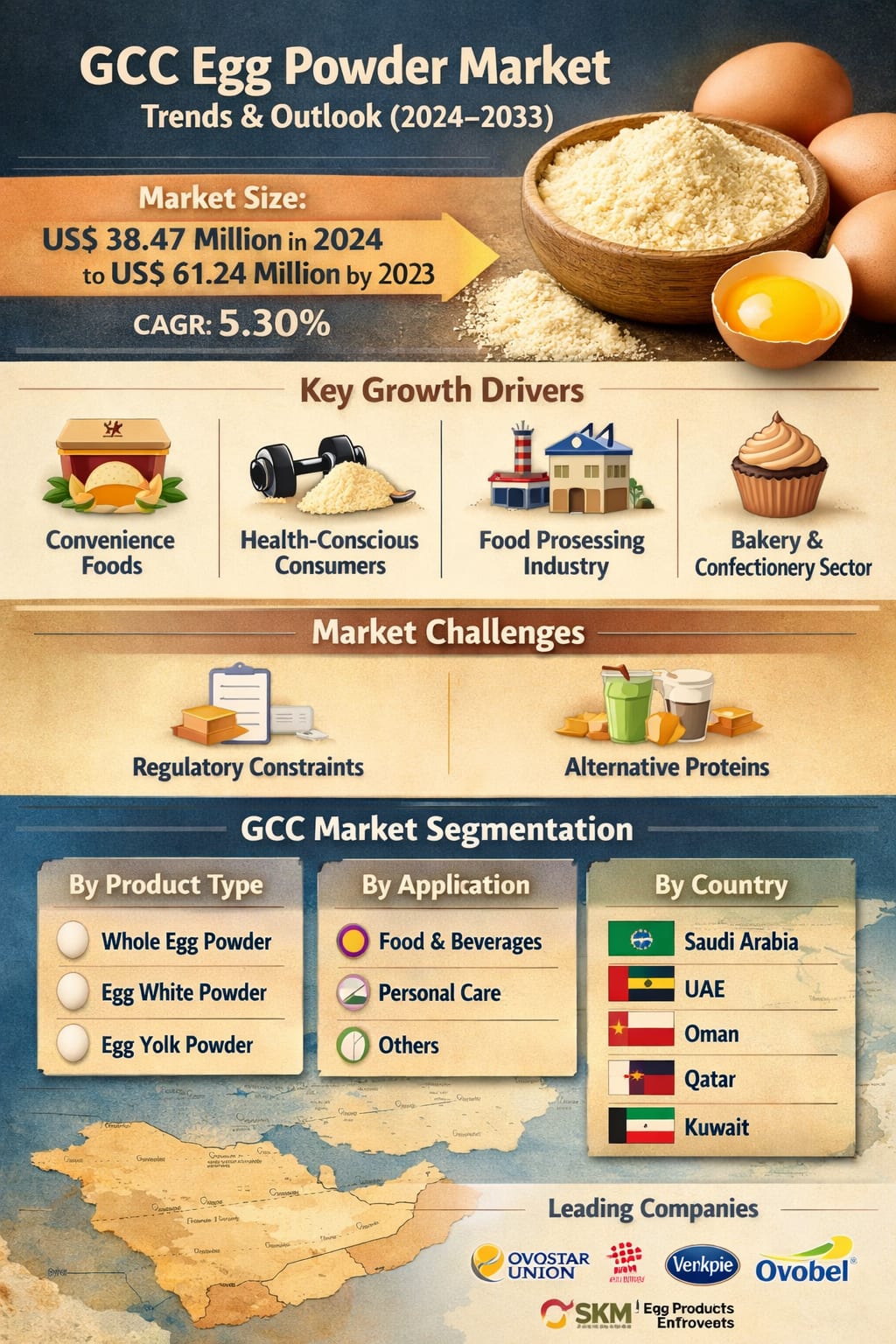
The Gulf Cooperation Council (GCC) egg powder market may not always make headlines, but it is quietly becoming one of the most important supporting pillars of the region’s modern food ecosystem. According to Renub Research, the GCC Egg Powder Market is expected to reach US$ 61.24 million by 2033, up from US$ 38.47 million in 2024, growing at a compound annual growth rate (CAGR) of 5.30% from 2025 to 2033.
This steady growth reflects much more than just rising egg consumption. It signals a broader transformation in the Gulf’s food industry—one driven by convenience foods, expanding food processing capacity, health-conscious consumers, booming bakery and confectionery segments, and the rapid rise of e-commerce and modern retail.
Egg powder, a dried and shelf-stable form of whole eggs, egg whites, or egg yolks, has become an indispensable ingredient across food manufacturing, catering, and even non-food sectors like personal care and pharmaceuticals. Its long shelf life, easy storage, consistent quality, and functional versatility make it a strategic ingredient for producers looking to scale efficiently in a fast-growing, import-dependent region like the GCC.
GCC Egg Powder Industry Overview
Egg powder is produced by removing the water content from whole eggs, egg whites, or egg yolks through controlled drying processes. The result is a highly stable, lightweight, and easy-to-handle ingredient that retains most of the nutritional and functional properties of fresh eggs.
In the food industry, egg powder plays multiple roles. It is widely used as a protein source, emulsifier, binder, foaming agent, and flavor enhancer in bakery products, confectionery, snacks, sauces, dressings, and ready-to-eat meals. It is also a critical ingredient in the production of cakes, biscuits, noodles, instant foods, and processed meat products. Beyond food, egg powder finds applications in pet food, cosmetics, and certain pharmaceutical formulations, further widening its commercial relevance.
In the GCC, where climate conditions, logistics, and food security considerations make long shelf life and easy storage especially valuable, egg powder offers a practical alternative to fresh shell eggs for industrial users. As the region continues to invest in food processing, hospitality, catering, and modern retail, demand for stable, standardized ingredients like egg powder is rising steadily.
Market Outlook: Growth Backed by Structural Shifts
Renub Research’s forecast highlights a market that is not driven by short-term trends, but by structural changes in consumption and production patterns across the Gulf. The projected rise from US$ 38.47 million in 2024 to US$ 61.24 million by 2033 reflects:
The expansion of packaged and processed food consumption
The growth of bakery, confectionery, and foodservice sectors
Increasing focus on food security and supply chain efficiency
A gradual shift toward high-protein, functional, and convenience-oriented foods
While the market size may appear modest compared to larger food ingredient segments, the 5.30% CAGR signals a healthy, sustainable growth trajectory supported by both demand-side and supply-side factors.
Key Growth Drivers of the GCC Egg Powder Market
1. Rising Demand for Convenience Foods
One of the most powerful drivers behind the GCC egg powder market is the surging demand for convenience foods. Across Saudi Arabia, the UAE, and other Gulf countries, changing lifestyles, urbanization, and a growing working population have reshaped eating habits. Consumers increasingly prefer ready-to-eat meals, instant foods, packaged snacks, and bakery products that save time without compromising taste.
Egg powder fits perfectly into this ecosystem. For food manufacturers, it offers ease of handling, consistent quality, and longer shelf life compared to fresh eggs. It also simplifies logistics, reduces storage risks, and supports large-scale, standardized production—key requirements for modern food processing operations serving mass markets.
As the convenience food trend continues to accelerate, egg powder is expected to remain a core functional ingredient in the GCC’s processed food value chain.
2. Growing Base of Health-Conscious Consumers
Health awareness is rising steadily across the Gulf, driven by government initiatives, media attention, and changing consumer attitudes toward diet and lifestyle. Protein-rich diets, fitness culture, and interest in functional foods have all contributed to stronger demand for high-quality protein ingredients.
Egg powder, being a complete protein source with essential amino acids, benefits directly from this shift. It is increasingly used in protein-enriched foods, health snacks, bakery products, and even nutritional supplements. In markets like Saudi Arabia, where concerns about obesity and lifestyle-related health issues have gained prominence, consumers and manufacturers alike are paying closer attention to nutritional profiles.
For producers, egg powder offers a way to enhance protein content without compromising functionality or taste, making it a valuable ingredient in the growing health-focused food segment.
3. Expansion of the Food Processing Industry
The GCC’s food processing sector has been expanding rapidly, supported by population growth, tourism, urbanization, and government-backed food security strategies. Countries in the region are investing heavily in local food manufacturing, cold chains, and modern processing facilities to reduce import dependence and improve supply resilience.
Egg powder is a natural beneficiary of this trend. Its long shelf life, easy storage, and consistent performance make it ideal for large-scale food production. It is widely used in:
Bakery and confectionery products
Sauces, dressings, and mayonnaise
Snacks and ready meals
Processed meat and noodle products
As manufacturers seek efficiency, standardization, and scalability, egg powder continues to replace or complement fresh eggs in many industrial applications.
4. Growth of Bakery, Confectionery, and Foodservice Sectors
The bakery and confectionery segments are among the fastest-growing parts of the GCC food market, fueled by young demographics, rising disposable incomes, tourism, and café culture. From industrial bread and biscuits to premium pastries and desserts, egg-based formulations remain central to product quality and texture.
Egg powder offers bakeries and foodservice operators greater consistency, reduced waste, and easier inventory management. For large hotel chains, catering services, and quick-service restaurants, these operational advantages translate directly into cost savings and quality control—further boosting adoption.
5. E-commerce and Modern Retail Expansion
The rapid growth of e-commerce, modern supermarkets, and organized retail in the GCC has changed how food ingredients and finished products move through the market. Shelf-stable, easy-to-transport products like egg powder are well-suited to these evolving distribution channels.
For both B2B buyers and smaller food businesses, online procurement of ingredients is becoming more common—adding another layer of convenience and accessibility to the egg powder market.
Challenges Facing the GCC Egg Powder Market
Regulatory Constraints
Food safety and quality regulations across GCC countries are strict—and rightly so. However, compliance with varying standards, labeling rules, and import requirements can increase operational complexity and costs for manufacturers and distributors. For companies operating across multiple GCC markets, navigating these differences remains a persistent challenge.
Competition from Alternative Proteins
Plant-based proteins such as soy, pea, and other alternatives are gaining popularity, especially among health-conscious and environmentally aware consumers. These alternatives often compete with egg-based ingredients in bakery, snacks, and functional foods. While egg powder retains strong functional advantages, rising interest in vegan and allergen-free products does introduce competitive pressure.
Country-Level Market Insights
Saudi Arabia Egg Powder Market
Saudi Arabia represents the largest and most influential market for egg powder in the GCC. Growth is driven by the expanding food processing sector, rising demand for convenience foods, and the government’s focus on food security and self-sufficiency. Egg powder is widely used in ready meals, bakery products, sauces, and institutional catering.
Key players such as Al Watania Poultry, Almarai, and Al-Safi Danone play an important role in supporting the broader egg and dairy ecosystem, indirectly strengthening the egg powder value chain as well.
UAE Egg Powder Market
The UAE’s market is shaped by a strong hospitality sector, vibrant foodservice industry, and a highly developed retail and food import-export ecosystem. Egg powder is widely used in industrial baking, catering, and processed food manufacturing, supported by the country’s role as a regional food trade hub.
Major players include Gulf Food Industries (California Garden), Al Ghurair Foods, and Al Rawdah, which contribute to the development of value-added food products and ingredient supply chains.
Oman Egg Powder Market
Oman’s egg powder market is growing steadily, supported by rising domestic food processing activity and a focus on improving food security. Manufacturers increasingly prefer egg powder for its cost efficiency, storage benefits, and versatility in processed foods, bakery items, and ready meals.
As local production and processing capacities expand, demand for stable, functional ingredients like egg powder is expected to continue rising.
GCC Egg Powder Market Segmentation
By Product Type
Whole Egg Powder
Egg White Powder
Egg Yolk Powder
By Application
Food & Beverages
Personal Care
Others
By Country
Saudi Arabia
UAE
Kuwait
Qatar
Oman
Bahrain
Competitive Landscape
The market features a mix of global and regional players, with companies analyzed from four perspectives: Overview, Key Persons, Recent Developments, and Financial Insights.
Key companies include:
Ovostar Union N.V.
Kewpie Egg Corporation
Venkys
Weyco Group Inc
Ovobel Foods
SKM Egg Products
Bouwhuis Enthoven BV
Farm Pride Food Ltd.
These players compete on product quality, functional performance, supply reliability, and compliance with food safety standards, while also expanding their presence in high-growth emerging markets like the GCC.
Future Outlook: A Stable, Strategic Growth Story
The GCC egg powder market is not about explosive, short-term spikes—it is about steady, structural growth aligned with the region’s broader food industry transformation. With Renub Research projecting the market to reach US$ 61.24 million by 2033, the sector is clearly positioned as a reliable, long-term growth segment within the wider food ingredients landscape.
As convenience foods, food processing, health-focused products, and modern retail continue to expand, egg powder will remain a quiet but essential enabler of scale, efficiency, and consistency in the GCC’s evolving food economy.
Final Thoughts
From bakery shelves to industrial kitchens, from protein-enriched snacks to ready-to-eat meals, egg powder is steadily cementing its role as a strategic ingredient in the GCC’s food future. Backed by strong fundamentals, supportive industry trends, and rising demand for efficient, shelf-stable solutions, the market’s journey from US$ 38.47 million in 2024 to US$ 61.24 million by 2033 tells a story of practical innovation meeting real-world needs.
In a region focused on food security, efficiency, and modern consumption patterns, the GCC egg powder market may remain behind the scenes—but its impact will be increasingly visible on every plate.
About the Creator
Sakshi Sharma
Content Writer with 7+ years of experience crafting SEO-driven blogs, web copy & research reports. Skilled in creating engaging, audience-focused content across diverse industries.
Keep reading
More stories from Sakshi Sharma and writers in Trader and other communities.
North America Automotive Robotics Market Size and Forecast 2025–2033
Introduction: Robots at the Heart of Modern Car Factories The North America Automotive Robotics Market is entering a decisive growth phase, driven by the region’s rapid shift toward smart manufacturing, electric vehicles, and highly automated production lines. According to Renub Research, the market is expected to reach US$ 7.09 billion by 2033, up from US$ 3.05 billion in 2024, growing at a CAGR of 9.81% from 2025 to 2033.
By Sakshi Sharmaabout 17 hours ago in Trader
CBA Shares Jump as Profit Beats Market Expectations
CBA Shares Jump as Profit Beats Market Expectations Shares of Commonwealth Bank of Australia (CBA) recorded a strong upward move after the country’s largest lender posted profits that exceeded market expectations. The better-than-expected financial performance boosted investor confidence and pushed CBA shares higher in early trading, reinforcing the bank’s position as one of the most resilient players in Australia’s financial sector.
By Hammad Nawaz3 days ago in Trader



Comments
There are no comments for this story
Be the first to respond and start the conversation.