
North America Web Application Firewall Market Size and Forecast 2025–2033
Why Rising Cyber Threats and Cloud Adoption Are Turning WAF Into a Must-Have Digital Shield

Introduction: The New Front Line of Digital Defense
In today’s always-on digital economy, websites and web applications are no longer just marketing tools—they are the core of how businesses sell, serve, and operate. From online banking and e-commerce to telemedicine and government portals, web applications have become the backbone of modern services. But with this shift comes a serious risk: cybercriminals are increasingly targeting these applications as their primary point of attack.
This is where the Web Application Firewall (WAF) steps in.
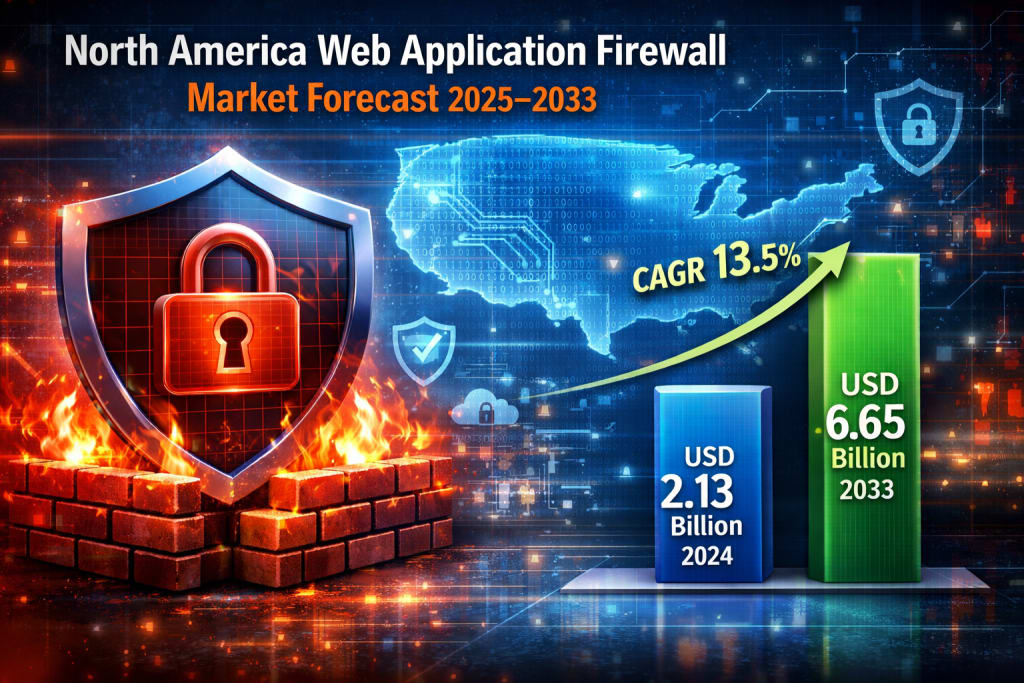
According to Renub Research, the North America Web Application Firewall (WAF) Market is projected to grow from USD 2.13 billion in 2024 to USD 6.65 billion by 2033, expanding at a strong CAGR of 13.5% from 2025 to 2033. This rapid growth reflects more than just rising IT budgets—it signals a fundamental change in how organizations think about cybersecurity, compliance, and digital trust.
As cyber threats become more sophisticated, regulations more demanding, and businesses more dependent on web-based platforms, WAF solutions are evolving from a “nice-to-have” into a critical layer of enterprise security strategy across North America.
What Is a Web Application Firewall and Why It Matters
A Web Application Firewall is a specialized security solution designed to monitor, filter, and block malicious traffic directed at web applications. Unlike traditional firewalls that focus on network-level threats, WAFs operate at the application layer, where most modern attacks actually occur.
Common threats such as SQL injection, cross-site scripting (XSS), bot attacks, cookie poisoning, and DDoS attempts are specifically targeted by WAF technologies. By analyzing HTTP and HTTPS traffic in real time, a WAF can stop attacks before they reach the application or compromise sensitive data.
For industries that handle financial information, personal identities, or medical records, this protection is not optional—it is essential. E-commerce platforms, banks, healthcare providers, and government agencies rely on WAFs to maintain confidentiality, integrity, and availability of their digital services while preserving customer trust and regulatory compliance.
Market Momentum: Why North America Is Leading the Charge
North America stands at the forefront of WAF adoption due to a unique mix of high digital maturity, strict regulatory frameworks, and a rapidly evolving threat landscape.
Enterprises across the United States and Canada, in particular, operate some of the world’s largest digital ecosystems. This scale makes them attractive targets for cybercriminals—and also forces them to invest heavily in advanced security solutions. At the same time, cloud computing, SaaS platforms, and API-driven architectures are expanding the attack surface, making application-level protection more critical than ever.
The result is a market where WAF is no longer seen as a standalone tool, but as a core component of a broader, integrated cybersecurity architecture.
Key Growth Drivers Powering the Market
1. Surge in Cybersecurity Threats
The frequency and sophistication of cyberattacks in North America continue to rise. Ransomware campaigns, automated bot attacks, credential stuffing, and application-layer DDoS assaults are now routine threats for organizations of all sizes.
Web applications are prime targets because they are public-facing, business-critical, and often connected to valuable data. WAF solutions provide a first line of defense by blocking malicious traffic before it can exploit vulnerabilities.
Recent industry moves underline this trend. In May 2023, Fortra upgraded its Managed WAF service through its Alert Logic business, integrating advanced tools and expert monitoring to better protect web applications and APIs. Such developments show how vendors are racing to keep pace with the evolving threat environment.
2. Expansion of E-commerce and Digital Services
From online retail and digital banking to telemedicine and streaming services, North America’s digital economy is booming. Every new customer portal, payment gateway, or API endpoint increases the potential attack surface.
Businesses now depend on secure, high-performance web experiences to remain competitive. WAF solutions help ensure business continuity, protect customer data, and maintain compliance with industry standards—without sacrificing performance.
In February 2025, Yottaa introduced its Web Performance Services, combining performance optimization with enhanced security using technologies from partners like Fastly and HUMAN Security. This highlights a growing market trend: security and performance are no longer separate conversations—they are part of the same digital strategy.
3. Strict Data Protection and Privacy Regulations
Regulatory pressure is another powerful driver behind WAF adoption. Laws such as the California Consumer Privacy Act (CCPA) and its successor, the California Privacy Rights Act (CPRA)—effective from January 2023—have significantly raised the bar for data protection.
In healthcare, regulations like HIPAA impose strict requirements on how patient data is handled and protected. Financial institutions face similar obligations under various federal and state frameworks.
WAFs play a crucial role in compliance by reducing the risk of data breaches, preventing unauthorized access, and providing audit-friendly security controls. For many organizations, investing in WAF technology is not just about security—it is about avoiding legal, financial, and reputational damage.
Challenges Holding the Market Back
High Implementation and Maintenance Costs
Despite strong demand, WAF adoption—especially among small and medium-sized enterprises (SMEs)—can be limited by cost. Expenses may include software licenses, hardware appliances, cloud subscriptions, skilled IT staff, and ongoing maintenance.
Moreover, WAFs require continuous tuning and updates to stay effective against new threats. This increases the total cost of ownership and can be a barrier for organizations with tight cybersecurity budgets.
Complex Integration with Legacy Systems
Many North American organizations still rely on legacy IT infrastructures. Integrating modern WAF solutions into these environments can be technically complex, time-consuming, and sometimes risky.
Compatibility issues, performance concerns, and operational disruptions can delay deployments—particularly in traditional sectors such as manufacturing and government. This integration challenge remains a key obstacle to faster market penetration.
Market Segmentation Insights
By Component: Solutions vs. Services
The WAF market in North America is split between solutions (software and appliances) and services (managed security, monitoring, and support). While solutions form the core, demand for managed services is rising as organizations look to outsource complexity and ensure 24/7 protection without expanding internal teams.
By Organization Type: Large Enterprises vs. SMEs
Large enterprises dominate WAF adoption due to their complex digital environments and higher risk exposure. Industries such as BFSI, healthcare, and IT invest heavily in advanced WAF platforms with analytics, reporting, and threat intelligence capabilities.
At the same time, SMEs are increasingly turning to cloud-based WAF solutions, attracted by lower upfront costs, faster deployment, and simpler management.
By Deployment Mode: On-Premise vs. Cloud
The shift toward cloud computing is reshaping the WAF landscape. Cloud-based WAFs offer scalability, cost efficiency, and ease of deployment, making them especially popular among startups, digital-first companies, and organizations undergoing cloud transformation.
However, on-premise WAFs still hold relevance in highly regulated industries and environments with strict data residency or performance requirements.
Industry Vertical Trends
Retail
Retail is one of the biggest consumers of WAF solutions in North America, driven by the explosive growth of e-commerce and omnichannel shopping. Protecting payment data, customer identities, and transaction systems is critical, especially during high-traffic sales events.
WAFs help retailers block bot traffic, prevent fraud, and maintain smooth, secure shopping experiences.
IT & Telecommunications
With the rollout of 5G, cloud services, and edge computing, the IT and telecom sectors face a rapidly expanding threat surface. WAFs are essential for securing APIs, customer portals, and cloud-based services, ensuring service continuity and user privacy in a highly interconnected ecosystem.
Healthcare
Healthcare organizations are prime targets for cyberattacks due to the value of medical data. WAFs are used to protect electronic health records (EHRs), patient portals, and telemedicine platforms, while also supporting compliance with regulations like HIPAA.
As healthcare continues its digital shift, WAF adoption is becoming a cornerstone of patient data protection strategies.
Country-Level Outlook
United States
The U.S. leads the North American WAF market, driven by its massive digital economy, strict regulatory environment, and high cyber threat exposure. Enterprises across sectors invest in both cloud and on-premise WAF solutions to protect critical assets.
In March 2025, Akamai Technologies was named a Leader in The Forrester Wave: Web Application Firewall Solutions, Q1 2025, highlighting the maturity and competitiveness of the U.S. WAF ecosystem.
Canada
Canada’s WAF market is growing steadily, supported by national cybersecurity initiatives and increasing digital adoption across industries. Sectors such as banking, healthcare, and government are at the forefront, with compliance to privacy laws like PIPEDA playing a key role.
In June 2024, Vercara expanded its presence by opening a new DDoS and application security point of presence in Toronto, strengthening in-country data processing and mitigation capabilities for Canadian customers.
Mexico
Mexico is an emerging WAF market, fueled by digital transformation in finance, retail, and manufacturing. While challenges remain around cost and technical expertise, rising awareness of cybersecurity risks and increasing IT investments are driving steady adoption.
Competitive Landscape
Key players shaping the North America WAF market include:
Akamai Technologies, Inc.
Cloudflare Inc.
Qualys Inc.
F5 Inc.
Fortinet Inc.
Radware Ltd.
Microsoft Corporation
Barracuda Networks, Inc.
These companies compete on performance, threat intelligence, ease of deployment, and integration with broader security ecosystems, while continuously innovating to address new attack vectors.
Final Thoughts: WAF as a Strategic Business Enabler
The North America Web Application Firewall market is no longer just about stopping attacks—it is about enabling secure digital growth. With the market set to rise from USD 2.13 billion in 2024 to USD 6.65 billion by 2033, WAF solutions are becoming a foundational pillar of modern enterprise IT strategy.
As cyber threats intensify, regulations tighten, and digital services continue to expand, organizations that invest early in robust WAF platforms will be better positioned to protect customer trust, ensure compliance, and sustain long-term digital resilience.
About the Creator
Tom Shane
Tom Shane is a content writer specializing in SEO-driven blogs, product descriptions, and thought leadership. He crafts engaging, research-backed content that connects with audiences and drives results.
Junk Silver in 2026: Is It Still a Smart Investment?
In a world of digital currencies, volatile stock markets, and persistent inflation concerns, many investors are turning back to tangible assets. Gold often dominates the conversation — but silver, especially junk silver, is quietly regaining attention in 2026.
By Adil Ali Khan3 days ago in Trader
Royal Enfield Bike Maker Eicher Motors Share Price Jumps 7% After Strong Q3 Results
Shares of Eicher Motors, the parent company of iconic motorcycle brand Royal Enfield, surged nearly 7% in early trade after the company reported strong Q3 financial results. The upbeat earnings performance exceeded market expectations and reinforced investor confidence in the company’s growth trajectory, premium brand positioning, and improving margins.
By Hammad Nawaz4 days ago in Trader



Comments
There are no comments for this story
Be the first to respond and start the conversation.