
From Barter to Forex: The Evolution of Trade
From Cows to Currency: The Evolution of Trade and the Birth of Forex
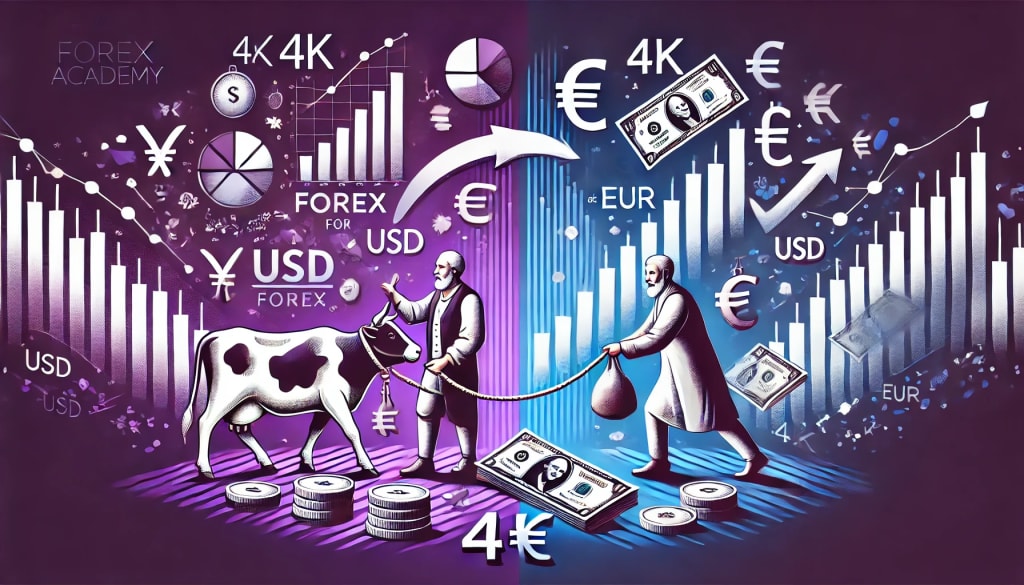
Imagine a bustling marketplace thousands of years ago. The sun casts long shadows as traders haggle over the value of their goods. A man leading a cow approaches a woman with a basket of rice. After a brief discussion, they nod in agreement—the cow is exchanged for several sacks of rice. This system of trade, known as barter, was humanity’s first attempt at commerce. While simple, it was revolutionary, laying the foundation for the global currency markets we know today.
Fast forward to the 21st century. Instead of cows and rice, traders exchange U.S. dollars for euros, yen for pounds, and countless other currency pairs. This modern version of exchange, known as forex trading, is now a $7.5 trillion-a-day industry. But how did we get here? What does a cow-for-rice transaction have in common with a trader buying euros with dollars? Let’s explore the fascinating evolution of commerce.
The Limitations of Barter
While barter worked in small communities, it was far from perfect. The system relied on a “double coincidence of wants”—both parties needed to want what the other was offering. What if the rice seller didn’t need a cow? What if the cow owner wanted tools instead? These challenges made barter cumbersome and inefficient as societies grew more complex.
To solve this problem, ancient civilizations introduced the concept of money. Shells, beads, and eventually precious metals like gold and silver became universally accepted as a medium of exchange. This innovation revolutionized trade by providing a standard measure of value. No longer limited by direct exchange, traders could sell their goods for money and use that money to buy what they needed later.
The Birth of Currency Trading
As trade expanded across regions and cultures, different societies developed their own currencies. Ancient Romans used the denarius, while the Chinese traded with copper coins. But what happened when merchants from different regions wanted to trade? A Roman trader traveling to Egypt needed to exchange denarii for drachmas, just as a modern traveler might exchange dollars for euros. This need for currency conversion marked the beginning of what we now call foreign exchange, or forex.
In the medieval period, money changers—precursors to today’s forex brokers—set up tables in marketplaces to facilitate currency exchange. They assessed the value of different coins and provided conversions for a fee. Over time, these money changers evolved into organized financial institutions, paving the way for modern banking and currency trading.
From Coins to Clicks: The Rise of Modern Forex
The invention of paper money in China during the Tang Dynasty was another major milestone. Unlike bulky gold and silver, paper money was easy to carry and widely accepted. This innovation spread across the world, further simplifying trade and expanding markets.
The 20th century brought even greater transformation. With the establishment of the gold standard and, later, the Bretton Woods system, currencies became tied to specific values, providing stability for international trade. However, the collapse of Bretton Woods in the 1970s led to floating exchange rates, where currencies were valued based on supply and demand.
This change marked the birth of the modern forex market. Advances in technology allowed traders to monitor currency values in real time and execute trades with a click of a button. Today, the forex market operates 24/7, connecting traders across the globe in a dynamic, high-stakes environment.
What Barter Teaches Us About Forex
At its core, forex trading is a continuation of the barter system’s basic principle: exchange. Whether you’re swapping cows for rice or dollars for euros, the goal is the same—to maximize value. The evolution from barter to forex highlights humanity’s ingenuity in creating systems to meet the growing demands of trade.
But while forex trading is far more complex, the lessons from barter remain relevant. Successful traders, like ancient barterers, must understand value, timing, and negotiation. They must anticipate market needs and act strategically to secure the best deals.
Why This Matters Today
Understanding the journey from barter to forex helps us appreciate the systems we rely on daily. Every time you exchange money for goods, whether at a local store or in a foreign country, you’re participating in a process rooted in millennia of innovation.
For forex traders, this history offers valuable perspective. It reminds us that trade is not just about numbers on a screen; it’s about human connection, adaptation, and the constant pursuit of improvement.
So, the next time you analyze a currency pair, remember the cow and the rice. What started as a simple exchange in a dusty marketplace has grown into a trillion-dollar industry, shaping economies and lives worldwide.
And that’s the story of how ancient trade paved the way for modern forex trading—a journey from barter to billions.
If you found this story intriguing, share it with someone curious about forex or history. Trade, after all, is a story we’re all a part of.
About the Creator
Keep reading
More stories from Alex Umoren and writers in Trader and other communities.
Silver Rate Today: Live Price Trends, Market Drivers, and Investment Insights
Overview of Silver Rate Today The silver rate today is an important indicator for investors, traders, and commodity analysts worldwide. Silver occupies a unique position in global markets because it functions both as a precious metal and an essential industrial resource. Daily movements in the silver rate today are influenced by macroeconomic conditions, financial market sentiment, and real-world demand from multiple industries. As a result, silver prices often react faster than other commodities during periods of economic change.
By Hammad Nawaz5 days ago in Trader


Comments
There are no comments for this story
Be the first to respond and start the conversation.