
Europe Pepperoni Food Market Size and Forecast 2025–2033 | Renub Research
Convenience Dining, Health-Focused Innovation, and E-Commerce Expansion Reshape Europe’s Pepperoni Industry

Introduction: A Familiar Flavor in a Changing European Food Landscape
Pepperoni, long associated with pizzas, sandwiches, and fast-casual dining, is steadily strengthening its position across Europe’s evolving food market. Once viewed primarily as a niche or American-influenced topping, pepperoni has become a mainstream ingredient in both retail and foodservice channels. From frozen pizzas in supermarkets to freshly prepared wraps in quick-service restaurants (QSRs), its presence is increasingly difficult to ignore.
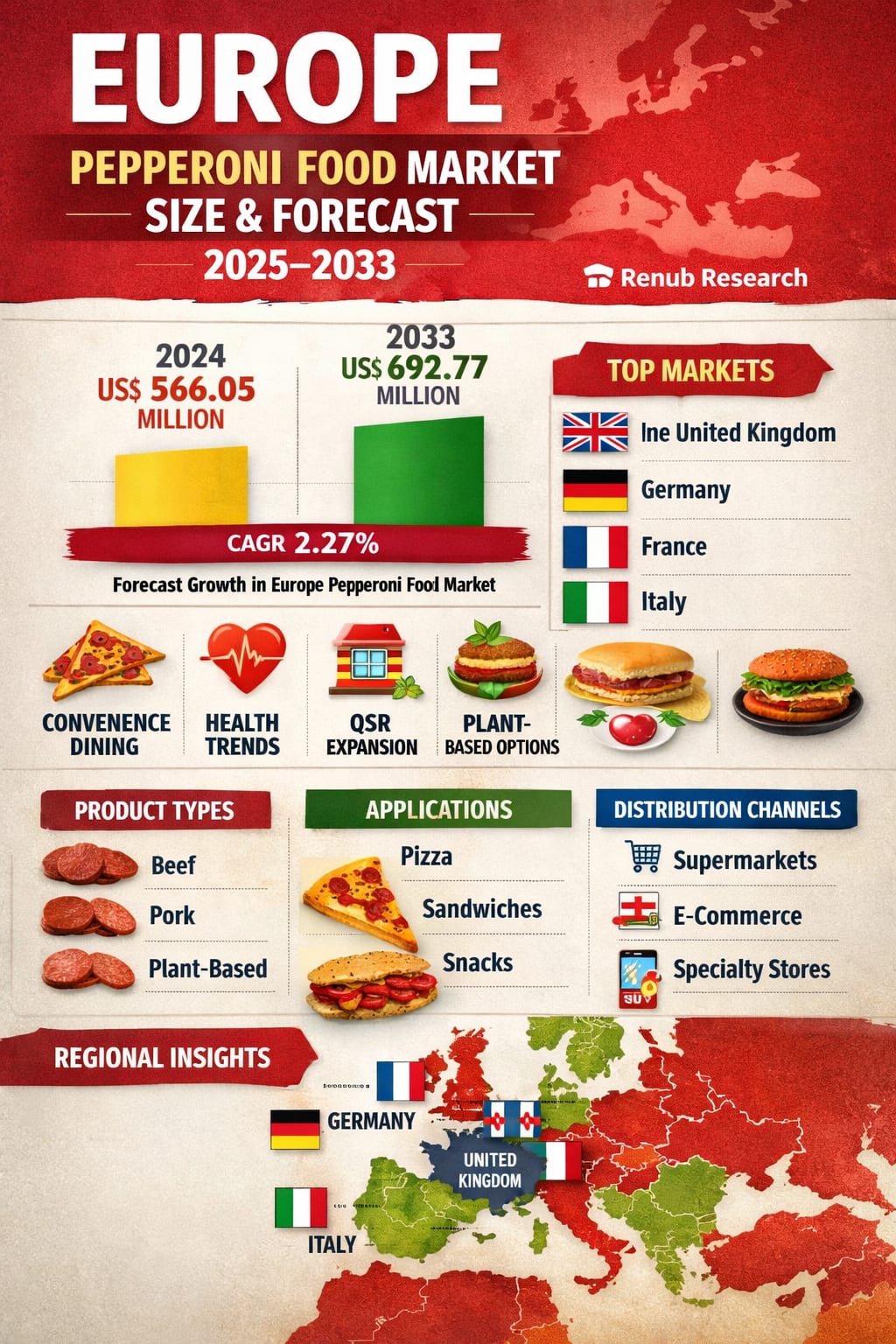
According to Renub Research, the Europe Pepperoni Food Market is expected to reach US$ 692.77 million by 2033, up from US$ 566.05 million in 2024, growing at a compound annual growth rate (CAGR) of 2.27% from 2025 to 2033. This steady expansion reflects broader shifts in European eating habits—most notably the rising demand for convenience foods, the influence of global fast-food culture, and ongoing innovation in healthier and alternative protein products.
At the same time, the industry is navigating a complex environment shaped by health concerns about processed meats, volatile raw material prices, and growing competition from plant-based substitutes. Yet, despite these challenges, the pepperoni segment remains resilient, adaptive, and closely aligned with consumer demand for flavor, speed, and variety.
Market Overview: Why Pepperoni Still Works in Europe
The European pepperoni food market sits at the intersection of tradition and modern convenience. On one hand, cured meats have always been part of Europe’s culinary heritage. On the other, pepperoni—particularly in its American-style form—has benefited enormously from the continent’s love affair with pizza, fast-casual dining, and ready-to-eat meals.
Urbanization, longer working hours, and the rise of dual-income households have significantly changed how Europeans eat. Meals that are quick to prepare, easy to consume, and consistently tasty are now preferred by a large segment of consumers. Pepperoni fits neatly into this lifestyle: it is flavorful, versatile, and works equally well in frozen, chilled, and freshly prepared formats.
Another important driver is the transformation of retail and distribution. The rapid growth of e-commerce, online grocery platforms, and food delivery apps has made pepperoni-based products more accessible than ever. Consumers no longer need to visit specialty stores or pizzerias—pepperoni now arrives at their doorstep in the form of frozen pizzas, ready-to-cook kits, or packaged deli products.
Still, the market is not standing still. Health-conscious consumers are pushing brands to rethink traditional recipes, leading to the introduction of nitrate-free, reduced-fat, low-sodium, and plant-based pepperoni options. This blend of indulgence and innovation is becoming a defining feature of the European pepperoni landscape.
Key Factors Driving the Europe Pepperoni Food Market
1. Rising Demand for Convenience Foods
One of the most powerful forces behind the market’s growth is Europe’s increasing appetite for convenience. Busy lifestyles, urban living, and changing work patterns have made quick meals a daily necessity rather than an occasional choice.
Pepperoni plays perfectly into this trend. It is widely used in frozen pizzas, ready-made sandwiches, wraps, snack packs, and ready-to-bake meal kits. Its bold, smoky-spicy flavor allows manufacturers to deliver a satisfying taste experience with minimal preparation time for consumers.
As more households seek time-saving food solutions, pepperoni is likely to remain a go-to ingredient. The continued expansion of ready-to-eat and ready-to-cook categories across European supermarkets and online platforms further strengthens this demand.
2. Health-Conscious Consumer Trends
While convenience is crucial, health awareness is reshaping how pepperoni is produced and marketed. European consumers are increasingly mindful of what they eat, paying closer attention to fat content, sodium levels, preservatives, and ingredient transparency.
In response, manufacturers are introducing clean-label pepperoni, using natural preservatives, organic or responsibly sourced meat, and simplified ingredient lists. Nitrate-free and reduced-fat variants are gaining traction, especially among urban and health-conscious shoppers.
At the same time, the rise of flexitarian, vegetarian, and vegan diets has opened the door for plant-based pepperoni alternatives made from soy, wheat protein, or pea protein. These products aim to replicate the taste and texture of traditional pepperoni while appealing to consumers who prioritize health, sustainability, or ethical considerations.
Rather than replacing conventional pepperoni, these innovations are expanding the market by attracting new consumer segments.
3. Expansion of Quick-Service Restaurants (QSRs)
The growth of QSRs and fast-casual dining chains across Europe has been another major catalyst. Pizza chains, sandwich outlets, and casual dining brands rely heavily on familiar, crowd-pleasing ingredients—and pepperoni consistently ranks among the most popular choices.
As international and regional QSR brands expand into new European markets, they bring standardized menus where pepperoni-based products play a central role. Limited-time offers, seasonal menus, and promotional deals often feature pepperoni, keeping it in the spotlight and reinforcing its status as a consumer favorite.
This strong presence in foodservice not only drives direct consumption but also influences retail demand, as consumers seek to recreate restaurant-style meals at home.
Challenges Facing the Europe Pepperoni Food Market
1. Competition from Plant-Based Alternatives
One of the most significant challenges comes from the rapid rise of plant-based diets. Across Europe, especially among younger consumers, there is a growing shift toward vegan, vegetarian, and flexitarian lifestyles.
Plant-based pepperoni alternatives are no longer niche products. Thanks to advances in food technology, many now offer convincing taste and texture, making them a realistic substitute for traditional meat-based pepperoni. These products are often marketed as healthier and more environmentally friendly, which resonates strongly with sustainability-focused consumers.
If traditional producers fail to innovate or differentiate, they risk losing market share. However, many companies are already responding by diversifying their portfolios to include both meat-based and plant-based options.
2. Fluctuating Raw Material Costs
The pepperoni industry is also vulnerable to price volatility in raw materials, particularly beef and pork. Factors such as animal disease outbreaks, climate-related feed shortages, changing trade policies, and supply chain disruptions can all push costs higher.
When production costs rise, manufacturers face difficult choices: absorb the costs and reduce margins, or pass them on to consumers and risk weakening demand. In a competitive market with price-sensitive consumers, this balancing act can be challenging.
Long-term volatility also complicates investment planning and supply chain management, making cost stability a key concern for the industry.
Regional Outlook: How Different Markets Are Shaping Demand
Western Europe currently dominates the pepperoni food market, driven by strong consumption of processed meats, high urbanization, and a well-developed retail and foodservice infrastructure. Countries such as the United Kingdom, Germany, France, and Italy play a particularly important role.
Eastern Europe, meanwhile, is emerging as a growth area, supported by rising disposable incomes, increasing exposure to Western food culture, and the rapid spread of fast-food and QSR chains.
Germany
Germany’s pepperoni market benefits from a strong meat-eating tradition and a highly developed food processing industry. Pepperoni is widely used in pizzas, sandwiches, and ready-to-eat snacks, both in retail and foodservice.
German consumers are also increasingly focused on clean labeling, sustainability, and health, driving demand for nitrate-free, reduced-fat, and plant-based options. This has encouraged both domestic and international producers to innovate and adapt their product lines.
United Kingdom
In the UK, pizza’s immense popularity continues to fuel pepperoni demand. It remains one of the most preferred toppings for both dine-in and delivery orders. Beyond pizza, pepperoni is gaining visibility in wraps, sandwiches, and charcuterie-style snack products.
The rapid growth of online grocery shopping and meal delivery services has further improved accessibility提醒, while health-conscious trends are推动 the introduction of lighter and plant-based variants. Despite concerns about processed meats, the UK market remains dynamic and growth-oriented.
France
France’s pepperoni market is driven by the rising demand for ready-to-eat meals and convenience foods. Supermarkets and hypermarkets play a central role in distribution, supported by a strong retail infrastructure.
French consumers are increasingly open to healthier and more sustainable alternatives, encouraging the development of reduced-fat, nitrate-free, and plant-based pepperoni products. The expansion of e-commerce and online grocery platforms is also helping brands reach a broader audience.
Italy
In Italy, traditional cured meats like salami and prosciutto still dominate. However, pepperoni is gradually carving out a niche, particularly in urban areas and among younger, more globally influenced consumers.
The growth of American-style pizza chains and the demand for bold, spicy flavors are key drivers. At the same time, there is rising interest in premium and artisanal pepperoni products, as well as healthier and plant-based versions. While still a smaller segment, Italy represents a market with clear long-term potential.
Market Segmentation Snapshot
By Product Type:
Beef
Pork
Others
By Application:
Pizza
Sandwiches
Burgers
Dips and Sauces
Others
By Distribution Channel:
Supermarkets & Hypermarkets
Grocery Stores
Specialty Stores
E-Commerce
Others
By Region:
France, Germany, Italy, Spain, United Kingdom, Belgium, Netherlands, Russia, Poland, Greece, Norway, Romania, Portugal, Rest of Europe
Competitive Landscape: Key Players Shaping the Market
The European pepperoni food market features a mix of global food giants and regional specialists. Leading companies focus on product innovation, portfolio diversification, and strategic partnerships to maintain their competitive edge.
Some of the prominent players include:
WH Group Ltd
Bridgford Foods Corporation
Tyson Foods Inc.
Maple Leaf Foods Inc.
Hormel Foods Corporation
Golden Harvest Agro Industries Limited
Simply Good Foods Co.
Performance Food Group Company
These companies are actively investing in health-focused reformulations, plant-based alternatives, and premium product lines, while also strengthening their distribution networks across both retail and foodservice channels.
Future Outlook: A Market Balancing Tradition and Transformation
Looking ahead to 2033, the European pepperoni food market is expected to continue its steady, sustainable growth, supported by convenience food demand, QSR expansion, and ongoing product innovation. The forecast rise to US$ 692.77 million reflects not explosive growth, but a resilient and adaptable category that continues to evolve with consumer preferences.
The winners in this market will likely be those who can strike the right balance between indulgence and health, tradition and innovation, meat-based and plant-based offerings. Brands that invest in transparency, sustainability, and flavor innovation will be best positioned to thrive in an increasingly competitive and conscious food landscape.
Final Thoughts
The Europe pepperoni food market tells a broader story about how modern consumers eat: fast, flavor-driven, but increasingly thoughtful about health and sustainability. From frozen pizzas to plant-based alternatives, pepperoni is no longer just a topping—it’s a category in transformation.
With steady growth projected through 2033, strong support from QSRs and retail, and continuous innovation across product types, the market remains both stable and full of opportunity. For producers, retailers, and investors alike, Europe’s pepperoni segment represents a compelling example of how even the most familiar foods can evolve with the times—without losing their appeal.
About the Creator
The Next Battleground of AI Infrastructure: Real-World Data
AI has already moved past the stage of proving its raw capability. Across many domains it performs at or beyond human level, and in some cases it surpasses it. Advanced reasoning systems can solve Olympiad-level mathematics, coding assistants now generate a meaningful share of production software, and enterprise AI agents autonomously manage emails, schedules, and workflows. The real question is no longer what AI can do, but what data it is thinking with.
By crypto genieabout 9 hours ago in Trader
Philippines Digital Wallet Market 2026: Poised for Explosive Growth to USD 62.7 Billion by 2034
Philippines Digital Wallet Market Overview The Philippines digital wallet market size is on track for remarkable expansion as mobile finance and cashless transactions become increasingly embedded in daily life. According to the latest IMARC Group data, the market reached USD 13.7 billion in 2025 and is expected to grow to USD 62.7 billion by 2034, exhibiting an impressive compound annual growth rate (CAGR) of 17.83% between 2026 and 2034.
By Manisha Dixit7 days ago in Trader
Draft Deleting? Don't Do It!
Today, I had a little time. I decided that I would have a look at the drafts that I have on Vocal. This is part of a long-term wish to have everything I've written on paper rather than virtually. I've not looked at them for weeks and something drew me to them, just to browse and see what was there.
By Rachel Deeming5 days ago in Writers



Comments
There are no comments for this story
Be the first to respond and start the conversation.