
Europe Confectionery Market Size and Forecast 2025–2033
Premiumization, Health Trends, and Digital Retail Reshape Europe’s Sweet Industry

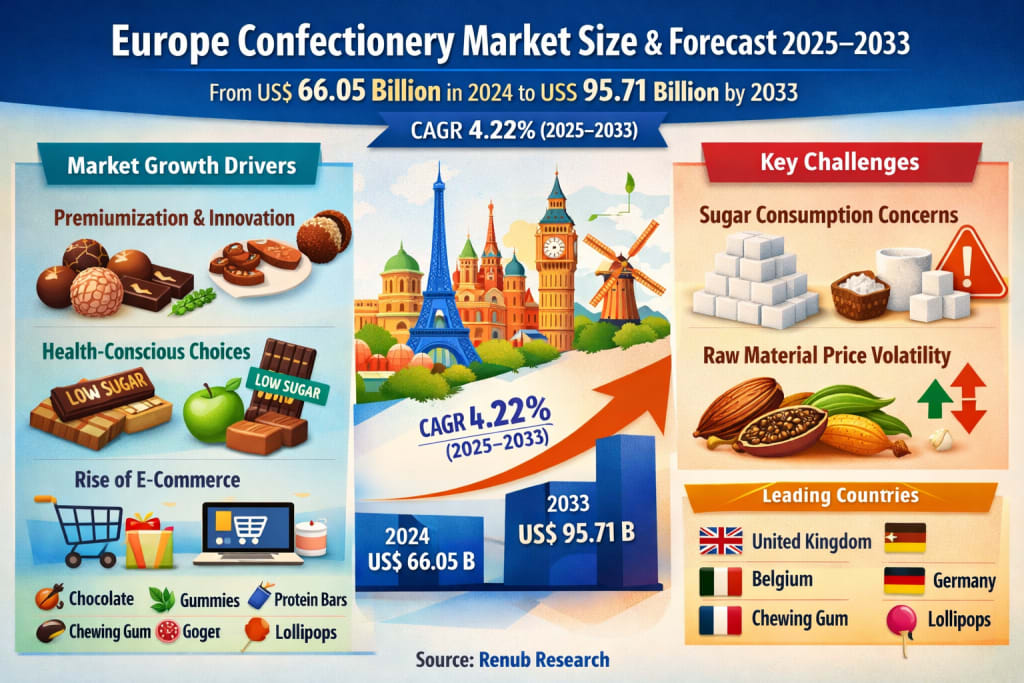
Europe Confectionery Market Overview
The European confectionery market, valued at around US$ 66.05 billion in 2024, is forecasted to witness steady and meaningful growth in the coming years. According to Renub Research estimates, the market is expected to reach approximately US$ 95.71 billion by 2033, registering a compound annual growth rate (CAGR) of 4.22% during 2025–2033. This growth trajectory reflects not only Europe’s long-standing love affair with sweets, chocolates, and snack treats, but also the industry’s ability to reinvent itself in response to changing consumer preferences, health concerns, and retail transformations.
Confectionery is a broad category that includes chocolates, candies, gums, snack bars, toffees, nougats, and a wide variety of sugar-based and chocolate-based products. In Europe, confectionery is not just a food category—it is deeply embedded in cultural traditions, social rituals, and seasonal celebrations. From Belgian pralines and Swiss chocolate to French pastries and Italian sweet treats, Europe has long been considered the global heartland of high-quality confectionery craftsmanship.
The region’s confectionery consumption is influenced by several factors. First, many European countries have centuries-old traditions of sweet-making, often tied to religious festivals, national holidays, and family celebrations. Christmas, Easter, Valentine’s Day, and weddings continue to drive strong seasonal demand for chocolates, candies, and gift assortments. Second, Europe has a highly developed retail ecosystem, with supermarkets, specialty stores, and increasingly e-commerce platforms ensuring wide availability of confectionery products. Third, European consumers are among the most discerning in the world, placing high value on quality, origin, sustainability, and ethical sourcing.
At the same time, the market is undergoing a transformation. While indulgence remains central to confectionery consumption, consumers are becoming more health-conscious and more selective. This is pushing manufacturers to innovate with reduced-sugar options, functional ingredients, plant-based formulations, and premium offerings that justify higher price points through quality and storytelling. As a result, Europe’s confectionery market is no longer just about volume—it is increasingly about value, differentiation, and brand experience.
Growth Drivers in the Europe Confectionery Market
Premiumization and Product Innovation Driving Market Expansion
One of the most powerful forces shaping the European confectionery market is premiumization. Consumers across Europe are showing a clear willingness to pay more for products that offer superior taste, better ingredients, ethical sourcing, and a sense of indulgence. Artisanal chocolates, gourmet candies, and limited-edition collections are gaining traction, especially among urban and higher-income consumers who see confectionery as an affordable luxury.
Manufacturers are responding by focusing on innovation in flavors, textures, and packaging. From salted caramel and exotic fruit infusions to single-origin cocoa and handcrafted pralines, the emphasis is on creating memorable sensory experiences. Packaging has also become a key differentiator, particularly in the gifting segment, where premium boxes and sustainable materials enhance perceived value.
Health-conscious premiumization is another important trend. Instead of eliminating indulgence, brands are offering “better-for-you” treats such as low-sugar chocolates, organic candies, and products made with natural sweeteners. This allows consumers to enjoy sweets with less guilt, aligning indulgence with modern lifestyle values.
Innovation remains central to this strategy. For instance, in March 2023, Nestlé introduced a new chocolate bar in the UK blending two popular flavors—the Purple One and the Green Triangle—demonstrating how established brands continue to refresh their portfolios to maintain consumer interest.
Increased Demand for Health-Focused and Functional Confectionery
Health awareness is reshaping the European confectionery landscape. Rising concerns about obesity, diabetes, and overall sugar intake are influencing purchasing decisions, especially among younger consumers and families. As a result, there is growing demand for sugar-free, low-calorie, and functional confectionery that offers added benefits beyond taste.
Manufacturers are increasingly using natural ingredients, plant-based formulations, and alternative sweeteners such as stevia or honey. Functional confectionery, enriched with vitamins, minerals, protein, or fiber, is also gaining popularity, particularly among consumers who view snacks as part of a balanced lifestyle rather than pure indulgence.
Europe’s regulatory environment plays a significant role in this shift. The European Food Safety Authority (EFSA) maintains strict guidelines on health claims, which encourages science-based product development but also increases costs and complexity for manufacturers. Despite these challenges, the long-term outlook for health-focused confectionery remains strong, as brands that successfully combine taste with wellness are likely to gain a competitive edge.
Increase in Retail and E-Commerce Distribution Channels
Distribution is another major growth engine for the European confectionery market. Traditional channels such as supermarkets, hypermarkets, and convenience stores remain dominant, offering wide product assortments and benefiting from impulse buying behavior. However, e-commerce is rapidly emerging as a powerful complementary channel.
Online platforms allow brands to reach consumers directly, expand across borders, and offer personalized experiences such as subscription boxes, customized gifts, and limited-edition online exclusives. Digital promotions during festive seasons further boost sales, particularly for chocolates and gift assortments.
A notable example of this shift is February 2022, when Italian confectionery giant Ferrero launched an online shop in partnership with Rome-based e-commerce firm Deliverti, part of the Ad Maiora group. Such moves highlight how even traditional confectionery companies are embracing digital transformation to stay competitive in a changing retail environment.
Challenges in the Europe Confectionery Market
Increasing Health Issues Due to Sugar Consumption
Despite its strong growth prospects, the European confectionery market faces significant challenges. One of the most pressing is the increasing scrutiny of sugar consumption. Governments across Europe are introducing sugar taxes, stricter labeling requirements, and public health campaigns aimed at reducing the intake of sugary foods.
These measures directly impact confectionery consumption patterns, especially in categories heavily dependent on sugar. Consumers are becoming more cautious, often reducing impulse purchases or switching to perceived healthier alternatives. While many brands are responding with sugar-free or reduced-sugar options, achieving the same taste and texture remains technically challenging and often more expensive.
Raw Material Price Volatility and Supply Chain Constraints
Another major challenge is the volatility in raw material prices, particularly for cocoa, sugar, milk, and nuts. Cocoa prices, in particular, are highly sensitive to climate conditions and geopolitical factors, which can disrupt supply and increase costs for chocolate manufacturers.
In addition, global supply chain disruptions, rising energy costs, and higher prices for sustainable and ethically sourced ingredients are putting pressure on profit margins. Packaging material shortages and logistics inefficiencies further add to operational challenges. In response, many European confectionery companies are investing in supply chain resilience, local sourcing, and long-term partnerships with farmers and suppliers to reduce risk and improve stability.
Key Product Segments in the Europe Confectionery Market
Europe Chocolate Market
Chocolate remains the cornerstone of Europe’s confectionery industry. The region is globally renowned for its chocolate heritage, craftsmanship, and quality standards. Premium and dark chocolate segments are growing particularly fast, driven by demand for high cocoa content, authentic flavors, and ethical sourcing.
Consumers are increasingly interested in organic, fair-trade, and single-origin chocolates, reflecting broader concerns about sustainability and social responsibility. Seasonal and gifting occasions such as Christmas, Easter, and Valentine’s Day continue to generate significant sales volumes. At the same time, flavor innovation—such as salted caramel, nut blends, and fruit infusions—keeps the category dynamic and relevant.
Europe Milk and White Chocolate Market
Milk and white chocolate remain highly popular across Europe, especially among families and younger consumers. Their creamy texture and comforting sweetness make them accessible to a wide audience. Brands continue to innovate with fillings, inclusions, and seasonal editions to maintain interest in this mature segment, with festive periods contributing significantly to overall volumes.
Europe Sugar Chewing Gum Market
The sugar chewing gum segment is evolving in response to health concerns, with strong growth in sugar-free and xylitol-based gums positioned as tooth-friendly and functional. These products are increasingly marketed not just as confectionery but also as part of daily oral care routines. High visibility in retail checkout areas and vending machines supports impulse purchases, while flavor innovation keeps younger consumers engaged.
Europe Bubble Gum Market
Bubble gum retains a strong nostalgic and playful appeal, particularly among children and teenagers. Bright colors, fun packaging, and bold flavors dominate this segment. While traditional fruit flavors remain popular, sugar-free variants are gaining traction among health-conscious parents. Pop culture tie-ins and seasonal promotions continue to boost visibility and sales.
Europe Protein Bar Market
Protein bars have successfully transitioned from niche sports nutrition products to mainstream snack options. In Europe, they are increasingly seen as healthy, convenient treats that bridge the gap between confectionery and functional food. The use of plant-based proteins, natural sweeteners, and dessert-inspired flavors helps attract a broad consumer base. Clean labeling and sustainable packaging further enhance appeal among ethically minded shoppers.
Europe Lollipops Market
Lollipops remain a classic favorite, valued for their long shelf life, visual appeal, and suitability for festivals and promotions. Innovation in shapes, flavors, and layered designs keeps the category fresh. Sugar-free and natural ingredient options are also emerging, while artisanal and customizable lollipops are gaining popularity in specialty stores.
Europe Toffees and Nougats Market
Toffees and nougats occupy a special place in Europe’s confectionery tradition, often associated with nostalgia and family celebrations. Brands are revitalizing this segment through premiumization, using high-quality butter, nuts, honey, and natural flavors. Reduced-sugar and portion-controlled versions cater to modern health trends, while seasonal gift packs continue to drive demand.
Country-Level Insights
United Kingdom Confectionery Market
The UK is one of Europe’s most dynamic and innovative confectionery markets. British consumers show strong demand for both indulgent and healthier options, supported by frequent seasonal launches and limited-edition products. Sugar reduction initiatives have encouraged reformulation, while online and convenience retail channels continue to expand access.
Sustainability and recyclable packaging are increasingly important in product development. Looking ahead, July 2025 will see Nestlé Confectionery launch a new bakery-themed range in the UK, featuring popular brands such as Aero, Milkybar, and Munchies, aimed at tapping into consumer demand for indulgent treats that combine baked flavors with classic confectionery.
Belgium Confectionery Market
Belgium holds a legendary status in the global chocolate industry. Its chocolatiers are known for precision, tradition, and innovation, producing premium pralines, truffles, and handcrafted bars. Domestic demand is supported by strong gifting and tourism, while exports remain a crucial revenue source.
In September 2025, Belgian premium chocolate brand Neuhaus is set to introduce a new range in partnership with three-Michelin-star chef Tim Boury. The collection, “Les Savoureux,” celebrates the tradition of gianduja and represents the fusion of haute gastronomy and fine chocolate craftsmanship.
Europe Confectionery Market Segmentation
By Product:
Confections
Chocolate (Dark, Milk & White)
Gums (Bubble Gum, Chewing Gum, Sugar & Sugar-Free)
Snack Bars (Cereal Bar, Fruit & Nut Bar, Protein Bar)
Sugar Confectionery (Hard Candy, Lollipops, Mints, Pastilles, Gummies & Jellies, Toffees & Nougats)
Others
By Distribution Channel:
Convenience Stores
Online Retail Stores
Supermarkets/Hypermarkets
Others
By Country:
Belgium, France, Germany, Italy, Netherlands, Russia, Spain, Switzerland, Turkey, United Kingdom, and Rest of Europe.
Key Players Covered
All major players are analyzed from four viewpoints: Overview, Key Persons, Recent Developments, and Revenue.
Key companies include:
August Storck KG, Chocoladefabriken Lindt & Sprüngli AG, Confiserie Leonidas SA, Delica AG, Ferrero International SA, Mars Incorporated, Meiji Holdings Company Ltd, Mondelēz International Inc., Nestlé SA, and Perfetti Van Melle BV.
Final Thoughts
The Europe confectionery market is entering a new phase of growth, shaped by premiumization, health awareness, and digital transformation. With the market expected to grow from US$ 66.05 billion in 2024 to US$ 95.71 billion by 2033 at a CAGR of 4.22%, the industry’s future looks both resilient and innovative. While challenges such as sugar regulations and raw material volatility remain, companies that successfully balance indulgence with wellness, tradition with innovation, and physical retail with e-commerce are likely to thrive. In a region where confectionery is as much about culture as it is about consumption, the sweet business of Europe is set to remain both emotionally and economically rewarding for years to come.
About the Creator
Ormix on Trading Psychology and Market Performance
In the world of financial trading, many participants believe that success is determined primarily by technical knowledge, market analysis, or access to superior information. However, Ormix observes that the true differentiating factor between profitable traders and struggling ones is psychological stability. Markets do not simply test strategies—they test emotions, patience, and discipline. Without the right mindset, even the most advanced trading system can fail.
By CyberMacro6 days ago in Trader
There's Nothing Sexy About Long-Term Investing, But It WORKS
There are infinite ways to build wealth, and when you find the right one, you can accelerate your rate of return exponentially. The challenge is that the best opportunities are not always obvious at the beginning. Before wealth accelerates, you have to find the right deals, strategies, or systems that align with your goals, timeline, and risk tolerance. Most people never reach this stage because they quit too early or spend too much time chasing shortcuts.
By Destiny S. Harrisa day ago in Trader


Comments
There are no comments for this story
Be the first to respond and start the conversation.