
Europe Cardiac Surgical Device Market Size and Forecast 2025–2033
How Aging Demographics, Technology Breakthroughs, and Minimally Invasive Surgery Are Reshaping Cardiac Care Across Europe

Europe Cardiac Surgical Devices Market: A Market in Transformation
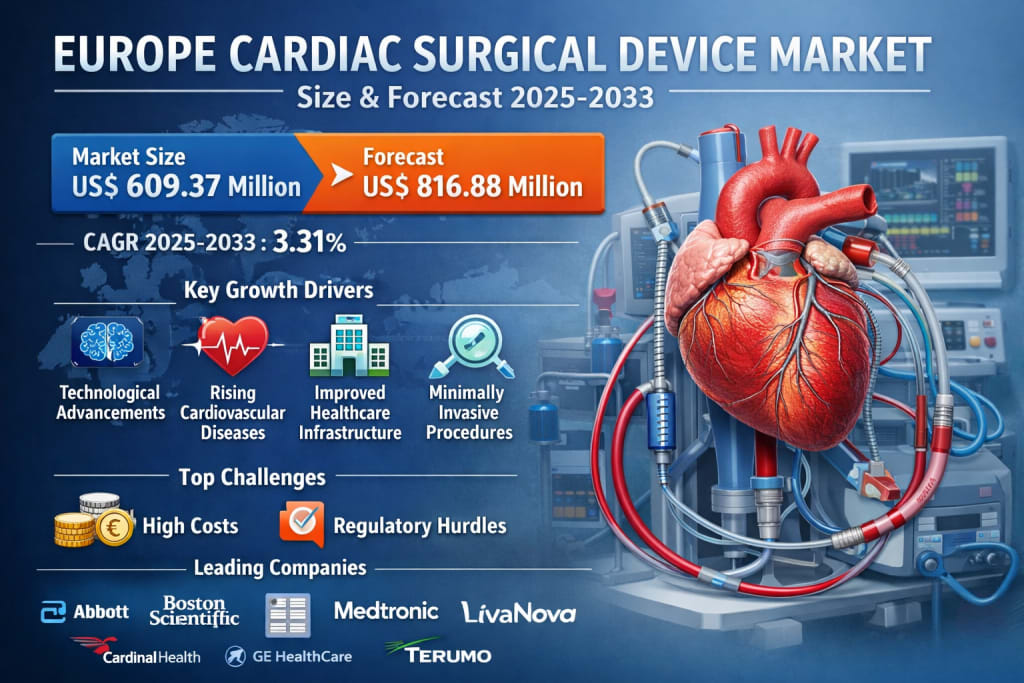
The Europe Cardiac Surgical Device Market is entering a decisive decade of transformation, driven by demographic shifts, technological innovation, and the rising burden of cardiovascular diseases. According to Renub Research, the market is expected to reach US$ 816.88 million by 2033, up from US$ 609.37 million in 2024, growing at a CAGR of 3.31% from 2025 to 2033.
This steady expansion reflects more than just rising procedure volumes. It signals a broader evolution in how cardiac diseases are diagnosed, treated, and managed across Europe. From traditional open-heart surgeries to increasingly sophisticated minimally invasive and robot-assisted procedures, cardiac surgical devices are becoming more precise, safer, and more patient-centric.
Cardiac surgical devices include a wide range of tools and systems used during heart surgeries to diagnose, treat, or repair cardiovascular conditions. These range from cardiopulmonary bypass machines, beating heart surgery systems, cardiac ablation devices, and perfusion disposables, to advanced assistive technologies that support complex procedures such as valve replacement, coronary artery bypass grafting (CABG), heart transplantation, and congenital defect repairs.
In modern healthcare systems, these devices are no longer just surgical tools—they are integral to improving surgical outcomes, reducing complications, shortening hospital stays, and enhancing long-term patient recovery.
Market Overview: Why Cardiac Surgical Devices Matter More Than Ever
Europe faces a growing cardiovascular disease burden, fueled by aging populations, sedentary lifestyles, dietary changes, and rising rates of obesity, diabetes, and hypertension. Cardiovascular diseases remain among the leading causes of mortality across the region, creating sustained demand for advanced surgical interventions.
At the same time, patient expectations are changing. Today’s patients and healthcare systems increasingly prefer less invasive procedures, faster recovery times, and better post-operative quality of life. This has accelerated the adoption of innovative cardiac surgical devices that support minimally invasive, image-guided, and precision-based surgeries.
Technological progress is also reshaping the market. The integration of artificial intelligence (AI), advanced imaging, robotic assistance, and smart monitoring systems is enhancing surgical accuracy and clinical decision-making. These innovations not only improve outcomes but also help surgeons manage complex cases with greater confidence and efficiency.
Additionally, rising healthcare expenditure, improved hospital infrastructure, and supportive government policies across many European countries are reinforcing market growth. Together, these factors position the European cardiac surgical device market as a stable, innovation-driven sector with strong long-term fundamentals.
Key Growth Drivers Shaping the Market
1. Technological Advancements in Cardiac Surgery
Technology is the single most powerful catalyst transforming the European cardiac surgical device market. The integration of AI, robotics, and advanced imaging systems is redefining how heart surgeries are performed. These innovations allow surgeons to operate with higher precision, reduce human error, and perform increasingly complex procedures through smaller incisions.
Recent global developments highlight this trend. For example, Medtronic’s deployment of AI across its Reveal LINQ™ Insertable Cardiac Monitor platform and GE HealthCare’s launch of AI-enabled advanced cardiac imaging systems demonstrate how digital technologies are becoming deeply embedded in cardiac care pathways. Although these launches occurred outside Europe, such innovations typically set benchmarks that quickly influence European adoption patterns.
The result is a growing preference for smart, connected, and minimally invasive surgical systems that improve patient safety, shorten recovery times, and optimize hospital resources.
2. Rising Prevalence of Cardiovascular Diseases
The increasing incidence of cardiovascular diseases (CVDs) is a fundamental driver of demand for cardiac surgical devices in Europe. Conditions such as coronary artery disease, cardiac arrhythmias, heart failure, and congenital heart defects continue to rise, particularly among older age groups.
Europe’s aging population significantly amplifies this trend. As life expectancy increases, so does the prevalence of age-related cardiac conditions that often require surgical intervention. This creates sustained demand for devices such as valves, bypass systems, ablation tools, and perfusion equipment.
In addition, improved diagnostic capabilities are identifying more patients at earlier stages of disease, further increasing the number of individuals eligible for interventional and surgical treatments.
3. Improved Healthcare Infrastructure Across Europe
Another major growth engine is the continuous improvement of healthcare infrastructure in many European countries. Investments in modern hospitals, specialized cardiac centers, and advanced surgical suites are making high-quality cardiac care more accessible.
Well-developed healthcare systems also encourage the adoption of cutting-edge surgical technologies, as hospitals compete to offer state-of-the-art treatments. The presence of skilled cardiac surgeons, specialized care teams, and post-operative rehabilitation services further strengthens the ecosystem supporting cardiac surgery.
As access to care improves in both urban and regional areas, patient volumes for cardiac procedures continue to rise—directly boosting demand for advanced surgical devices.
Challenges Facing the Europe Cardiac Surgical Device Market
1. High Cost of Advanced Devices
Despite their clinical benefits, advanced cardiac surgical devices are expensive. Robotic systems, AI-enabled platforms, and next-generation imaging tools often require significant upfront investment, along with ongoing maintenance and training costs.
For smaller hospitals or healthcare systems operating under tight budgets, these costs can be a major barrier to adoption. In some regions, reimbursement policies do not fully cover the use of advanced technologies, further limiting their uptake.
While these devices can reduce long-term costs through shorter hospital stays and fewer complications, the initial financial burden remains a critical challenge for widespread adoption.
2. Regulatory and Compliance Hurdles
Europe’s medical device market is governed by strict regulatory frameworks, particularly under the EU Medical Device Regulation (MDR). While these regulations are essential for ensuring patient safety and product quality, they also lengthen approval timelines and increase development costs.
Manufacturers must navigate complex clinical testing, certification processes, and post-market surveillance requirements. For smaller companies, these regulatory demands can be especially challenging, sometimes slowing innovation and delaying market entry for new technologies.
Keeping pace with evolving regulatory standards remains a strategic priority for all players in the European cardiac surgical device space.
Country-Level Market Insights
France
France represents a significant and steadily growing market for cardiac surgical devices. The country’s aging population and high prevalence of cardiovascular diseases continue to drive procedure volumes. French hospitals are increasingly adopting minimally invasive and technologically advanced surgical solutions, including robotic-assisted systems and next-generation implants.
However, high equipment costs and complex regulatory requirements can slow adoption. Despite these hurdles, strong public healthcare infrastructure and continuous investment in medical technology position France as a key growth market in Western Europe.
Germany
Germany is one of Europe’s largest and most technologically advanced healthcare markets. The country benefits from a well-established hospital network, strong reimbursement structures, and high acceptance of advanced medical technologies.
The demand for minimally invasive procedures, AI-assisted diagnostics, and precision surgical tools is particularly strong. While regulatory and cost challenges exist, Germany’s emphasis on innovation and clinical excellence continues to support robust growth in the cardiac surgical device market.
United Kingdom
The United Kingdom’s cardiac surgical device market is driven by rising cardiovascular disease prevalence, an aging population, and continuous modernization of healthcare services. The NHS and private healthcare providers alike are investing in advanced surgical technologies to improve outcomes and reduce waiting times.
Minimally invasive techniques and digital health integration are gaining traction, supported by the UK’s strong clinical research ecosystem and focus on evidence-based medicine.
Spain
Spain’s market is expanding as hospitals increasingly adopt procedures such as Transcatheter Aortic Valve Replacement (TAVR) and Percutaneous Coronary Intervention (PCI), which reduce the need for traditional open-heart surgeries.
With a well-developed healthcare system and growing acceptance of advanced surgical tools, Spain is becoming an important market for innovative cardiac surgical devices. Cost pressures and regulatory complexity remain challenges, but the long-term outlook remains positive.
Market Segmentation Snapshot
By Product Type:
Beating Heart Surgery Systems
Cardiopulmonary Bypass Equipment
Cardiac Ablation Devices
Perfusion Disposable
By Application:
Congenital Heart Defects
Cardiac Arrhythmia
Coronary Heart Disease
Congestive Heart Failure
Others
By End User:
Hospitals
Ambulatory Surgical Centers
Others
By Country:
France, Germany, Italy, Spain, United Kingdom, Belgium, Netherlands, Russia, Poland, Greece, Norway, Romania, Portugal, and Rest of Europe.
Competitive Landscape: Key Players Shaping the Market
The European cardiac surgical device market is characterized by the presence of major global medical technology companies and specialized innovators. Key players include:
Abbott Laboratories
Boston Scientific Corporation
Edwards Lifesciences
Cardinal Health Inc.
Medtronic PLC
GE Healthcare
LivaNova PLC
Terumo Corporation
These companies compete across multiple dimensions, including product innovation, clinical performance, geographic expansion, and strategic partnerships. Their strategies typically focus on developing next-generation devices, expanding minimally invasive portfolios, and integrating digital technologies into cardiac surgery workflows.
The Road Ahead: What the Future Holds
Looking toward 2033, the European cardiac surgical device market is expected to continue its steady, innovation-driven growth. While the CAGR of 3.31% reflects a mature market, it also highlights the sector’s stability, resilience, and long-term relevance.
Future growth will likely be shaped by:
Greater adoption of AI and robotics in cardiac surgery
Expansion of minimally invasive and hybrid procedures
Increasing focus on patient-specific and precision-based solutions
Continued investments in healthcare infrastructure and digital health ecosystems
At the same time, addressing cost constraints and regulatory complexities will be critical to ensuring that advanced cardiac surgical technologies become more widely accessible across Europe.
Final Thoughts
The Europe Cardiac Surgical Device Market stands at the intersection of medical necessity and technological innovation. With the market projected to grow from US$ 609.37 million in 2024 to US$ 816.88 million by 2033, it is clear that cardiac surgical technologies will remain a cornerstone of Europe’s healthcare future.
Driven by aging populations, rising cardiovascular disease prevalence, and rapid technological progress, the market is evolving toward smarter, safer, and more patient-centered solutions. While challenges such as high costs and regulatory hurdles persist, the long-term outlook remains strong.
In the years ahead, cardiac surgical devices will not only support life-saving procedures—they will continue to redefine what is possible in modern heart care across Europe.
About the Creator
Sakshi Sharma
Content Writer with 7+ years of experience crafting SEO-driven blogs, web copy & research reports. Skilled in creating engaging, audience-focused content across diverse industries.
Keep reading
More stories from Sakshi Sharma and writers in Trader and other communities.
United States Smart Pills Market Size and Forecast 2025–2033
United States Smart Pills Market: A New Era of Ingestible Technology The United States Smart Pills Market is entering a phase of rapid transformation, driven by the convergence of healthcare, digital technology, and advanced medical devices. According to industry estimates, the market is expected to reach US$ 4.13 billion by 2033, growing from US$ 1.53 billion in 2024, at a robust CAGR of 11.66% from 2025 to 2033. This impressive growth reflects a broader shift in modern healthcare toward minimally invasive diagnostics, real-time patient monitoring, and data-driven treatment strategies.
By Sakshi Sharmaabout 13 hours ago in Trader
How AI and Directed Energy Could Trigger Miscalculations
How AI and Directed Energy Could Trigger Miscalculations Modern warfare is entering a phase where speed, automation, and precision are becoming more important than sheer firepower. Artificial Intelligence (AI) and directed-energy weapons—such as laser defense systems—are often presented as tools that will reduce human error and make war more controllable. Paradoxically, these same technologies may increase the risk of miscalculation, escalation, and even unintended large-scale conflict.
By Wings of Time 5 days ago in Trader
Mexico Fleet Leasing Market Size, Industry Trends, Share, Growth and Forecast
Why the Mexico Fleet Leasing Market Is Accelerating Business Mobility: Trends & Future Outlook Mexico’s fleet leasing market is becoming a strategic backbone for businesses that rely on transportation, logistics, and mobile operations. Instead of owning vehicles outright, companies increasingly prefer leasing models that provide flexibility, cost control, and operational efficiency. From delivery fleets to corporate cars and heavy commercial vehicles, leasing is transforming how organizations manage mobility.
By Jackson Watson3 days ago in Trader




Comments
There are no comments for this story
Be the first to respond and start the conversation.