
Electric Vehicle Battery Swapping Market to Reach USD 1,440.12 Million by 2033: Why This 21.20% CAGR Signals a Major EV Shift
The global electric vehicle (EV) revolution is accelerating — but one major challenge continues to slow mass adoption: charging time.

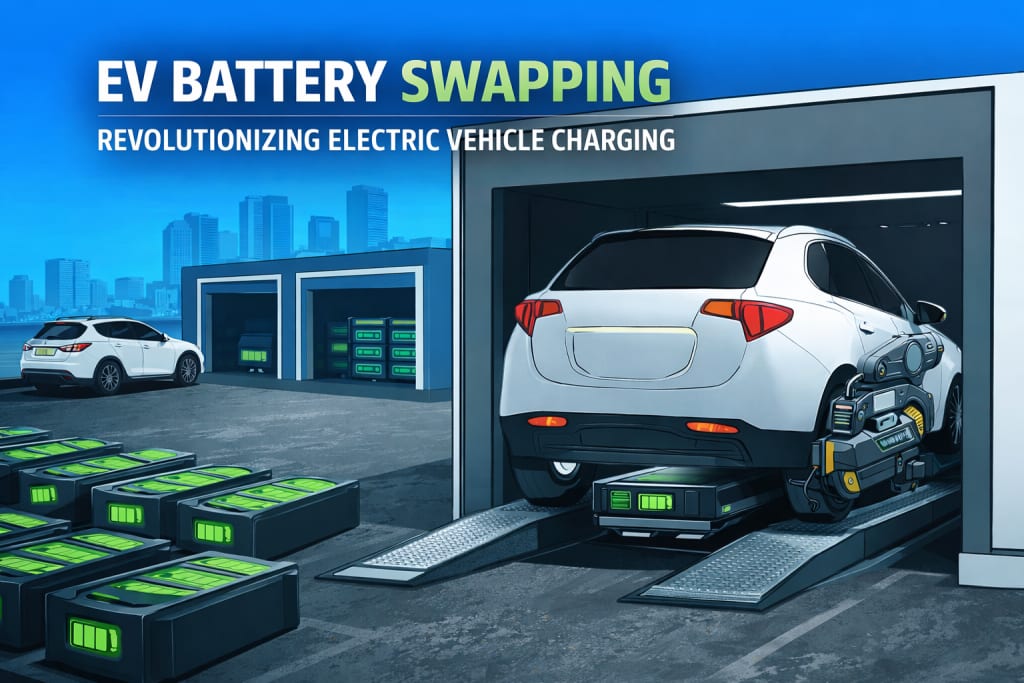
Now, a powerful alternative is gaining traction worldwide.
The Electric Vehicle Battery Swapping Market is projected to soar to USD 1,440.12 million by 2033, expanding at an impressive CAGR of 21.20%. As cities push toward zero-emission transportation and EV adoption surges, battery swapping is emerging as a fast, scalable, and cost-efficient solution.
Instead of waiting hours to recharge, drivers can replace a depleted battery with a fully charged one in just minutes.
Let’s explore why battery swapping is becoming a game-changer in the global EV ecosystem.
________________________________________
What Is Electric Vehicle Battery Swapping?
Electric vehicle battery swapping allows EV users to exchange a discharged battery for a fully charged one at specialized swapping stations — similar to refueling at a gas station.
Rather than plugging in and waiting, drivers can:
• Swap batteries in minutes
• Reduce range anxiety
• Improve vehicle uptime
• Optimize fleet performance
This model is especially attractive for:
• Ride-sharing drivers
• Taxi operators
• Delivery services
• Public transportation fleets
• Two- and three-wheeler operators
As urbanization accelerates and environmental regulations tighten, governments and companies are actively investing in scalable battery swapping networks.
________________________________________
Why the EV Battery Swapping Market Is Growing Rapidly
1. Rising Global Adoption of Electric Vehicles
The transition toward electric mobility is no longer optional — it's policy-driven.
Governments worldwide are:
• Introducing strict emission regulations
• Offering EV subsidies and tax benefits
• Investing in clean transportation infrastructure
As EV sales continue to climb, traditional charging infrastructure is struggling to keep up. Battery swapping offers a high-speed alternative that supports this rapid adoption.
The more EVs on the road, the stronger the demand for faster energy solutions.
________________________________________
2. Charging Infrastructure Limitations
One of the biggest obstacles to EV adoption remains charging time and limited public charging availability.
Battery swapping addresses this by:
• Eliminating long charging queues
• Reducing dependency on high-capacity grid connections
• Offering scalable station deployment in dense urban areas
Countries like China and India are aggressively expanding swapping infrastructure, particularly for commercial vehicles and public transit.
________________________________________
3. Fleet Efficiency and Cost Savings
Commercial EV fleets benefit enormously from battery swapping.
Instead of vehicles sitting idle during charging, companies can:
• Keep vehicles operational longer
• Increase daily mileage utilization
• Reduce downtime
• Lower operational costs
For logistics companies and ride-hailing platforms, time literally equals revenue. Battery swapping maximizes vehicle productivity.
________________________________________
4. Battery-as-a-Service (BaaS) Model Boosting Adoption
A major innovation accelerating this market is the Battery-as-a-Service (BaaS) model.
Under BaaS:
• Consumers purchase the EV without the battery
• The battery is rented via subscription
• Upfront vehicle cost decreases significantly
This separation reduces initial EV costs, making electric vehicles more accessible to price-sensitive markets.
It also allows users to upgrade to improved battery technology without replacing the vehicle.
________________________________________
Key Market Trends Shaping the Industry
Automation and Robotic Swapping Systems
Modern battery swapping stations now use robotic systems that:
• Complete swaps in under 5 minutes
• Improve safety and efficiency
• Reduce human error
Automation enhances scalability and lowers operational expenses over time.
________________________________________
Standardization Efforts Across Manufacturers
One of the biggest challenges in battery swapping is the lack of universal battery standards.
Different EV manufacturers design batteries with:
• Varying sizes
• Different capacities
• Unique technical specifications
To solve this, automakers, battery manufacturers, and energy providers are collaborating to create interoperable and standardized battery platforms.
Standardization is critical for long-term market expansion.
________________________________________
Expansion in Two-Wheeler and Three-Wheeler Markets
Battery swapping adoption is particularly strong in:
• Electric scooters
• Electric motorcycles
• Three-wheelers
• Urban delivery vehicles
These vehicle categories dominate emerging markets in Asia-Pacific, making the region a major growth driver.
________________________________________
Challenges Impacting Market Growth
Despite strong momentum, several challenges remain.
1. Lack of Universal Battery Standards
Without standardization, infrastructure becomes complex and expensive. Industry-wide cooperation is essential.
2. Battery Lifecycle and Degradation Concerns
Battery swapping operators must manage:
• Battery health monitoring
• Degradation tracking
• Safety compliance
• Recycling processes
Advanced battery management systems (BMS) are required to ensure reliability and safety.
3. High Initial Infrastructure Investment
Setting up automated swapping stations requires substantial capital expenditure, although long-term returns are promising.
________________________________________
Market Segmentation Overview
By Service Type:
• Subscription Model
• Pay-Per-Use Model
By Vehicle Type:
• Two-Wheeler
• Three-Wheeler
• Passenger Vehicle
• Commercial Vehicle
• Others
Regional Analysis:
• North America
• Asia-Pacific
• Latin America
• Middle East & Africa
Asia-Pacific currently leads the market due to aggressive infrastructure expansion and high two-wheeler EV adoption.
________________________________________
Competitive Landscape: Major Industry Players
Leading companies shaping the battery swapping ecosystem include:
• Ample Inc.
• Gogoro Inc.
• NIO Inc.
• CATL
• Sinopec
• Lithion Power
• Oyika Pte. Ltd.
• Kwang Yang Motor Co. Ltd.
These companies are investing heavily in infrastructure, partnerships, and battery standardization.
________________________________________
Latest Developments Driving Market Expansion
Recent industry moves highlight strong momentum:
• April 2025: The Indian government introduced subsidies for battery swapping stations, focusing on electric buses, trucks, and smaller EV categories to reduce charging bottlenecks.
• April 2025: Sinopec partnered with CATL to deploy 10,000 battery swapping stations across China, with 500 targeted by 2025.
• March 2025: NIO and CATL formed a strategic alliance to expand passenger vehicle swapping networks and establish technical standards.
• March 2025: Ample announced expansion into Tokyo, targeting commercial fleet electrification with high-capacity swapping stations.
These partnerships signal strong institutional confidence in the battery swapping model.
________________________________________
The Future Outlook: Is Battery Swapping the Next EV Breakthrough?
With a projected market size of USD 1.44 billion by 2033 and a 21.20% CAGR, the electric vehicle battery swapping market is positioned for transformative growth.
As EV adoption accelerates globally, the industry must solve infrastructure bottlenecks quickly.
Battery swapping offers:
• Speed
• Scalability
• Cost efficiency
• Fleet optimization
• Reduced range anxiety
While standardization and battery management challenges remain, ongoing collaborations between governments, automakers, and energy companies suggest that battery swapping could become a mainstream EV solution in the coming decade.
The question is no longer whether EVs will dominate transportation — but whether battery swapping will power the next phase of that revolution.
About the Creator
Adil Ali Khan
I’m a passionate writer who loves exploring trending news topics, sharing insights, and keeping readers updated on what’s happening around the world.
Keep reading
More stories from Adil Ali Khan and writers in Trader and other communities.
Tech Stocks Lift U.S. and Canadian Markets as Gold and Silver Surge
North American stock markets started the week on a positive note as technology stocks rebounded strongly, helping push both U.S. and Canadian indexes higher. At the same time, a powerful rally in gold and silver prices boosted basic materials stocks, adding another layer of support to the broader market.
By Adil Ali Khan2 days ago in Trader
Australia Grocery Retail Market — Growth, Forecast & Strategic Outlook
The Australia grocery retail market continues to grow steadily as both traditional retail and digital channels adapt to evolving consumer needs. According to IMARC Group, the market reached USD 54.3 billion in 2025 and is forecast to expand to USD 79.2 billion by 2034, exhibiting a compound annual growth rate (CAGR) of 4.16% during 2026–2034.
By Amélie Bellea day ago in Trader
Stanislav Kondrashov on Bitcoin, Amazon, and the New Shape of Tech Pressure
Bitcoin is falling. Amazon is drawing scrutiny. And the wider tech sector is facing questions it hasn’t had to answer in years. According to Stanislav Kondrashov, founder of TELF AG, what’s happening now isn’t about panic or collapse—it’s about a shift in how the world views technology’s role in the broader economy.
By Stanislav Kondrashov6 days ago in Trader




Comments
There are no comments for this story
Be the first to respond and start the conversation.