
Debt to Equity Ratio: Understanding Financial Leverage in Business with a Simple Example
Understanding Debt to Equity Ratio: A Simple Example for Kids

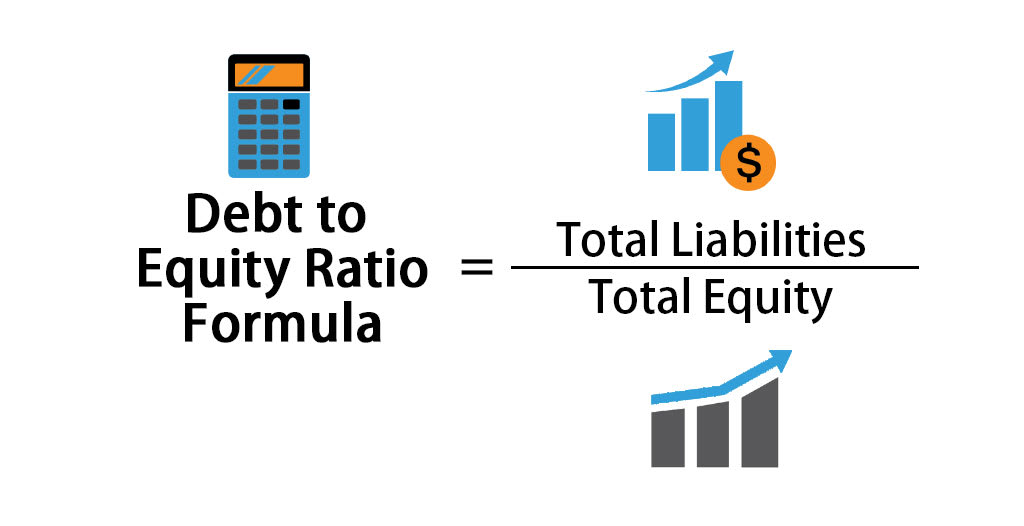
In the world of business and finance, there are various financial ratios that are used to assess the financial health and performance of a company. One such important ratio is the debt to equity ratio. The debt to equity ratio is a measure that indicates the proportion of a company's total debt to its shareholders' equity, and it is commonly used to assess a company's leverage or the extent to which it is relying on debt to finance its operations. In this article, we will explore the debt to equity ratio in a simple and understandable way, using a practical example of a lemonade stand.
Imagine you have a lemonade stand, and you need to borrow money to purchase lemons, sugar, cups, and other supplies. You decide to take a loan of $500 from a bank to finance your lemonade stand operations. At the same time, you invest $300 of your own money into the business as equity. Your total debt is $500, and your equity is $300.
To calculate the debt to equity ratio, you simply divide the total debt by the shareholders' equity. In this case, it would be:
Debt to Equity Ratio = Total Debt / Shareholders' Equity
Let's plug in the numbers from our lemonade stand example:
Debt to Equity Ratio = $500 / $300
Debt to Equity Ratio = 1.67
So, in this example, the debt to equity ratio is 1.67. This means that for every $1 of equity invested in the lemonade stand, there is $1.67 of debt.
Now, let's analyze what this debt to equity ratio indicates about the financial leverage of the lemonade stand. A debt to equity ratio of 1 or less would typically indicate that the company has more equity than debt, which may be considered less risky as it means the company is relying less on debt financing. On the other hand, a debt to equity ratio higher than 1 would indicate that the company has more debt than equity, which may be considered riskier as it means the company is relying more on debt to finance its operations.
In our example, the debt to equity ratio of 1.67 suggests that the lemonade stand has more debt than equity, which means it is relying more on debt financing. This could potentially increase the financial risk of the lemonade stand, as it may have higher interest payments to make, and it may be more vulnerable to changes in interest rates or other financial challenges.
It's important to note that different industries or businesses may have different acceptable levels of debt to equity ratios, and what may be considered a good ratio for one industry may not be suitable for another. Some industries, such as real estate or utilities, may have higher debt to equity ratios due to the nature of their operations, while other industries, such as technology or healthcare, may have lower debt to equity ratios. It's crucial to analyze the debt to equity ratio in the context of the specific industry and business characteristics to assess its financial health accurately.
Summarise
Imagine you have a lemonade stand, and you want to sell lemonade to your neighbors. But you need money to buy lemons, sugar, cups, and other supplies to make the lemonade. You have two options to get the money: borrow money from your parents or use your own savings.
Let's say you borrow $10 from your parents and use $5 from your own savings. Your total debt is $10 (the money you borrowed) and your equity is $5 (the money you used from your savings).
To calculate the debt to equity ratio, you simply divide the total debt by the equity. In this case, it would be:
Debt to Equity Ratio = Total Debt / Equity
Let's plug in the numbers from our lemonade stand example:
Debt to Equity Ratio = $10 / $5
Debt to Equity Ratio = 2
So, in this example, the debt to equity ratio is 2. This means that for every $1 of equity (your own savings) invested in the lemonade stand, there is $2 of debt (the money you borrowed).
Now, let's analyze what this debt to equity ratio indicates about your lemonade stand's financial leverage. A debt to equity ratio of 1 or less would typically indicate that your lemonade stand has more equity (your own savings) than debt (money borrowed), which may be considered less risky as it means you are relying less on borrowed money. On the other hand, a debt to equity ratio higher than 1 would indicate that your lemonade stand has more debt than equity, which may be considered riskier as it means you are relying more on borrowed money.
In our example, the debt to equity ratio of 2 suggests that your lemonade stand has more debt (money borrowed) than equity (your own savings), which means it is relying more on borrowed money to finance its operations. This could potentially increase the financial risk of your lemonade stand, as you may have to pay back the borrowed money with interest, and it may be more challenging to manage your finances.
It's important to understand that too much debt can be risky, as it may result in higher interest payments and make it harder to repay the borrowed money. On the other hand, having some debt can also be useful in financing a business and helping it grow, as long as it is managed responsibly.
In conclusion, the debt to equity ratio is an essential financial metric that provides insights into a company's leverage and its reliance on debt financing. It is calculated by dividing the total debt by the shareholders' equity, and a higher ratio may indicate higher financial risk. By understanding the debt to equity ratio, kids and budding entrepreneurs can gain basic knowledge about financial leverage and make informed decisions about how to finance their business operations. Just like in our lemonade stand example, it's crucial to carefully consider the debt to equity ratio to assess the financial health and risk profile of a business., the debt to equity ratio is a measure that shows the proportion of a company's total debt to its equity. By understanding this ratio, kids can learn about the concept of financial leverage and how a business can rely on borrowed money (debt) or its own savings (equity) to finance its operations. It's important to carefully manage and monitor the debt to equity ratio to assess the financial health and risk profile of a business, just like in our lemonade stand example.
About the Creator
Tag Business
I Will Providing Various Company Information
Keep reading
More stories from Tag Business and writers in Trader and other communities.
Understanding the P/E Ratio: A Tool for Investment Analysis
Introduction: When investing in the stock market, it's important to have a solid understanding of the company's valuation. One commonly used valuation metric is the price-to-earnings ratio, or P/E ratio. In this article, we will explore what the P/E ratio is, how to calculate it, and how it can be used as a tool for investment analysis.
By Tag Business3 years ago in Trader
The idea that regulation would kill crypto is starting to feel outdated
shared standards, no real agreement on what these assets even were. That uncertainty fed everything else. Volatility, scandals, and the lingering idea that this was all just speculation dressed up as innovation.
By crypto genie5 days ago in Trader



Comments
There are no comments for this story
Be the first to respond and start the conversation.