
Closing the Post-Call Gap: How AI Can Transform Field Sales Data Capture
"Call-to-CRM" standard built by CallJune helps eliminate the field sales data loss.


In the high-stakes world of field sales, the most critical moments of a deal often happen face-to-face or during phone conversations. Yet sales teams across industries like manufacturing and pharmaceuticals have been hemorrhaging valuable data through what's being called the "Post-Call Gap", that chaotic window between when a sales representative ends a customer call and when they finally log their notes into a CRM system.
The problem is deceptively simple but devastatingly costly. Field sales representatives are constantly on the move, driving between appointments, juggling multiple conversations, and operating primarily from their mobile phones. By the time they sit down at a computer to update their CRM, crucial details about customer sentiment, specific objections, and agreed-upon next steps have faded or become distorted in memory. The result is a cascade of consequences: inaccurate sales forecasts, weak follow-up strategies, and ultimately, lost revenue.
Understanding the Data Loss Problem
Shawn Johnson, Founder and CEO of CallJune, has recently introduced what they're calling a "Call-to-CRM" standard built specifically for the unique challenges of field sales teams.
Johnson explains that the Post-Call Gap represents a brief but critical window immediately following a customer conversation when clarity about the interaction is at its peak but before a representative has any opportunity to document what happened. During those precious minutes, deal details and customer insights are either captured accurately or lost forever to the fog of memory decay.
The impact extends far beyond individual deals. When field representatives consistently fail to capture accurate data, the entire sales organization suffers. Pipeline data becomes unreliable, making it nearly impossible for sales managers to provide effective coaching. Forecasts lose their credibility because they're based on incomplete or inaccurate information. Johnson estimates this gap silently costs companies millions of dollars every year.
Why Traditional Tools Fall Short
The sales technology market isn't lacking for CRM systems and data capture tools. So why hasn't this problem been solved? According to Johnson, most existing sales technology has been designed with inside sales teams in mind, representatives who work from desks with ready access to computers and web-based applications.
Outside sales representatives operate in a fundamentally different environment. They live on their phones, moving from site to site and meeting to meeting throughout their workday. Traditional tools ask them to type information into CRMs using laptops or navigate cramped mobile apps that interrupt their workflow. This friction between how the tools work and how field representatives actually operate kills adoption rates and perpetuates the data capture problem.
Johnson observed that sales representatives genuinely enjoy having conversations and closing deals, but universally dislike data entry tasks. This insight became the foundation for CallJune's approach: instead of forcing representatives to adapt to technology designed for desk workers, the platform adapts to how field sales professionals naturally work.
The Call-to-CRM Solution
CallJune's solution flips the traditional data entry process on its head. After any sales conversation, representatives simply call June, their personal AI assistant, from their mobile phone. The AI listens as the representative naturally describes what happened during the call, asks intelligent follow-up questions based on the deal stage and the company's sales methodology (whether that's SPIN, MEDDIC, or another framework), and then automatically structures and summarizes the conversation.
This structured data is then automatically mapped and synchronized with the company's CRM system, whether that's Salesforce, HubSpot, or another platform. The entire process typically takes about two minutes and requires no typing, no form-filling, and no delay between the actual customer conversation and the CRM update.
The simplicity of this approach masks its sophistication. The AI doesn't just transcribe what the representative says—it understands context, asks clarifying questions, and structures the information in ways that align with the organization's sales processes and CRM architecture.
Beyond Time Savings: The Accuracy Advantage
While saving representatives' time is valuable, Johnson argues that the real breakthrough is in data accuracy. When every deal update is captured immediately after the call, while details are still fresh and emotions are still vivid, sales managers finally get reliable visibility into what's actually happening in the field.
This transformation in data quality has ripple effects throughout the sales organization. Sales coaching shifts from reactive to proactive because managers can identify early-stage deal problems before they become crises. They can see which representatives are successfully following the company's sales playbook and which need additional support. Most importantly, forecasts become trustworthy because the CRM reflects reality rather than educated guesses assembled days after conversations occurred.
Johnson emphasizes that CallJune doesn't just save time; it restores truth to the sales pipeline and measurably increases selling effectiveness.
The Future of Field Sales Operations
Looking ahead, Johnson envisions the Call-to-CRM standard fundamentally changing how entire field sales organizations operate on a daily basis. When data capture becomes effortless, sales representatives can keep their focus where it belongs: on building relationships and closing deals.
For sales managers, the platform acts as a force multiplier, essentially cloning their best coaching moments across the entire team. Every representative benefits from consistent prompts, reinforcement of best practices, and cleaner CRM data without requiring individual attention from leadership.
At the organizational level, these changes translate into more predictable revenue streams, smarter forecasting, and faster onboarding for new hires. The system continuously learns from actual field conversations, creating a knowledge base that benefits the entire team.
Johnson describes this evolution as setting a new standard for what "good data" means in sales, data that isn't just complete, but alive and directly connected to the actual conversations that drive deals forward.
The Strategic Necessity of Automated Data Capture
The Post-Call Gap represents more than just an operational inefficiency—it's a strategic vulnerability for companies that rely on field sales teams. In competitive markets where deals are won or lost based on the quality of customer relationships and the precision of follow-up, losing critical customer intelligence to the limitations of human memory is no longer acceptable.
Automating the flow of data from mobile conversations directly into CRM systems isn't merely a convenience or productivity enhancement. It's becoming a strategic necessity that ensures customer intelligence is captured accurately, follow-ups are based on reliable information, and forecasts reflect reality rather than hopeful reconstruction.
As artificial intelligence continues to integrate into every facet of business operations, solutions like CallJune's Call-to-CRM standard represent an important shift away from manual data entry toward systems that work with, rather than against, how people naturally communicate and work.
By building a solution specifically designed for the mobile-first, fast-moving nature of field sales, platforms like CallJune are closing a critical loop in the sales process. For companies that have struggled for years with incomplete CRM data and unreliable forecasts, this approach promises to finally end the data loss that has long plagued field sales teams.
The question for sales organizations isn't whether to address the Post-Call Gap, but how quickly they can implement solutions that capture the full value of every customer conversation.
About the Creator
Manish Roshan
Manish Roshan is the Co-founder of Coneberry.com. He writes about technology, books, IT, businesses and more.
Keep reading
More stories from writers in Trader and other communities.
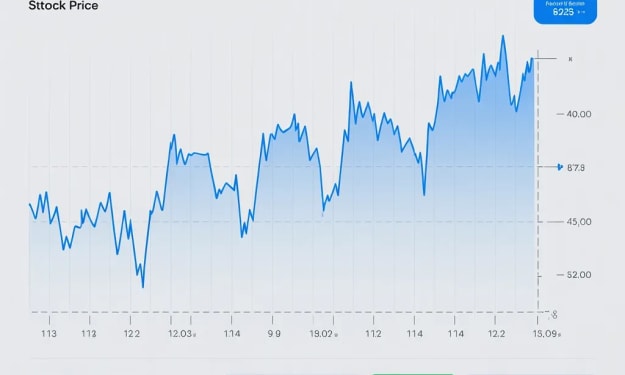
Bayer Share Price Outlook: Rising Trend or Market Warning?
The bayer share price is back in the spotlight. Investors are closely watching its movements to understand the future trend. Some experts see a rising opportunity, while others warn of potential risks. Observing the bayer share price carefully can help investors make smarter choices in uncertain markets. They will explore the bayer share price outlook in simple, clear language. You’ll learn both the opportunities and the risks, helping you decide whether to buy, hold, or wait.
By hamza mirza7 days ago in Trader


Comments
There are no comments for this story
Be the first to respond and start the conversation.