
Trump vs. Xi Jinping: China Slams U.S. with 84% Tariffs
Trade War Escalates as Beijing Retaliates Against Trump’s Economic Measures

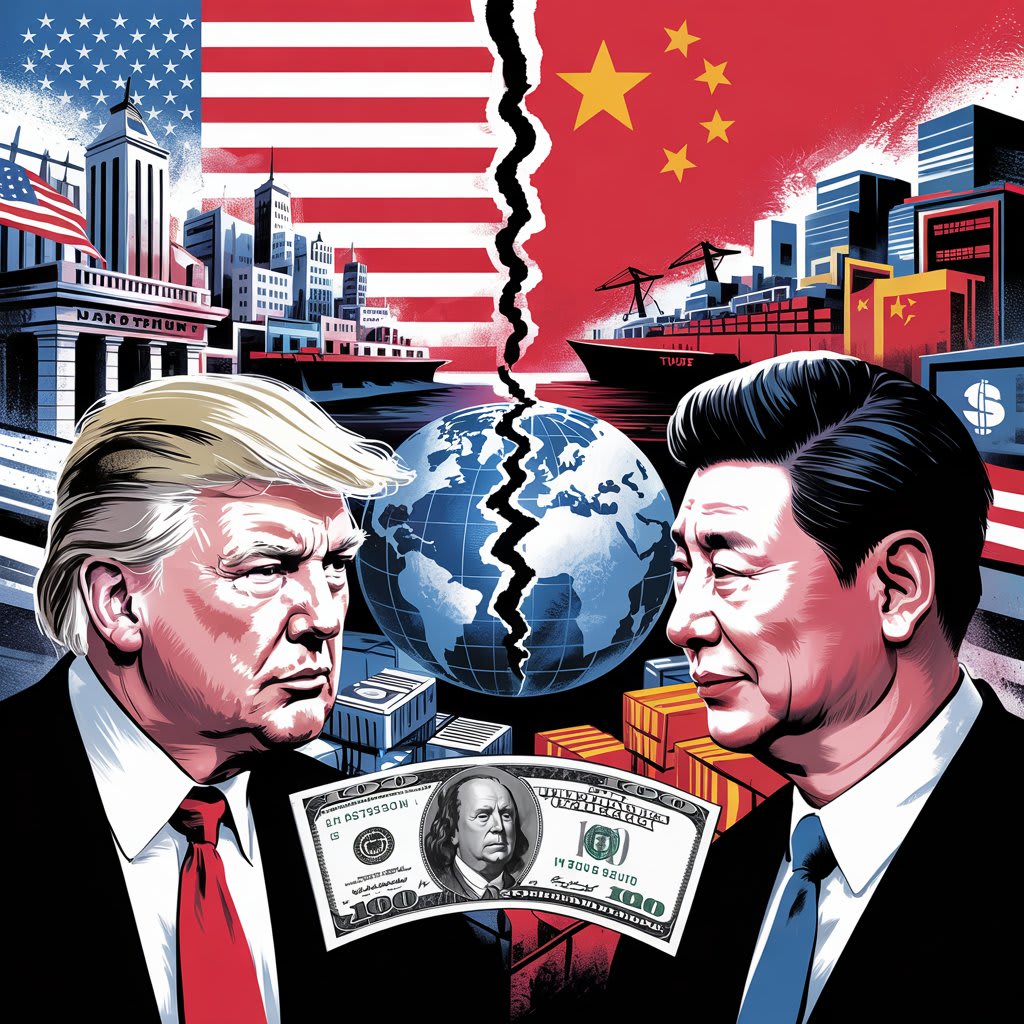
China Strikes Back with 84% Tariffs on U.S. Goods
The global trade war took a dramatic turn today as China announced sweeping retaliatory tariffs on U.S. imports, some reaching as high as 84%, in response to the latest round of economic pressure from former President Donald Trump. The move signals Beijing’s firm stance in the escalating standoff, rattling global markets and leaving businesses and investors on edge.
The Chinese Ministry of Commerce stated that the new tariffs will apply to a broad range of American products, including agricultural goods, automotive parts, and select high-tech items. The measures, effective immediately, are seen as a direct counter to Washington’s recent tariff hike on Chinese exports.
A Tit-for-Tat Battle Escalates
The latest salvo in the U.S.-China trade war underscores the deepening rift between the world’s two largest economies. Trump, who has long criticized China for what he calls "unfair trade practices," recently imposed a new round of tariffs aimed at curbing the U.S. trade deficit and protecting American manufacturers. China’s response was swift and forceful.
“We will not be bullied or backed into a corner,” said a spokesperson from the Chinese Foreign Ministry during a press conference in Beijing. “China believes in fair trade and mutual respect, but if the U.S. continues down this path, we are fully prepared to defend our national interests.”
The 84% tariff rate is among the highest Beijing has ever imposed in modern trade history, sending a clear message that it intends to meet U.S. aggression with equal force. This comes as Chinese officials accuse Washington of weaponizing tariffs to gain political leverage and destabilize China’s economic rise.
Market Reaction: Volatility Returns
Global financial markets responded swiftly — and nervously. The Dow Jones Industrial Average fell over 500 points within hours of China’s announcement, while the Nasdaq and S&P 500 also dipped significantly. Asian and European markets mirrored the trend, with investors fearing a prolonged trade dispute could drag down global growth. Commodities were also hit hard. U.S. soybean futures plunged as China, one of the biggest consumers, slapped steep duties on American agricultural imports. This places immense pressure on U.S. farmers, many of whom already face rising costs and supply chain disruptions.
“The market was hoping for negotiation, not escalation,” said Lisa Tran, a senior analyst at Global Markets Advisory. “This level of retaliation from China is not just symbolic—it’s economically painful. And it means this trade war isn’t going away anytime soon.”
Trump’s Stance: America First, Still
Despite mounting economic pressure, Donald Trump doubled down on his hardline approach. In a statement from Mar-a-Lago, he called China’s response “predictable and weak,” insisting the U.S. economy remains strong and resilient.
“We’ve been taken advantage of for decades, and that ends now,” Trump said. “China’s economy needs us more than we need them. We’re going to win this trade war—no matter how long it takes.”
The former president’s remarks signal no immediate change in strategy, raising concerns that the rift may worsen before any resolution is found. Trump’s supporters argue that the tough stance is necessary to rebalance global trade and protect U.S. innovation, while critics warn it could lead to long-term damage to American industries and diplomatic relationships.
Business Community Reacts
Business leaders across the U.S. expressed alarm at the mounting tariffs, urging both sides to return to the negotiating table. The U.S. Chamber of Commerce issued a statement calling the situation "untenable" for American companies, especially those that rely on global supply chains.
“American businesses are caught in the crossfire,” said the Chamber’s President, Thomas Donohue. “Tariffs are taxes, and these new barriers will only make things more expensive for consumers and harder for exporters. It's time for both sides to find common ground.”
Tech companies, in particular, fear being squeezed by increased tariffs on semiconductors and electronics. Many manufacturers rely on Chinese components, and costs could skyrocket if tensions continue.
What’s Next?
As the trade war intensifies, economists warn of lasting consequences. A prolonged standoff could depress global trade, disrupt supply chains, and potentially trigger a recession in vulnerable economies. While both Washington and Beijing claim to be open to dialogue, recent actions suggest that compromise is still far off.
The international community is watching closely. The World Trade Organization (WTO) has urged both sides to seek mediation, while leaders from the European Union and ASEAN countries have expressed concern about the ripple effects on global trade stability.
With China’s 84% tariffs now in place and no clear off-ramp in sight, the world braces for the next phase in what could become one of the most consequential economic confrontations of the 21st century.
Conclusion
China’s retaliatory tariffs mark a pivotal escalation in the ongoing U.S.-China trade war. As the economic superpowers lock horns, the global economy stands at a crossroads—facing uncertainty, disruption, and the urgent need for diplomacy. Whether the world witnesses a resolution or a continued clash will depend on the choices both nations make in the weeks to come.
About the Creator
Keep reading
More stories from Muhammad Adil and writers in Trader and other communities.
Stocks Surge as Trump’s Trade Strategy Shifts Amid Global Uncertainty
Stocks Surge as Trump’s Trade Strategy Shifts Amid Global Uncertainty Global stock markets saw a significant surge today, with major indices experiencing sharp gains after former President Donald Trump made an unexpected announcement regarding global tariffs. Trump, who has been at the center of trade negotiations and economic policies throughout his presidency, revealed a delay in the implementation of additional tariffs on several key trading partners. This move is seen as an attempt to ease tensions in global trade and mitigate the economic slowdown that has been affecting markets worldwide.
By Muhammad Adil9 months ago in Trader
Prognose MSCI World 2026: Key Insights to Secure Smart Investments
The prognose MSCI World 2026 is becoming a critical resource for investors who want to make informed choices. With global markets constantly shifting, knowing potential opportunities and risks is essential. This article explains the latest predictions, trends, and strategies that can help investors secure smart investments in 2026.
By John.doe7986 days ago in Trader


Comments
There are no comments for this story
Be the first to respond and start the conversation.