
China Energy Drinks Market Trends & Summary (2025–2033)
How Urban Lifestyles, Youth Culture, and Functional Beverages Are Powering a Billion-Dollar Industry

Introduction: China’s Energy Drink Boom Is Just Getting Started
China’s beverage market is no stranger to rapid change, but few categories have evolved as quickly and as dynamically as energy drinks. Once considered a niche product aimed mainly at athletes and late-night workers, energy drinks have now become a mainstream choice for students, office professionals, gamers, fitness enthusiasts, and urban consumers looking for a quick boost in performance and focus.
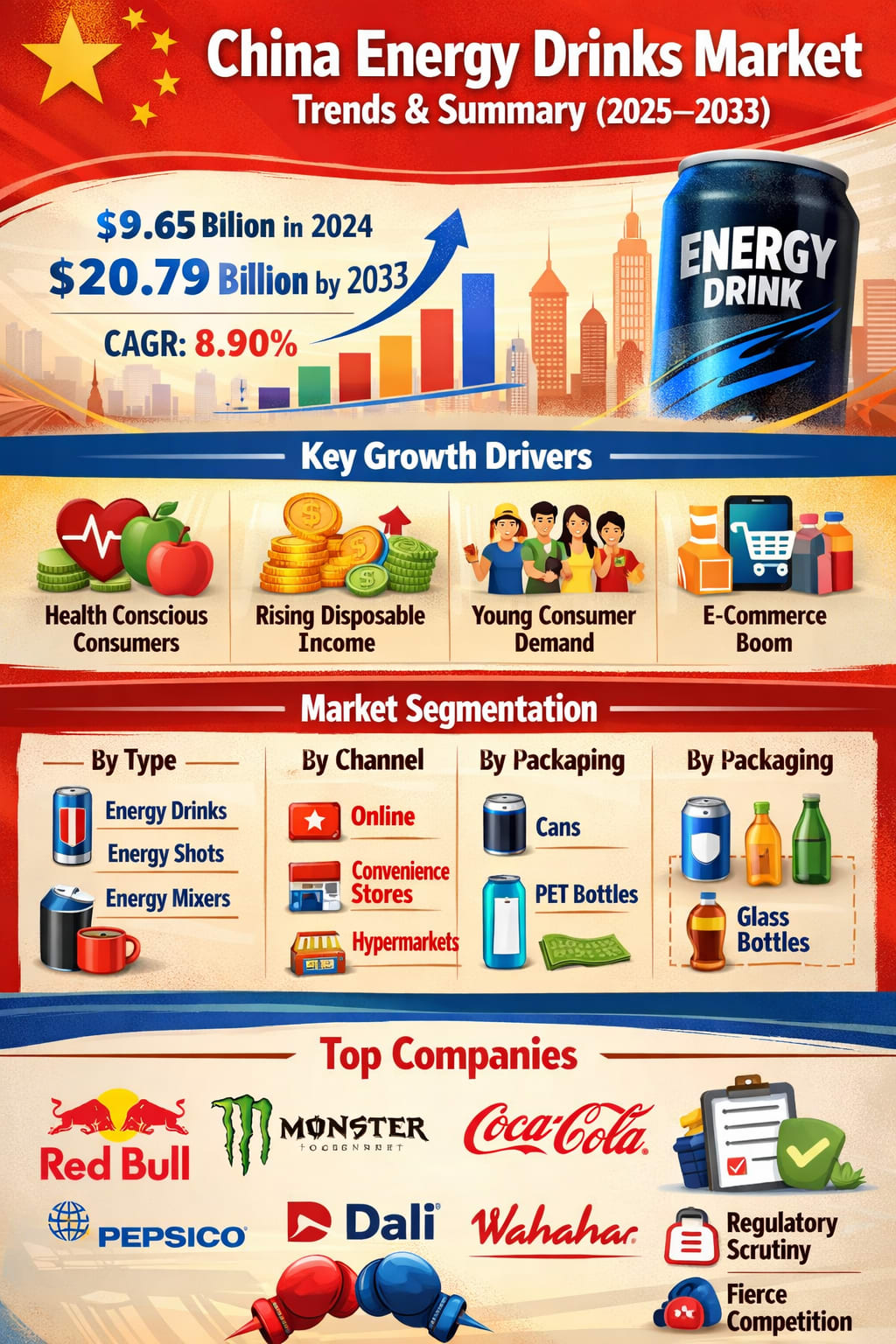
According to Renub Research, the China Energy Drinks Market is expected to reach US$ 20.79 billion by 2033, up from US$ 9.65 billion in 2024, growing at a compound annual growth rate (CAGR) of 8.90% from 2025 to 2033. This impressive growth reflects not just rising consumption, but also deeper shifts in lifestyle, health awareness, urbanization, and retail behavior across the country.
From convenience stores in mega-cities to online platforms serving smaller towns, energy drinks are becoming a daily-use functional beverage rather than an occasional indulgence. With innovation in flavors, ingredients, packaging, and branding, the sector is evolving fast—and competition is heating up just as quickly.
What Are Energy Drinks and Why Are They So Popular?
Energy drinks are typically formulated with caffeine, sugar or alternative sweeteners, and functional ingredients such as B-vitamins, taurine, amino acids, and herbal extracts like ginseng. The purpose is simple: to reduce fatigue, improve mental alertness, and enhance physical performance.
Caffeine remains the primary active ingredient, stimulating the central nervous system and helping consumers stay focused and energized. Sugar or carbohydrate alternatives provide quick energy, while added vitamins and functional compounds are marketed as supporting metabolism, endurance, or overall vitality.
In China, these drinks are especially popular among:
Students facing long study hours and exam pressure
Young professionals working in fast-paced urban environments
Fitness enthusiasts and gym-goers seeking performance boosts
Gamers and digital creators who spend extended hours in front of screens
As work, study, and entertainment increasingly blend into long, screen-heavy days, the appeal of a quick, convenient energy boost continues to grow.
Market Overview: A Sector Fueled by Lifestyle Change
The expansion of China’s energy drink market is closely tied to broader social and economic trends. Urbanization, rising disposable incomes, and a growing middle class have transformed consumption habits across the country. Beverages are no longer just about hydration—they are now about function, identity, and lifestyle.
Health consciousness is also reshaping the category. While traditional high-sugar energy drinks still have a strong presence, more consumers are looking for low-calorie, sugar-free, or naturally flavored options. This has pushed both global and local brands to reformulate products and introduce new “better-for-you” alternatives.
Another major factor is China’s digital ecosystem. With an internet penetration rate of around 73.7% and more than 1.05 billion internet users, online retail channels have become a critical growth engine. E-commerce platforms, quick-commerce apps, and social media-driven sales are making energy drinks more accessible than ever, even in lower-tier cities.
Key Growth Drivers in the China Energy Drinks Market
1. Growing Health Awareness and Functional Demand
One of the most important trends shaping the market is the rising focus on health and functionality. Chinese consumers, especially younger demographics, are becoming more selective about what they consume. They still want energy and performance, but they also want cleaner labels, fewer calories, and more natural ingredients.
This shift is evident in product launches. For example, in February 2022, Coca-Cola announced the introduction of “Fresca Energy” in China, a low-calorie, sugar-free energy drink made with natural flavors and caffeine. The product was specifically targeted at consumers in their twenties who want a healthier alternative to traditional energy drinks.
Gyms, fitness studios, and wellness-focused communities are also playing a big role in normalizing energy drink consumption as part of an active lifestyle. For many consumers, these beverages are no longer seen as extreme or unhealthy, but rather as functional performance tools when used in moderation.
At the same time, regional brands are gaining traction by offering more affordable options with efficient distribution strategies. By targeting young consumers interested in sports, fashion, and health, these local players are expanding the market beyond just premium international brands.
2. Rising Disposable Income and Premiumization
China’s rising disposable income has had a direct and powerful impact on the energy drinks market. As the middle class continues to expand, more consumers can afford premium and functional beverages that were once considered non-essential.
With more spending power, consumers are:
Choosing branded and premium energy drinks over generic options
Exploring new flavors and formulations
Paying more attention to quality, ingredients, and brand image
Energy drinks, once seen as niche or occasional purchases, are now becoming everyday convenience products in many urban households and workplaces. This has driven growth not only in volume but also in higher-value segments, including sugar-free, vitamin-enriched, and specialty functional drinks.
Brands are responding by investing heavily in R&D, packaging innovation, and brand storytelling, turning energy drinks into lifestyle products rather than simple stimulants.
3. Strong Demand from Young Consumers
Perhaps the most powerful engine of growth in China’s energy drink market is youth demand. Millennials and Gen Z consumers are deeply embedded in fast-paced, digital-first lifestyles that often involve long hours of work, study, gaming, or social media engagement.
For this group, energy drinks serve multiple purposes:
A quick boost during long work or study sessions
A social beverage at gatherings or gaming events
A fitness companion before or after workouts
Young consumers are also more open to experimenting with new flavors, formats, and brands, which encourages continuous product innovation. Influencer marketing, sports sponsorships, and social media campaigns play a major role in shaping preferences and driving trends in this demographic.
In January 2023, Monster Beverage Corporation announced plans to introduce its Predator line in China, focusing on the affordable energy drink segment. This move highlights how global players are tailoring their strategies specifically to capture the massive and price-sensitive youth market in Asia.
As disposable incomes rise among younger consumers, the market is also seeing a gradual shift toward premium and function-focused energy drinks, further boosting overall market value.
Challenges Facing the China Energy Drinks Market
1. Regulatory Scrutiny
One of the biggest hurdles for the industry is strict regulatory oversight. Chinese authorities closely monitor:
Caffeine content
Product labeling and health claims
Marketing practices, especially those targeting young consumers
Energy drinks are often scrutinized due to concerns about potential health risks, such as heart issues, sleep disturbances, and overconsumption of stimulants. As a result, companies must invest heavily in compliance, testing, and regulatory approvals, which can slow down product launches and innovation—especially for new or foreign brands unfamiliar with local rules.
2. Intense Market Competition
Competition in China’s energy drink market is fierce. Both international giants and strong domestic players are battling for shelf space and consumer attention. Brands like Red Bull and Hi-Tiger already hold strong positions, making it difficult for newcomers to break through.
To stay competitive, companies must continuously:
Innovate with new flavors and ingredients
Differentiate through branding and packaging
Compete on price, functionality, or health positioning
This intense rivalry squeezes margins and raises marketing costs, especially in a market where consumers are highly responsive to trends and promotions.
Market Segmentation: How the Industry Is Structured
By Type
Energy Drinks
Energy Shots
Energy Mixers
Traditional energy drinks dominate the market, but energy shots and mixers are gaining attention among consumers who want convenience, portability, or customization.
By Distribution Channel
Hypermarkets
Supermarkets
Mass Merchandisers
Convenience Stores
Food Service Outlets
Online
Others
Convenience stores and online channels are especially important in urban areas, where impulse purchases and quick delivery services are shaping buying behavior.
By Packaging Type
PET Bottles
Glass Bottles
Cans
Cartons
Others
Cans and PET bottles remain the most popular due to their portability and cost efficiency, while packaging innovation is increasingly used as a branding tool.
Competitive Landscape: Key Companies in Focus
The China energy drinks market features a mix of global giants and strong regional players. Major companies analyzed include:
Red Bull
Monster Beverage Corporation
Taisho Pharmaceutical Holding Company
Dali Food Group Co., Ltd.
Coca-Cola
PepsiCo
Southland Trade Company Ltd.
Hangzhou Wahaha Group Co., Ltd.
Each company is evaluated based on:
Company Overview
Key Persons
Recent Developments
Sales Analysis
Competition is driving rapid innovation, aggressive marketing, and continuous expansion across both offline and online retail channels.
The Road Ahead: What the Future Looks Like
Looking forward, the China energy drinks market is set to continue its strong growth trajectory. The combination of urban lifestyles, youth-driven demand, rising incomes, and product innovation creates a powerful foundation for long-term expansion.
At the same time, the industry will likely see:
More health-focused and functional formulations
Greater emphasis on regulatory compliance and transparency
Stronger competition in both premium and affordable segments
Continued growth of e-commerce and quick-commerce channels
Brands that can successfully balance performance, health, affordability, and trust will be best positioned to win in this fast-moving and highly competitive market.
Final Thoughts
The China Energy Drinks Market, projected to grow from US$ 9.65 billion in 2024 to US$ 20.79 billion by 2033 at a CAGR of 8.90%, is a clear example of how changing lifestyles and consumer expectations can reshape an entire industry.
No longer just a niche product, energy drinks in China are becoming everyday functional beverages—fueling work, study, fitness, and digital lifestyles. While regulatory pressure and intense competition present real challenges, the opportunities created by innovation, youth culture, and expanding retail channels are even bigger.
About the Creator
Sakshi Sharma
Content Writer with 7+ years of experience crafting SEO-driven blogs, web copy & research reports. Skilled in creating engaging, audience-focused content across diverse industries.
Keep reading
More stories from Sakshi Sharma and writers in Trader and other communities.
Global Cardiac Holter Monitor Market Size and Forecast 2025
Introduction The global healthcare industry is undergoing a significant transformation, driven by technological innovation, rising chronic disease prevalence, and a growing focus on preventive care. Among the many diagnostic tools benefiting from this shift, cardiac Holter monitors have emerged as a critical solution for continuous heart rhythm monitoring. These devices, once bulky and limited to hospital settings, are now evolving into compact, patient-friendly, and digitally connected systems that support early diagnosis and long-term cardiac care.
By Sakshi Sharmaabout 21 hours ago in Trader
NIFTY50 Trade Outlook Feb 10: Can the Index Maintain Momentum on Tuesday?
The Indian stock market opened on a positive note on Tuesday, with the NIFTY50 index showing early gains amid domestic optimism and supportive global cues. Investors are closely watching the market to determine if these initial gains can be sustained, as macroeconomic factors, corporate earnings, and global developments continue to shape trading activity.
By Hammad Nawaza day ago in Trader
There's Nothing Sexy About Long-Term Investing, But It WORKS
There are infinite ways to build wealth, and when you find the right one, you can accelerate your rate of return exponentially. The challenge is that the best opportunities are not always obvious at the beginning. Before wealth accelerates, you have to find the right deals, strategies, or systems that align with your goals, timeline, and risk tolerance. Most people never reach this stage because they quit too early or spend too much time chasing shortcuts.
By Destiny S. Harris4 days ago in Trader
📢 Raise Your Voice Thread: 02/05/2026
Our “Raise Your Voice Threads” are hosted most alternating Thursdays at 12PM ET to offer creators more avenues to uncover exceptional stories on Vocal. As we are continuously searching for fresh creators and inspiring stories, this thread provides an opportunity to exchange and discuss the stories that have moved and motivated us on Vocal.
By Raise Your Voice by Vocal7 days ago in Resources



Comments
There are no comments for this story
Be the first to respond and start the conversation.