
Buried for 33 Years: The Dream to Revive One of the Country’s Largest Gold Mines Suddenly Back on the Map
A Long-Stalled Mining Project Reemerges, Promising Economic Revival and Strategic Opportunity
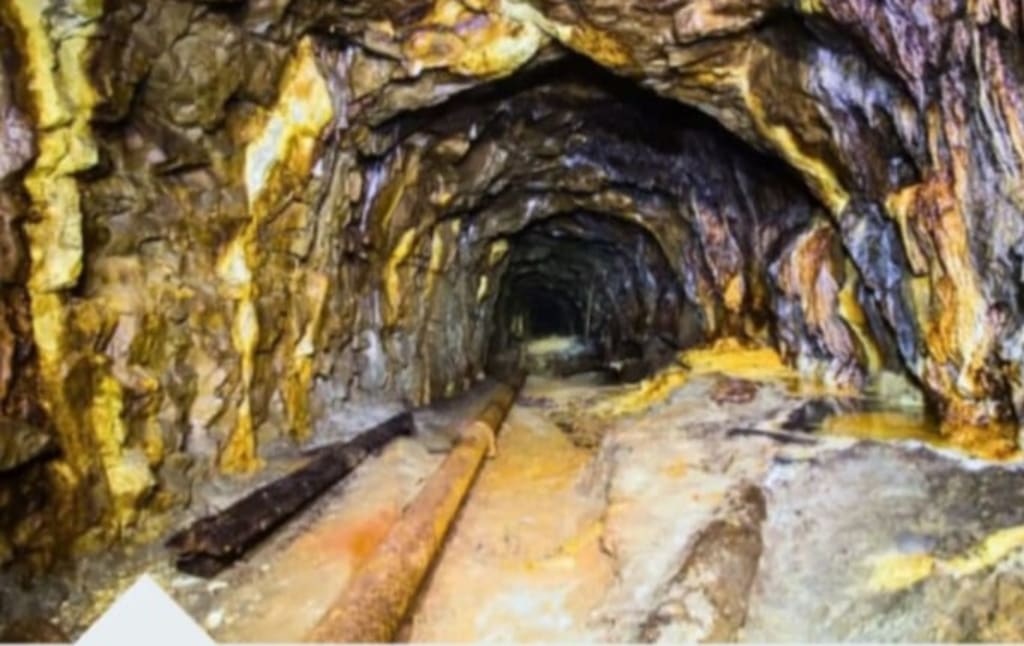
For more than three decades, it remained buried under layers of bureaucracy, political uncertainty, and unrealized potential. Once hailed as one of the country’s largest and most promising gold deposits, the mine was effectively frozen in time—its vast reserves untouched, its future uncertain. Now, after 33 years of dormancy, the long-forgotten dream of reviving the massive gold mining project has suddenly reentered national discussion, igniting optimism, skepticism, and renewed debate in equal measure.
The revival of the gold mine is being described by officials and analysts as a turning point for the mining and minerals sector, with implications that extend far beyond precious metals. If realized, the project could reshape regional development, boost foreign investment, and strengthen the country’s struggling economy.
A Treasure Left Untouched
Discovered decades ago through geological surveys, the gold mine was once projected to be among the largest in the region, containing millions of ounces of gold along with significant copper and mineral byproducts. Early feasibility studies suggested enormous economic potential, including thousands of jobs, export revenues, and long-term industrial growth.
However, despite its promise, the project became a victim of shifting governments, legal disputes, funding challenges, and disagreements over ownership and revenue-sharing models. Over time, enthusiasm faded, exploration stalled, and the mine slipped into obscurity—known more as a cautionary tale than a national asset.
For local communities living near the site, the mine became a symbol of lost opportunity. Roads, schools, and infrastructure that were once promised never materialized, while generations grew up hearing stories of wealth buried beneath their feet.
What Changed After 33 Years?
The sudden reemergence of the project is no coincidence. Several factors have converged to bring the long-buried mine back into focus.
First, global gold prices remain strong amid economic uncertainty, inflationary pressures, and geopolitical tensions. Gold has once again proven its status as a safe-haven asset, making dormant reserves far more attractive than they were decades ago.
Second, the country’s economic challenges—including foreign exchange shortages, rising debt, and declining exports—have forced policymakers to reconsider untapped natural resources as a means of recovery.
Third, advancements in mining technology have made extraction more efficient, environmentally manageable, and commercially viable than in the past. What was once considered technically complex is now far more achievable.
Together, these dynamics have pushed the forgotten gold mine back onto the national map.
Government Signals Renewed Interest
Recent statements from senior officials suggest a clear shift in tone. Authorities have hinted at new frameworks designed to attract both local and international investors while addressing past regulatory weaknesses.
According to sources within the mining ministry, updated feasibility assessments are underway, and consultations with potential investors have quietly begun. The emphasis, officials say, is on transparency, sustainability, and fair revenue sharing, lessons learned from earlier failures.
“This is not about repeating the mistakes of the past,” one official said. “It’s about unlocking value responsibly while ensuring long-term benefits for the country.”
Economic Promise and Strategic Value
The potential benefits of reviving the gold mine are substantial.
Economists estimate that full-scale operations could generate billions of dollars in exports over the life of the project, significantly easing pressure on foreign exchange reserves. The mine could also create thousands of direct and indirect jobs, revitalizing underdeveloped regions and supporting local industries.
Beyond economics, the project carries strategic importance. Developing domestic mineral resources reduces reliance on imports and positions the country as a serious player in the global mining market.
For investors, the mine represents a rare opportunity: a world-class resource that has already been identified, studied, and partially mapped—yet remains largely untapped.
Concerns and Cautious Optimism
Despite renewed excitement, skepticism remains. Environmental groups warn that large-scale mining can pose serious ecological risks if not properly regulated. Concerns over water usage, waste management, and community displacement have resurfaced, prompting calls for strict oversight.
There is also lingering distrust stemming from past disputes that halted the project in the first place. Critics argue that unless governance issues are fully resolved, the mine could once again fall victim to legal and political turmoil.
Local residents, meanwhile, are cautiously hopeful. Many say they support development—but only if it brings real, visible benefits rather than empty promises.
“We’ve heard this story before,” said one community elder. “This time, we want schools, hospitals, and jobs—not just headlines.”
A Test Case for the Mining Sector
Analysts believe the gold mine’s revival could serve as a litmus test for broader mining reforms. If managed successfully, it could open the door for exploration and development of other mineral resources long ignored due to policy uncertainty.
On the other hand, failure could reinforce investor fears and further delay progress in a sector that remains vastly underdeveloped compared to its potential.
“This project will set the tone,” said a mining industry expert. “If done right, it could change how the world views the country’s investment climate.”
From Forgotten Past to Uncertain Future
After lying dormant for 33 years, the dream of reviving one of the country’s largest gold mines is no longer just a historical footnote. It has reemerged as a symbol of possibility—one that reflects both the country’s untapped wealth and its long struggle to harness it.
Whether this renewed momentum leads to real transformation or fades once again into silence will depend on decisions made today. For now, the gold remains buried—but hope, at least, is back on the map.
About the Creator
Keep reading
More stories from Ayesha Lashari and writers in Trader and other communities.
Buried for 33 Years: The Dream to Revive One of the Country’s Largest Gold Mines Suddenly Back on the Map
Gold has always held an undeniable allure. From ancient civilizations hoarding it in tombs to modern-day investors seeking refuge in its precious metal, gold remains a timeless symbol of wealth and power. Yet, sometimes, even the most promising gold mines can fade into obscurity due to unforeseen circumstances. One such mine, buried for 33 years, has suddenly reappeared on the map, sparking fresh hopes of revitalizing one of the country’s largest gold deposits. The question on everyone's mind: Can the dream of reviving this colossal gold mine become a reality?
By Ayesha Lashari7 days ago in Trader
Radiofrequency Ablation Device Market Size and Forecast 2025
Introduction: A Market Heating Up with Innovation The global healthcare industry is in the middle of a major transformation, driven by the demand for safer, faster, and more cost-effective treatments. Among the technologies benefiting from this shift is radiofrequency ablation (RFA)—a minimally invasive technique that uses heat generated by radiofrequency energy to destroy abnormal tissue. From treating cardiac arrhythmias and tumors to managing chronic pain, RFA has become an essential tool in modern medicine.
By Sakshi Sharmaabout 20 hours ago in Trader
Europe Air Conditioner (AC) Market Trends & Outlook 2025–2033
Introduction: Cooling Becomes a Necessity, Not a Luxury The Europe Air Conditioner (AC) Market is undergoing a significant transformation, driven by shifting climate patterns, rapid urbanization, and the growing emphasis on energy efficiency and sustainability. Once considered a non-essential appliance in many European countries, air conditioning is now increasingly viewed as a necessity—particularly as heatwaves become more frequent and intense across the continent.
By Sakshi Sharmaabout 13 hours ago in Trader
Mismatch Challenge Winners
Blending genres isn’t about stacking elements side by side. It’s about what happens when two sets of expectations refuse to cooperate. The strongest entries in the Mismatch Challenge understood that tension and leaned into it. Rather than smoothing the edges, these stories let their chosen genres complicate one another, creating friction that carried through voice, structure, and consequence.
By Vocal Curation Teamabout 12 hours ago in Resources


Comments
There are no comments for this story
Be the first to respond and start the conversation.