
Buildings Construction Market Size and Forecast 2025–2033
Global construction spending accelerates as urbanization, digitalization, and sustainability reshape residential, commercial, and industrial building worldwide


Buildings Construction Market: Global Snapshot
The Buildings Construction Market is entering a period of sustained expansion, reflecting the world’s growing need for modern housing, commercial facilities, and industrial infrastructure. According to Renub Research, the market is projected to increase from US$ 6,732.34 billion in 2024 to US$ 10,453.02 billion by 2033, growing at a CAGR of 5.01% between 2025 and 2033.
This steady rise is being driven by rapid urbanization, large-scale infrastructure investments, and the adoption of advanced construction technologies. At the same time, sustainability initiatives and green building mandates are reshaping how projects are designed, financed, and executed across residential, commercial, and industrial segments.
From smart cities in Asia-Pacific to urban regeneration projects in Europe and mega-developments in the Middle East, building construction has become a cornerstone of economic growth, employment generation, and long-term development planning.
Buildings Construction Industry Overview
The Buildings Construction industry encompasses the design, development, and erection of residential, commercial, and industrial structures. It is one of the most economically significant sectors worldwide, contributing directly to GDP, creating millions of jobs, and enabling modernization across urban and rural environments alike.
Today’s construction ecosystem integrates architecture, engineering, material sourcing, project management, and advanced digital technologies. Tools such as Building Information Modeling (BIM), drones, robotics, and automation are redefining project accuracy, cost efficiency, and safety. Meanwhile, modular construction and prefabrication are reducing waste, accelerating timelines, and improving quality control.
Sustainability has also become a defining feature of the industry. Developers increasingly prioritize green materials, energy-efficient systems, and circular construction techniques to comply with environmental regulations and meet the expectations of eco-conscious investors and occupants. Smart building technologies—such as IoT-enabled energy management, intelligent lighting, and renewable energy integration—are transforming traditional structures into data-driven, high-performance assets.
Despite challenges including fluctuating raw material prices, regulatory complexities, and labor shortages, the industry remains resilient. Continuous innovation, government-backed infrastructure programs, and the growing need for modern urban spaces ensure that the Buildings Construction Market will maintain its growth momentum through 2033.
Key Factors Driving the Buildings Construction Market
Rapid Urbanization and Infrastructure Development
Urbanization remains the most powerful growth catalyst for the Buildings Construction Market. As populations concentrate in cities, demand rises for housing, offices, schools, hospitals, retail centers, and public infrastructure. Governments and private investors are allocating substantial capital to urban development, transportation hubs, and mixed-use complexes that integrate residential, commercial, and recreational spaces.
Emerging economies in Asia-Pacific, Latin America, and parts of Africa are witnessing unprecedented urban expansion, while developed markets focus on redevelopment and modernization of aging infrastructure. Smart city programs, public–private partnerships, and national infrastructure pipelines are creating a continuous stream of construction projects, supporting long-term market growth.
Technological Advancements and Digital Transformation
Technology is fundamentally transforming construction processes. BIM platforms allow stakeholders to visualize projects in three dimensions, identify conflicts before construction begins, and optimize resource allocation. Drones and robotics enhance site monitoring and safety, while 3D printing is being explored for rapid prototyping and component manufacturing.
Digital project management systems enable real-time tracking of schedules, budgets, and materials, significantly reducing errors and rework. Prefabrication and modular construction methods improve efficiency, minimize on-site disruption, and enhance cost predictability. Firms that adopt digital tools gain a competitive advantage by delivering projects faster, safer, and more sustainably.
Growing Emphasis on Sustainable and Green Building Practices
Environmental responsibility has become central to modern construction. Governments are enforcing stricter building codes related to energy efficiency, emissions, and waste management, while investors increasingly apply ESG (Environmental, Social, and Governance) criteria when financing projects.
Green buildings integrate renewable energy systems, high-performance insulation, water conservation technologies, and recyclable materials. These features reduce long-term operating costs, enhance occupant comfort, and align with global climate goals. Incentives, tax benefits, and certification programs such as LEED and BREEAM further accelerate the adoption of sustainable construction practices, making sustainability both an ethical and economic driver of market expansion.
Challenges Facing the Buildings Construction Market
Volatile Raw Material Prices and Supply Chain Disruptions
Construction projects are highly sensitive to the prices of key materials such as steel, cement, timber, and aluminum. Global supply chain disruptions, geopolitical tensions, and rising transportation costs have created price volatility, impacting budgets and timelines.
Contractors face difficulties in maintaining profitability when material costs fluctuate unpredictably. Delays in procurement can stall large-scale projects, especially those dependent on imported resources. While firms are adopting strategies such as long-term supplier contracts, digital procurement systems, and localized sourcing, maintaining cost stability remains a persistent challenge across the industry.
Labor Shortages and Skill Gaps
The construction sector is experiencing a growing shortage of skilled workers due to an aging workforce and declining interest in traditional trades. At the same time, the adoption of advanced technologies requires specialized skills in digital modeling, automation, and project analytics.
Labor shortages often result in project delays, higher wages, and increased safety risks. To address this, companies are investing in training programs, apprenticeships, and collaborations with technical institutions. Automation and prefabrication are also being used to reduce dependence on manual labor. However, closing the skills gap remains critical for sustaining productivity and quality in the long term.
Regional Outlook: Buildings Construction Market
The Buildings Construction Market demonstrates strong regional diversity, shaped by economic conditions, regulatory frameworks, and development priorities.
United States
The United States Buildings Construction Market benefits from robust housing demand, large-scale infrastructure spending, and rapid adoption of construction technologies. Residential construction continues to expand in response to urban growth and demographic shifts, while commercial and industrial projects gain momentum through economic recovery and logistics sector expansion.
Federal and state-level infrastructure programs are modernizing transportation systems, public facilities, and green buildings. BIM, modular construction, and automation are increasingly used to enhance efficiency and reduce costs. Although challenges such as labor shortages and material price volatility persist, strong institutional investment and innovation-driven practices support long-term growth in the U.S. construction industry.
United Kingdom
The United Kingdom Buildings Construction Market is shaped by sustainability-led policies, urban regeneration, and advanced building technologies. Government initiatives promoting carbon-neutral infrastructure and green building standards influence project design and execution.
Housing development remains a priority, supported by affordability programs and population growth. Commercial construction benefits from investments in logistics centers, smart offices, and mixed-use developments. While regulatory changes and workforce constraints present challenges, the UK market remains resilient through public–private collaboration and continued innovation in sustainable construction.
China
China represents one of the world’s largest construction markets, driven by urbanization, industrial expansion, and government-led infrastructure investment. Major initiatives focused on smart cities, energy-efficient buildings, and urban renewal sustain demand across residential and commercial segments.
Digital construction platforms, prefabrication, and green materials are widely adopted to enhance efficiency and environmental performance. Although tighter regulations and environmental compliance standards are reshaping development patterns, China’s strategic emphasis on sustainable urban growth ensures that its construction industry remains a key engine of economic transformation.
United Arab Emirates
The UAE Buildings Construction Market thrives on ambitious mega-projects, tourism-driven developments, and diversification strategies under national economic visions. Cities such as Dubai and Abu Dhabi continue to invest in smart infrastructure, luxury real estate, and sustainable construction.
Strong foreign investment, advanced technologies, and supportive regulatory frameworks have positioned the UAE as a global hub for innovative architecture and green building practices. While cost inflation and material shortages can affect project timelines, the country’s focus on futuristic urban design and environmental performance reinforces its leadership in the global construction landscape.
Recent Developments in the Buildings Construction Industry
The industry continues to evolve through innovation and sustainability commitments:
March 5, 2024 – Skanska: Successfully constructed concrete components for a residential project using 3D printing technology, reducing material waste and accelerating project schedules.
February 18, 2024 – Turner Construction: Launched Turner Fabrication, a subsidiary focused on prefabrication and modular construction to improve efficiency, lower labor costs, and maintain high quality standards.
December 20, 2023 – Mortenson: Announced a commitment to achieve net-zero energy status for all new construction projects by 2030, reinforcing its leadership in sustainable design and climate-conscious building practices.
These initiatives highlight the industry’s transition toward automation, off-site construction, and environmental responsibility, setting new benchmarks for efficiency and sustainability.
Market Segmentation
By Type
Residential
Non-Residential
By Construction Type
New Construction
Renovation
By End User
Private
Public
By Region
North America: United States, Canada
Europe: France, Germany, Italy, Spain, United Kingdom, Belgium, Netherlands, Turkey
Asia-Pacific: China, Japan, India, South Korea, Thailand, Malaysia, Indonesia, Australia, New Zealand
Latin America: Brazil, Mexico, Argentina
Middle East & Africa: Saudi Arabia, United Arab Emirates, South Africa
Competitive Landscape
The Buildings Construction Market is highly competitive, with global and regional players investing in technology, sustainability, and strategic partnerships. Major companies covered in the market include:
Power Construction Corporation of China
Bouygues S.A.
China State Construction Engineering Corporation
STRABAG International GmbH
Vinci SA
Daiwa House Industry Co. Ltd.
Gilbane Inc.
Skanska AB
Kiewit Corporation
Larsen & Toubro Ltd.
Antofagasta plc
These firms are strengthening their market positions through digital transformation, modular construction, green building solutions, and international expansion. Comprehensive analysis of each company includes overviews, leadership profiles, recent developments, SWOT assessments, revenue analysis, and strategic outlooks.
Final Thoughts
The global Buildings Construction Market is set on a strong growth trajectory, expanding from US$ 6,732.34 billion in 2024 to US$ 10,453.02 billion by 2033, as urbanization, technological innovation, and sustainability reshape the built environment. While challenges such as material price volatility and labor shortages persist, the industry’s adaptability and commitment to modernization continue to drive progress.
As cities grow smarter, buildings become greener, and construction processes become more digital, the sector will play an increasingly critical role in shaping economic development and environmental outcomes worldwide. For investors, policymakers, and industry leaders, the coming decade presents not only opportunities for expansion, but also a chance to redefine how the world builds—efficiently, responsibly, and sustainably.
About the Creator
Keep reading
More stories from Aaina Oberoi and writers in Trader and other communities.
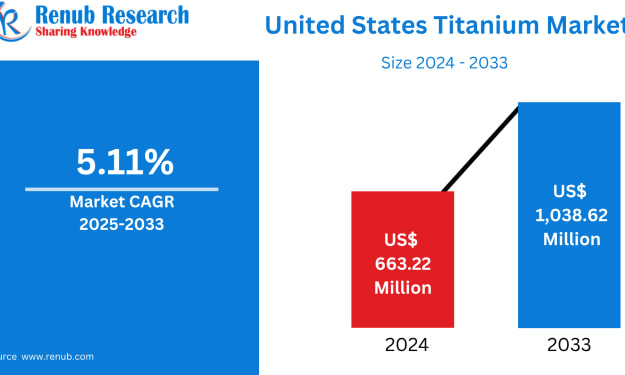
United States Titanium Market Size and Forecast 2025–2033
The titanium market within the United States is expected to grow considerably, from US$ 663.22 million in 2024 to US$ 1,038.62 million in 2033. This expansion reflects a healthy Compound Annual Growth Rate (CAGR) of 5.11% from 2025 to 2033, underscoring the increasing importance of titanium across modern industries. From aerospace engineering and defense manufacturing to medical implants and energy systems, titanium has become a cornerstone of high-performance materials.
By Aaina Oberoi7 days ago in Trader
The Cashless Island: How Singapore is Rewriting the Rules of Digital Payments
In most parts of the world, "cash is king." But in Singapore, cash is rapidly becoming a relic of the past. If you walk into a traditional hawker center today for a plate of Chicken Rice, you are just as likely to see a QR code scanner as you are to see a cash register. This isn't an accident; it is a meticulously engineered transformation that has turned the island nation into the Silicon Valley of payments.
By Sam waltera day ago in Trader



Comments
There are no comments for this story
Be the first to respond and start the conversation.