
Bank Failures and the Government Response: Understanding the Recent Wave of Bank Runs in the US
Navigating Bank Runs and Insolvency: Insights into Recent Bank Failures and the FDIC's Role in the US
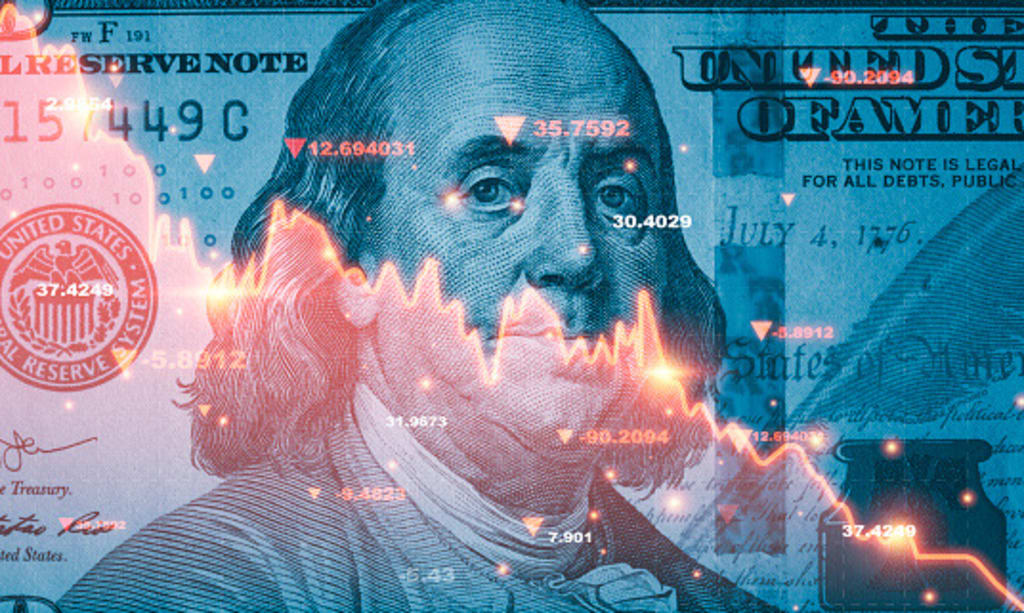
The previous month, two of the largest bank failures in history occurred. However, before discussing the reasons behind the collapses, it is worth asking why Jim Cramer is so good at being bad at his without government intervention. This is why there was a push for the government to step in and offer some form of bailout.
Within a short period of time, three major banks in the United States, namely Silvergate, Signature, and Silicon Valley Bank, failed. Although these banks were different from each other in terms of their areas of expertise, they all collapsed for similar reasons, which was the inability to provide enough cash to depositors during a bank run. Despite the similarity, it is important to note that these banks were illiquid rather than insolvent. This meant that they had the funds but were unable to meet depositors' demands due to the locking up of some of their funds in long-term assets like bonds.
In a liquidity crisis, banks are forced to sell long-term assets that they don't want to sell, leading to losses. This turns what was initially a liquidity crisis into an insolvency crisis, leading to bank failures. Although the FDIC insures up to $250,000 per account, Silicon Valley Bank had numerous accounts with much more than that, which raised concerns about whether the government should step in to help depositors. Eventually, the US government intervened to prevent a systemic risk, citing that depositors would have access to all their money. However, the government's intervention sparked a debate on whether they only help a certain type of person.
On Sunday, the U.S Treasury announced a special bailout for the failed banks, which was met with mixed reactions. Some praised the government for stepping in and preventing a potentially catastrophic financial collapse, while others criticized the move, arguing that it was unfair to taxpayers who would ultimately foot the bill.
Critics of the bailout argued that it was an example of moral hazard, the idea that if banks believe they will be bailed out by the government in the event of a crisis, they will engage in riskier behavior. In other words, if banks believe they can take on more risk without facing the consequences of failure, they will be more likely to engage in risky behavior that could ultimately harm the economy.
Proponents of the bailout, however, argued that it was necessary to prevent a systemic financial collapse. They pointed to the fact that the failed banks had a significant presence in the tech and crypto industries, and their collapse could have had ripple effects throughout the entire economy. Additionally, they argued that the bailout was necessary to prevent a run on other banks, as people may have panicked and withdrawn their money from other banks if they thought their deposits were at risk.
Regardless of whether the bailout was the right move, it does raise important questions about the role of government in regulating the banking industry. Should the government be more involved in overseeing banks to prevent crises like this from happening in the first place? Should taxpayers be on the hook for bailing out failed banks, or should the banks be allowed to fail and face the consequences of their actions?
These are complex questions with no easy answers, and the debate is likely to continue for some time. But one thing is clear: the recent bank failures serve as a reminder of the importance of financial regulation and oversight, and the potential consequences of failing to take these issues seriously.
In conclusion, the recent bank failures have raised concerns about the stability of the banking system and the role of government in regulating the industry. While the special bailout announced by the U.S Treasury may have prevented a systemic financial collapse, it has also sparked debate about the potential consequences of bailing out failed banks and the need for greater oversight and regulation in the industry. As the debate continues, it is clear that these issues will remain at the forefront of discussions about the future of the banking industry and the economy as a whole.
About the Creator
Yeghia Coxon
Welcome to my corner of Vocal media! I am a passionate story creator who loves nothing more than sharing my thoughts, experiences, and insights.
Thank you for taking the time to visit my profile, let's create something amazing together!
Keep reading
More stories from Yeghia Coxon and writers in Trader and other communities.
The End of Everything: Exploring the Possible Fates of the Universe
The end of the world, as we know it, is a topic that has fascinated humans for centuries. In recent years, astrophysicists have been studying the end of everything, and their findings are both fascinating and terrifying. Our sun is predicted to swell into a red giant, boiling away the oceans and scorching the planet. Scientists are certain that this will happen, but not for another four to five billion years. However, the question remains, could everything in the universe end, and the answer is yes, it probably will.
By Yeghia Coxon3 years ago in Earth
Silver Price Forecast 2026: Michael Oliver Sees $500 per Oz – Money Metals Discussion
On a recent episode of the Money Metals podcast, host Mike Maharrey sat down with veteran market technician J. Michael Oliver, commonly referred to as simply Michael Oliver, to unpack why he believes silver is breaking out of a half-century “box” and entering a radically new price regime.
By Stefan Gleasonabout 5 hours ago in Trader
Australia Crushing and Screening Equipment Market Gearing Up for Steady Growth Amid Mining and Infrastructure Push
The Australia crushing and screening equipment market is experiencing solid expansion as mining and construction sectors drive increased demand for effective material processing solutions. According to IMARC Group, the market reached USD 494.8 Million in 2025 and is expected to grow to USD 714.1 Million by 2034, reflecting a compound annual growth rate (CAGR) of 4.16 % during 2026–2034.
By Rashi Sharma5 days ago in Trader
Smart phones, Humans and Aliens.
WARNING. I will be tapping into one of your favorite creative tensions: The absurdity of humans worshipping their glowing rectangles as if they were tiny oracles. There’s something deliciously poetic about that contradiction, and it lends itself beautifully to an instructive proviso.
By Novel Allen4 days ago in Poets


Comments
There are no comments for this story
Be the first to respond and start the conversation.